Search Articles


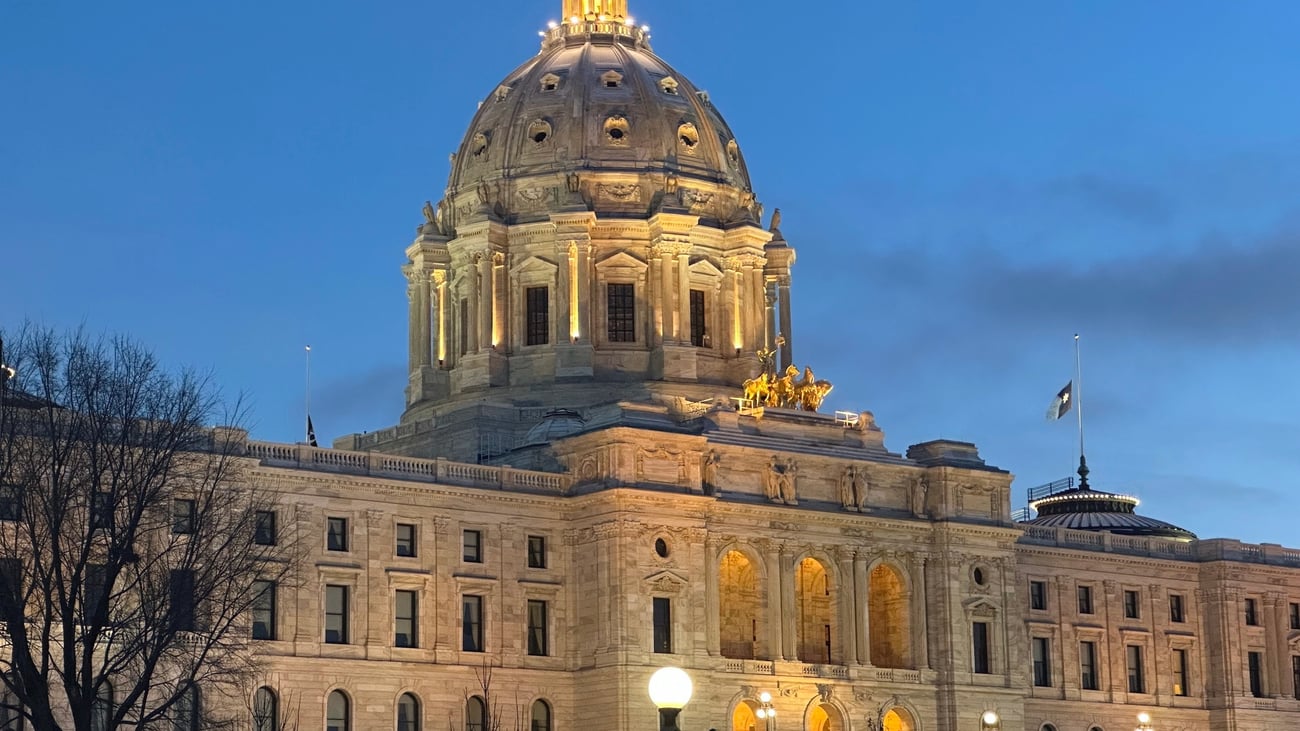
ST. PAUL, Minn. (CN) — A man convicted of murder urged the Minnesota Supreme Court on Tuesday to reconsider his case under the state’s new, more restrictive felony-murder laws.
In 2010, a Hennepin County jury found Christopher Bahtuoh guilty on four counts of first- and second-degree murder via liability. Bahtuoh was at the wheel during a gang-affiliated, drive-by shooting but didn’t fire any shots himself.
Bahtuoh maintains he did not know his passenger had a gun and never intended for the victim, Kyle Parker, to die. He was sentenced to life in prison with possibility of release after 31 years.
Now, Bahtuoh is pressing the Minnesota Supreme Court to examine his case in light of 2023 reforms that restrict when accomplices can be charged with murder — requiring prosecutors to prove intent to kill, or that someone acted with extreme indifference to human life.
Bahtuoh argues a lower court improperly denied him the chance to prove he lacked that intent.
Minnesota, however, claims special jury instructions from 2010 guided jurors to consider whether Bahtuoh acted with the intent to kill, meaning his conviction already meets the new standard.
“The state took on a heightened additional burden, through the set of hybrid jury instructions and proved, despite not needing to do so, that the appellate actor would attempt to end Mr. Parker’s life,” Hennepin County attorney Robert Yount said.
A 2013 Minnesota Supreme Court ruling in Bahtuoh’s initial postconviction appeal found these instructions were actually beneficial to his defense, though justices on Tuesday appeared hesitant to rely heavily on that decision.
Because little precedent exists in applying the new law, Chief Justice Natalie Hudson showed clear worry about relying solely on a then-incorrect, potentially confusing jury instruction.
“We’re creating a framework here for these cases, and I guess I’m just worried about messing up the law that we are creating,” she said, noting the possibility the jury misread various intent standards. “This just feels dicey to me.”
Justice Paul Thissen also questioned putting so much weight on jury instructions in a time when the state did not have to prove a defendant’s intent to kill — which the jury likely knew.
“You’re making an assumption that he did [have intent] because we assume the jury followed this hybrid jury instruction, even though there were other jury instructions,” he said, pushing back on Yount’s notion that the state proved beyond a reasonable doubt Bahtuoh intended to end Parker’s life.
Nico Ratkowski of Ratkowski Law in St. Paul, Bahtuoh’s attorney, told the justices despite the wording of jury instructions, there was no special verdict form clearly identifying the element of intent to kill.
“It’s a really slippery slope to say just because the state got lucky through an incorrect jury instruction that was harmless to the verdict at the time, that therefore we prevent any further review on the actual question,” Ratkowski said, noting the jury was likely confused on how to parse between incorrect and correct technical instructions.
“It’s not a conviction capable of being appealed, and if it can’t be appealed, then the individual does not get to present their defense,” he added. “It’s an incomplete record.”
Still, the justices were clearly hung up on the facts of the case.
“Your client is accused of summoning a victim to a car, facilitating a close-range shooting and then immediately fleeing that shooting,” Justice Gordon Moore said. “Why isn’t that sufficient to support an inference of an intent to kill?”
Ratkowski conceded the evidence was certainly enough to support a lesser felony charge but not enough on its own to succinctly say Bahtuoh meant to cause death.
“Those are totally consistent with knowing there’s going to be a robbery, knowing there’s going to be some other underlying felony, but not being certain that something is going to result in death,” he said.
The lower court dismissed Bahtuoh’s application under the 2023 law in both 2024 and 2025, relying heavily on the high court’s prior conclusion that “only a person who knew of a planned shooting and intended to further the shooting would” act as Bahtuoh did.
Ratkowski contends it would be ridiculous to say, as a matter of law, every person who intends a shooting intends to cause death, as “every single second-degree assault involving a firearm would constitute an attempted murder crime.”
Regardless of whether or not the court finds Bahtuoh deserves an evidentiary hearing, the state is still confident his conviction will stand based on the totality of evidence and his longstanding gang ties.
“Appellant did not stop the shooting. He did not warn Parker before the shooting. He did not help Parker after the shooting. He did not call 911 or take Parker to a hospital,” the state writes in its reply brief. “Rather, appellant sped away.”
Still, Ratkowski said a combination of grand jury testimony, questionable counsel decisions and a clear dispute about the facts that would lead someone to find Bahtuoh acted with intent is more than enough to at least warrant further examination of evidence.
“Any reasonable person, or at least one, is going to find a possibility that, after evidentiary hearings, he can prove that he did not intend to cause death,” Ratkowski said.
Subscribe to our free newsletters
Our weekly newsletter Closing Arguments offers the latest about ongoing trials, major litigation and rulings in courthouses around the U.S. and the world, while the monthly Under the Lights dishes the legal dirt from Hollywood, sports, Big Tech and the arts.