
 Search Articles


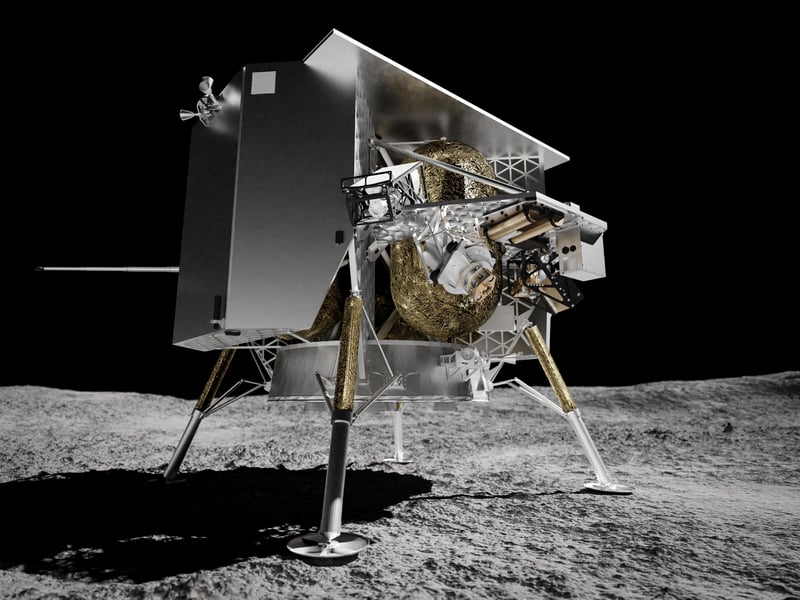
MEXICO CITY (CN) — Mexico’s first time taking part in an expedition to the moon will not arrive at its destination.
The ultimate mission of the Colmena (“hive” in Spanish) project was to send five 4-inch, 2-ounce robots to the moon to work together like bees gathering data on the moon’s regolith, its loose blanket of dust and rocks.
This was also the first lunar launch taken in part by a private company, Astrobotic, a Pittsburgh-based space robotics development company and the first U.S. moon launch in more than 50 years.
According to the Space Instrumentation Laboratory (LINX) at the Institute of Nuclear Sciences of the National Autonomous University of Mexico, which designed the robots, the dust has been an obstacle to the technology.
“Their study will make it possible to analyze the feasibility of building structures on planetary surfaces using swarms of self-organizing robots,” the organization said.
The unmanned moon lander successfully launched aboard United Launch Alliance’s Vulcan VC2S rocket from Space Launch Complex 41 at Cape Canaveral Space Force Station in Florida on Monday at 2:18 a.m.. The mission consisted of seven phases, but was not necessarily expected to achieve all phases.
“Seven hours after a successful launch and separation of ULA’s Vulcan Centauro rocket, the Peregrine spacecraft, on the correct trajectory to the Moon, began to have problems with its pointing system, which caused its solar panels to no longer be able to charge its batteries,” said Gustavo Medina-Tanco, the creator and current head of LINX.
“To stabilize the Peregrine and keep its panels in the direction of the sun, intensive use of its other engines had to be made, which consumed a much greater amount of fuel than expected, severely limiting the life of the ship and its ability to land on the moon in a controlled manner.”
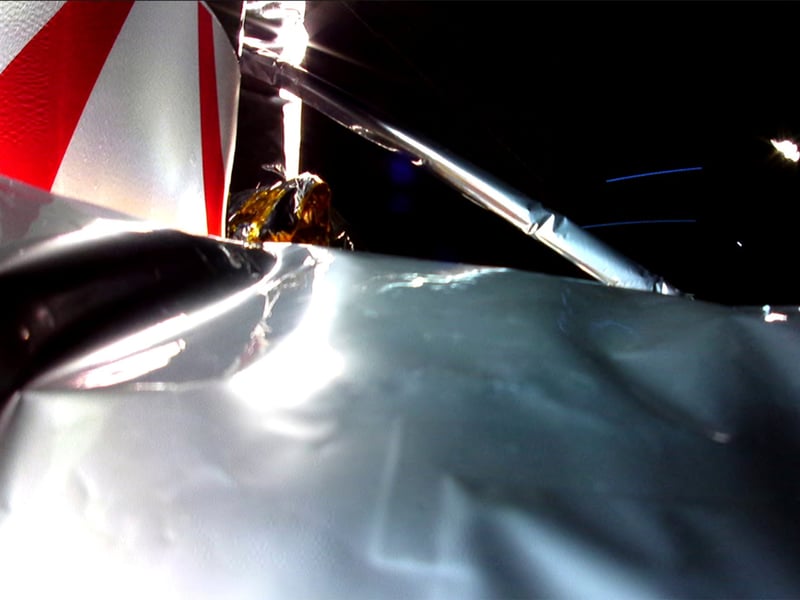
In a statement made on X, formerly Twitter, Astrobiotic also discussed fuel problems.
“There is, unfortunately, no chance of a soft landing on the moon,” the company said. The expected moon arrival was Feb. 24.
Medina does not deem this mission a failure as already half of the development goals for Colmena II, expected to launch in 2027, have been completed by the innovative technology achieved with the development of this first project. Colmena is currently in deep space and is consuming the expected amount of power, awaiting Astrobotic’s authorization to proceed to test all the other Colmena subsystems.
“In the next hours and during the morning, we expect to perform tests that can lead to a 75% success level despite not managing to gather the scientific data on the lunar regolith,” Medina said.
Mexico’s hope of a successful moon landing must wait. This mission precedes NASA’s Artemis moon missions, which the agency said Tuesday will be delayed until at least 2025 due to safety concerns with the Orion spacecraft.
Subscribe to our free newsletters
Our weekly newsletter Closing Arguments offers the latest about ongoing trials, major litigation and rulings in courthouses around the U.S. and the world, while the monthly Under the Lights dishes the legal dirt from Hollywood, sports, Big Tech and the arts.