
 Search Articles


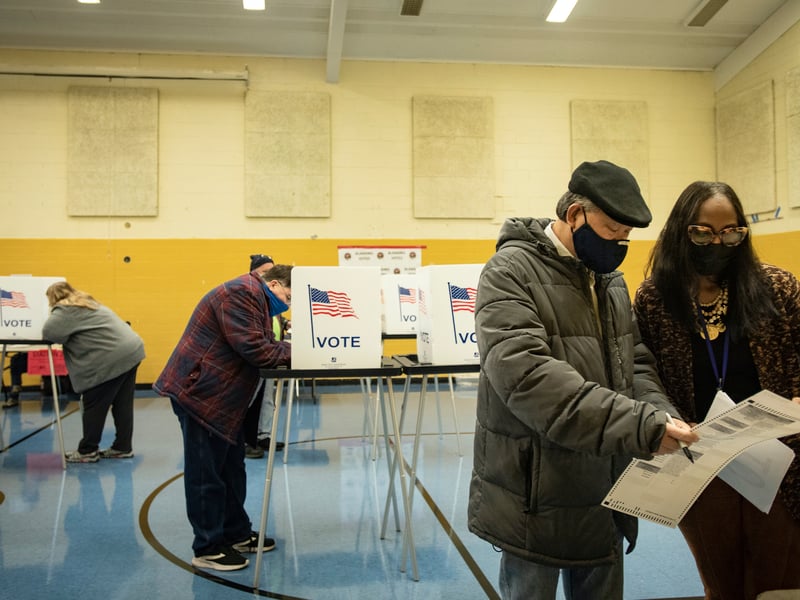
LANSING, Mich. (AP) — Republicans who control the Michigan Senate passed legislation Wednesday that would mandate a photo ID to vote in person and add identity requirements for people who want to vote by mail.
The bills, which were sent to the GOP-led House on party-line 19-16 votes, are among a wave of Republican-sponsored measures to tighten voting rules in various states. Democratic Gov. Gretchen Whitmer will veto the bills if they reach her desk, but the GOP could eventually sidestep her with a maneuver that lets the Legislature enact citizen-initiated ballot proposals.
Michigan voters without a photo ID now can sign an affidavit and cast a ballot at their polling place. More than 11,400 of nearly 5.6 million voters did that in the November election. Under the legislation, they would instead vote a provisional ballot and have to verify their identity within six days for it to count.
Voters currently seeking an absentee ballot by mail or at an election clerk’s office must sign the application, and the signature is matched to the voter file. The legislation would require applicants to include a copy of their photo ID, their driver’s license number or the last four digits of their Social Security number. Those who do not would get a provisional ballot.
Republicans said the bills would ensure election integrity and security because the system allegedly became more vulnerable following a 2018 voter-approved constitutional amendment that expanded absentee voting and allowed same-day registration. Nearly 3.3 million people — a record — voted absentee in November amid the coronavirus pandemic.
Democrats said the legislation, which is opposed by clerks and voting-rights advocates, would impose a “poll tax” and suppress the vote by making it harder to participate. They also raised concerns about identity theft. The bills seek to address nonexistent problems amid former President Donald Trump’s false claims that he won, they said.
“Trump lost. You believed the big lie, engaged in treason at the U.S. Capitol. And now you want to change the rules because you realize that the demographics of America are changing and your base is out of control," said Sen. Sylvia Santana, a Detroit Democrat who is Black. “So now you want to change the rules and add barriers so that people who look like me get frustrated and decide not to vote.”
GOP senators argued that the state’s photo ID law is insufficient due to the 2018 voting changes and noted that ID is required for many activities. They said voters previously were seen in person at least once, either when they registered to vote or when they voted for the first time, but now can register and vote by mail without showing ID.
“These bills would help ensure the security and fairness of our elections," said Sen. Ruth Johnson, a Holly Republican. “Requiring voters to verify their identity with ID is the best way to protect the one-person, one-vote standard.”
Trump’s allegations have been resoundingly rejected by state officials who certified the results, judges who dismissed multiple lawsuits filed by Trump and his allies, and a coalition of federal and state officials who called the 2020 election the “most secure” in U.S. history.
Michigan’s existing ID requirement was first enacted in 1996, declared unconstitutional by a Democratic state attorney general in 1997 and reenacted in 2005.
A Senate committee is considering three-dozen other election bills. They would shut ballot drop boxes three hours before polls close, prohibit mass mailings of unsolicited ballot applications and ban prepaid postage on return envelopes.
It was not immediately clear how soon the House will consider the three Senate-passed bills. It is scheduled to start a summer break in three weeks.
By DAVID EGGERT Associated Press
Subscribe to our free newsletters
Our weekly newsletter Closing Arguments offers the latest about ongoing trials, major litigation and rulings in courthouses around the U.S. and the world, while the monthly Under the Lights dishes the legal dirt from Hollywood, sports, Big Tech and the arts.