
 Search Articles


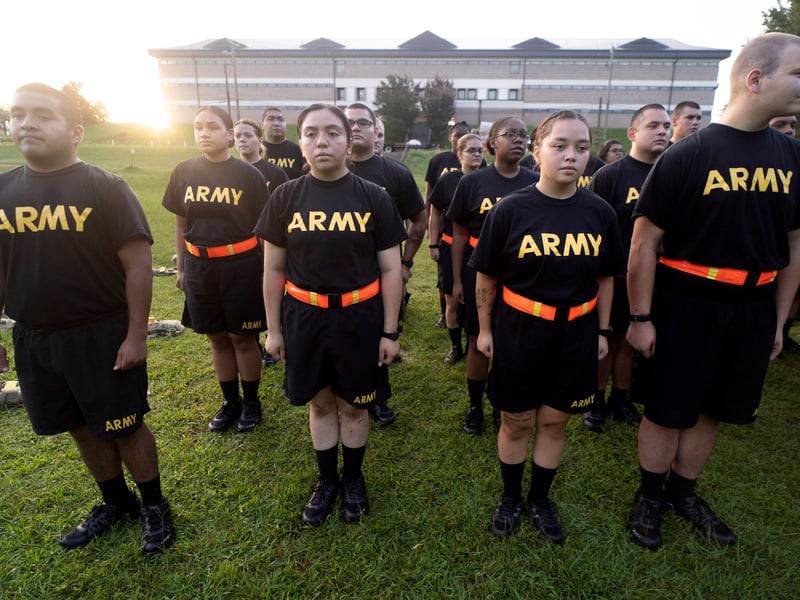
ALEXANDRIA, Va. (CN) — A federal judge ruled Tuesday that the military’s policy barring prospective service members who are HIV-positive, asymptomatic and undetectable from enlisting is unconstitutional.
“Defendant’s policies prohibiting the accession of asymptomatic HIV-positive individuals with undetectable viral loads into the military are irrational, arbitrary and capricious,” U.S. District Judge Leonie Brinkema, a Bill Clinton appointee, wrote in the opinion. “Even worse, they contribute to the ongoing stigma surrounding HIV-positive individuals while actively hampering the military’s own recruitment goals.”
The plaintiffs include a gay man, a transgender woman and a cisgender woman, along with the advocacy organization Minority Veterans of America. The collection successfully argued that the policy violates the equal protection component of the due process clause of the Fifth Amendment and the Administrative Procedure Act.
“We are pleased the court has eliminated the last discriminatory policy that barred people living with HIV from seeking enlistment or appointment to the military,” Gregory Nevins, senior counsel and Employment Fairness Project director for Lambda Legal, said in a statement. “Americans living with HIV no longer face categorical barriers to service careers — discharge, bans on commissioning, bans on deployment and finally bans on enlisting.”
The Department of Defense argued that regardless of successful treatment, the military must decline prospective service members who present what it calls known risks. These risks include medical, financial and foreign relations concerns.
Brinkema disagreed, finding no connection between the policies and a legitimate government interest. In the 38-page ruling, Brinkema found existing Fourth Circuit precedent affords the Pentagon little wiggle room in a science-based argument.
The Fourth Circuit held in a pair of cases filed in 2018 that the military’s policies prohibiting the commissioning and retention of asymptomatic HIV-positive service members with undetectable viral loads were irrational, arbitrary and capricious. The cases created an extensive factual record regarding the history and science of HIV.
The human immunodeficiency virus, which causes acquired immunodeficiency syndrome, or AIDS, became treatable in the U.S. in 1996 when antiretroviral therapy became widely available. Today, the majority of HIV-positive individuals are on a one-tablet regimen that has minimal side effects.
Within several months of receiving treatment, the individual’s viral load becomes suppressed, allowing the virus to reach undetectable levels. Undetectable means there are less than 50 virus copies per milliliter of blood. According to the Office of Infectious Disease and HIV/AIDS Policy, once undetectable, people who take their medicine as prescribed cannot transmit HIV to their HIV-negative partners through sex.
The Defense Department argued restricting the ability of individuals living with HIV to enlist is rationally related to ensuring that safe blood supplies are available for use in combat medical care. Brinkema answered that service members who test positive for HIV are ordered not to donate blood. In any case, Brinkema emphasized the Pentagon failed to provide a single example of a service member transmitting HIV through a blood transfusion.
“Thanks to modern science, there is no legitimate reason to continue denying people living with HIV the ability to enlist,” plaintiff attorney and legal & policy director for Minority Veterans of America Peter Perkowski said. “I am proud to have fought and won for these brave American patriots, and we urge the Department of Defense to immediately comply with the court’s decision.”
Brinkema appeared frustrated with the Dod’s repeating of arguments already resolved in the Fourth Circuit.
“Merely labeling an argument as new does not make it so,” Brinkema wrote.
Attorneys representing the Pentagon did not respond to requests for comment. One of the plaintiffs, 24-year-old Isiaha Wilkins, was admitted to the U.S. Military Academy Preparatory School and hopes to enroll at West Point one day.
“This is a victory not only for me but for other people living with HIV who want to serve,” Wilkins said. “As I’ve said before, giving up on my dream to serve my country was never an option. I am eager to apply to enlist in the Army without the threat of a crippling discriminatory policy.”
Subscribe to our free newsletters
Our weekly newsletter Closing Arguments offers the latest about ongoing trials, major litigation and rulings in courthouses around the U.S. and the world, while the monthly Under the Lights dishes the legal dirt from Hollywood, sports, Big Tech and the arts.