
 Search Articles


MINNEAPOLIS (CN) — A Minnesota federal judge delivered yet another blow to the Trump administration Thursday, bashing the government’s credibility and reinforcing an order protecting attorney access in a detention center.
In her 69-page-order, U.S. District Judge Nancy Brasel scolded the Trump administration’s disregard for the fundamental right to counsel for detainees, and for its inability to plan for the obvious impact of “Operation Metro Surge.”
“Due process is not a game of keep-away. ICE recognizes detainees’ right to access counsel in theory and written policy, but not in practice,” the Donald Trump appointee wrote, alluding to a consistent theme of inaccurate accounts by the government throughout the case’s existence.
“Instead, it has placed obstacle after obstacle in front of detainees and their attorneys, blocking communication between clients and counsel,” she added.
Brasel said the government has made considerable but inconsistent efforts to improve attorney access since a February restraining order was issued — leaving her with no choice but to grant a preliminary injunction.
While admitting a detention center’s safety and security needs affords the government some deference, Brasel said the back-and-forth nature and inconsistency with the government’s defense gutted its credibility.
“Sometimes defendants argue that they are not creating any obstacle. Other times they argue that the obstacle is necessary for operational or safety concerns,” she wrote. “Even under the most generous of standards, the restraints defendants have imposed on detainees’ access to counsel at Whipple are excessive and not rationally related to legitimate purposes.”
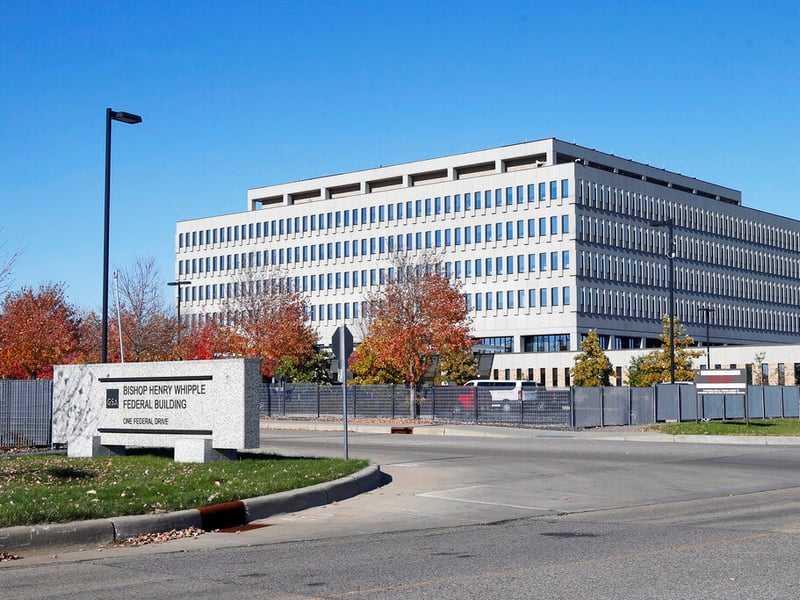
Brasel mandates all detainees held at the Bishop Henry Whipple Federal Building in Hennepin County, Minnesota, to be provided a signed order outlining their rights, including unlimited and free phone calls and attorney visits — and for the government to uphold those rights to a tee.
The case stems from an initial class action filed by The Advocates For Human Rights and a detainee who said immigration agents in Minnesota pressure detainees to waive their rights and restrict attorney access to the Whipple building.
Any phone calls allowed for detainees were short, often lasting mere minutes, and almost always closely monitored by federal agents, according to attorney testimony.
The Whipple building has long provided in-person attorney-client communication that Brasel and attorneys said abruptly stopped once Operation Metro Surge began in December — and suddenly returned after court intervention.
During evidentiary hearings on Mar. 19 and 20, advocates presented 20 attorney declarations, five attorney testimonies and two testimonies from detainees.
On the other hand, the government presented a single testimony from Deputy Field Office Director Tauria Rich that Brasel said carried little weight.
“Rich was on the witness stand for over two hours, and her testimony was quickly proven inconsistent at best and incredible at worst,” Brasel wrote. “Rich stated things in vague terms that were often contradicted by specific evidence or her own previous words.”
In one instance, Rich asserted the government has not detained individuals overnight at the Whipple Federal Building — a claim countered by the government’s own provided data and numerous detainee accounts.
While the Justice Department argued the case moot because of the enforcement operation’s supposed end, Brasel said there is no indication that the unlawful treatment could not be expected to recur, and no existing precedent for violating rights just because things get tough.
“The requested relief is not tied to the duration of Operation Metro Surge,” Brasel wrote. “The drawdown did not resolve the access to counsel issues at the heart of this lawsuit.”
Moreover, attorneys for the detainees said the difference with regards to attorney access at Whipple before and after Brasel’s restraining order is “night and day” — an impact used to urge continued court-intervention during March’s hearings.
Attorneys say they’re now able to meet with clients instead of being turned around in the parking lot, and the number of detainees being flown out of the state in secret has plummeted.
Before the restraining order, and even still in some cases, attorneys said they were forced to file habeas petitions for detainees they’ve never even spoken to by gaining as much information as they could from family members and the internet.
“I have to cobble together the information I need from a variety of sources. It makes it significantly more stressful,” attorney Kira Kelley said at the Mar. 19 hearing. “When I’m filing habeas petitions, I’m often scrambling to do them at all hours of the day and night, because I know if I don’t file a habeas petition in time that person could be transported to another state or out of the country.”
Brasel also granted the advocates’ motion for class certification.
The U.S. Department of Homeland Security did not immediately respond to a request for comment late Thursday.
Subscribe to our free newsletters
Our weekly newsletter Closing Arguments offers the latest about ongoing trials, major litigation and rulings in courthouses around the U.S. and the world, while the monthly Under the Lights dishes the legal dirt from Hollywood, sports, Big Tech and the arts.