
 Search Articles


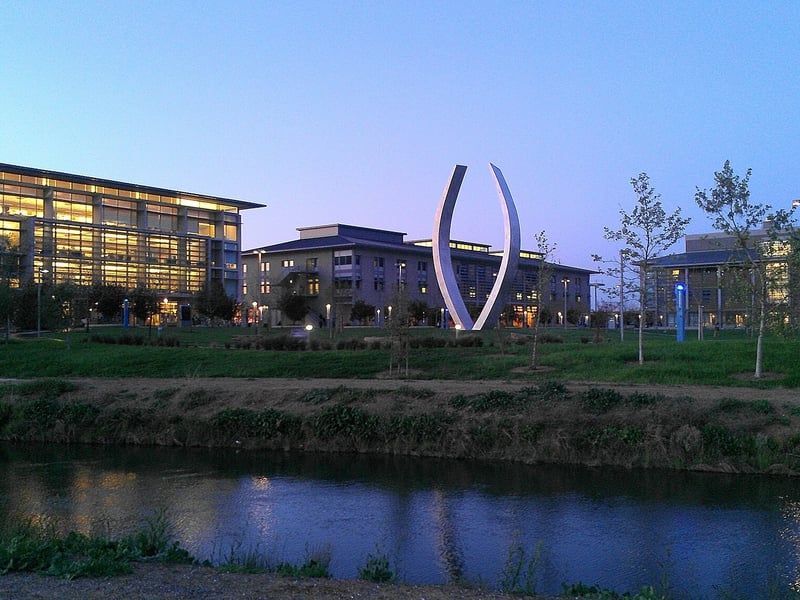
SACRAMENTO, Calif. (CN) — A California state report issued Thursday about the state of the University of California, Merced, calls the university a “cautionary tale,” pointing to its modest impact on educational and economic impacts in the area.
Additionally, the Central Valley university has regularly missed enrollment goals, despite reducing those targets at times.
The report from the state’s Legislative Analyst’s Office — “Merced at 20” — comes 20 years after the university’s founding. It’s meant to show how the institution has changed over the past two decades, examine whether its goals have been achieved and offer observations.
“Overall, the evidence is not strong that UC Merced had a major role in expanding UC enrollment capacity and improving regional educational and economic outcomes,” the analyst’s office wrote.
The state’s quickly growing population from 1965 to 2005 sparked interest in another University of California system campus. Meant to lift the region’s economic and educational levels, the university has a set of goals for its growth.
Initially, UC Merced saw quick growth in undergraduate students. It took only seven years for the undergraduate student body to reach 5,000. However, over the past five years enrollment has remained flat and hasn’t reached 10,000 in its almost 20-year history.
The university wants its graduate student body to achieve 10% of total enrollment. Last fall, it was 8.5%. That’s compared to 20% across the rest of the UC system.
UC Merced’s graduation rate also is below the system average — 52% compared to 74% for the 2019 cohort. Also, freshman and transfer students of all racial and ethnic groups perform worse at the university on average as compared to students in other system universities.
A reason for the lower performance could be linked to the student body’s composition. Research has shown that certain groups, like first-generation and low-income students, perform worse than their peers. UC Merced has a large number of those groups. Fewer student support staff could be another contributor.
Despite these negatives, the analyst’s office found that UC Merced has brought positive impacts in other areas. Those include leading more valley students to attend a UC in their area. Also, the university likely has led to increased employment in some sectors and more money for state government workers.
While the unemployment and poverty rates are higher in the region than the state average, employment growth has been higher. UC Merced itself has become a large regional employer. It also buys goods and services in the region on a large scale.
Pivoting to its observations, the analyst’s office wrote that it wants to inform and guide the Legislature when it works on education planning. It calls UC Merced a “cautionary tale,” as it shows new campuses will take longer than anticipated to meet their goals. UC Merced shows that college attendance and educational benchmarks in the area of a new campus likely won’t move the needle quicker than other parts of California.
“Moreover, the UC Merced experience suggests that new campuses are unlikely to generate pronounced economic effects in the near term beyond those that might have been achieved by other large state projects,” the analyst’s office wrote.
The analyst’s office also advised lawmakers that it takes longer than expected for new campuses to grow, that the higher costs of new campuses likely will linger for decades, and that new campuses probably can’t provide the same level of programs more established institutions can.
A significant amount of area economic activity is linked to UC Merced, though the analyst’s office questioned if any state agency with a large staff and new facility, like a courthouse, would bring similar benefits.
“Theoretically, a university campus might yield higher economic benefits related to research, but such benefits could take many decades to materialize,” the office wrote. “After 20 years, the Merced area is not seeing pronounced economic benefits due to its research activities.”
Subscribe to our free newsletters
Our weekly newsletter Closing Arguments offers the latest about ongoing trials, major litigation and rulings in courthouses around the U.S. and the world, while the monthly Under the Lights dishes the legal dirt from Hollywood, sports, Big Tech and the arts.