
 Search Articles


The state’s GOP-dominated Legislature refused to provide $1.9 billion in funding for the expansion after voters approved it in a ballot measure last year.
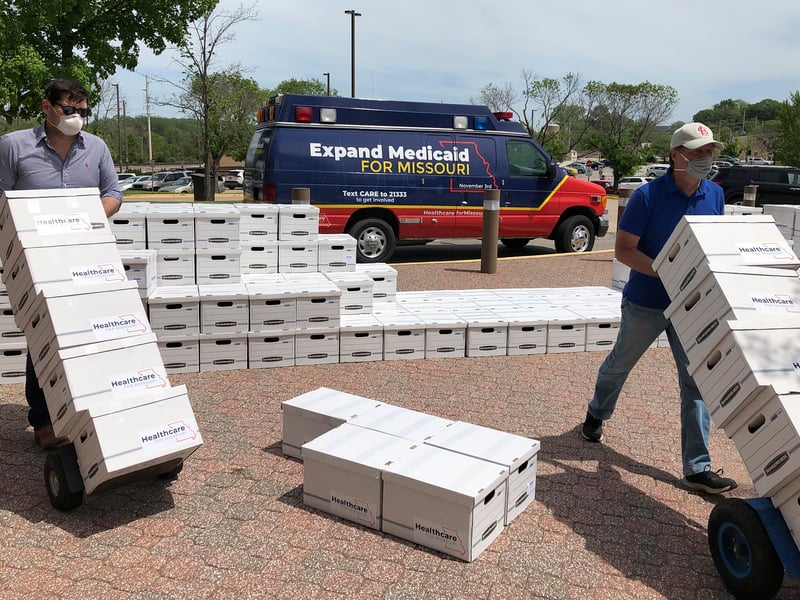
JEFFERSON CITY, Mo. (CN) — Missouri Governor Mike Parson on Thursday scrapped plans for voter-approved Medicaid expansion due to a lack of funding from state lawmakers.
The decision by Parson, a Republican, came less than a week after the state’s Republican-controlled Legislature declined to provide the $1.9 billion he had sought for it.
“Although I was never in support of MO HealthNet expansion, I always said that I would uphold the ballot amendment if it passed. The majority of Missouri voters supported it, and we included funds for the expansion in our budget proposal,” the governor said in a statement. “However, without a revenue source or funding authority from the General Assembly, we are unable to proceed with the expansion at this time and must withdraw our state plan amendments to ensure Missouri’s existing MO HealthNet program remains solvent.”
The expansion effort was supported by many health organizations, including the Missouri Hospital Association, which criticized Thursday’s decision.
“The General Assembly was always going to be a roll of the dice, but Governor Parson has been consistent since even before the measure was adopted last year that he would respect the will of the voters and clearly this rolls that back,” said Dave Dillon, a Missouri Hospital Association spokesman, in an interview.
In August 2020, voters approved a constitutional amendment expanding MO HealthNet eligibility to individuals whose income is between 100 and 138% of the federal poverty level.
But the Missouri Constitution prohibits ballot initiatives from appropriating funds without creating a revenue source.
Parson’s decision is in line with a June 2020 ruling by the Missouri Court of Appeals before the election, which found that the MO HealthNet expansion ballot initiative did not create a revenue source or direct the General Assembly to appropriate funds. The court noted that the General Assembly retained discretionary authority to on whether to fund MO HealthNet expansion if the ballot initiative passed.
Without funding from the Legislature, Parson’s statement said the executive branch lacks authority to proceed with MO HealthNet expansion at this time.
The governor told reporters Thursday that he expects a legal fight to ensue with supporters of the expansion.
Dillon said Parson’s action makes a legal challenge all but a certainty.
Dillon said the expansion could have made as many as 275,000 additional Missouri residents eligible. The lack of expansion threatens to increase the cost of uncompensated care to Missouri hospitals, which totaled $1.5 billion statewide in 2020.
“It means that individuals, who would otherwise be eligible, will not likely get care as efficiently as they would if they were in the system,” Dillon said. “What I mean by that is that the uninsured often use an emergency department as the first venue of care instead of last and that’s just the most expensive place you can get care. So, improving the efficiency of the health care system is a factor of getting people insured, so that they use the coverage correctly.”
He said there is false belief that taxpayers are now off the hook in paying for health coverage for those who would qualify for the expansion.
“When hospitals get paid less by the state or federal government for services, and Medicare or Medicaid are portions of the hospitals’ business, there’s only really one thing to do and that’s to shift the cost elsewhere,” he said. “So, we do a lot of that to the commercially insured.”
 Follow @joeharris_stl
Subscribe to our free newsletters
Our weekly newsletter Closing Arguments offers the latest about ongoing trials, major litigation and rulings in courthouses around the U.S. and the world, while the monthly Under the Lights dishes the legal dirt from Hollywood, sports, Big Tech and the arts.