Search Articles


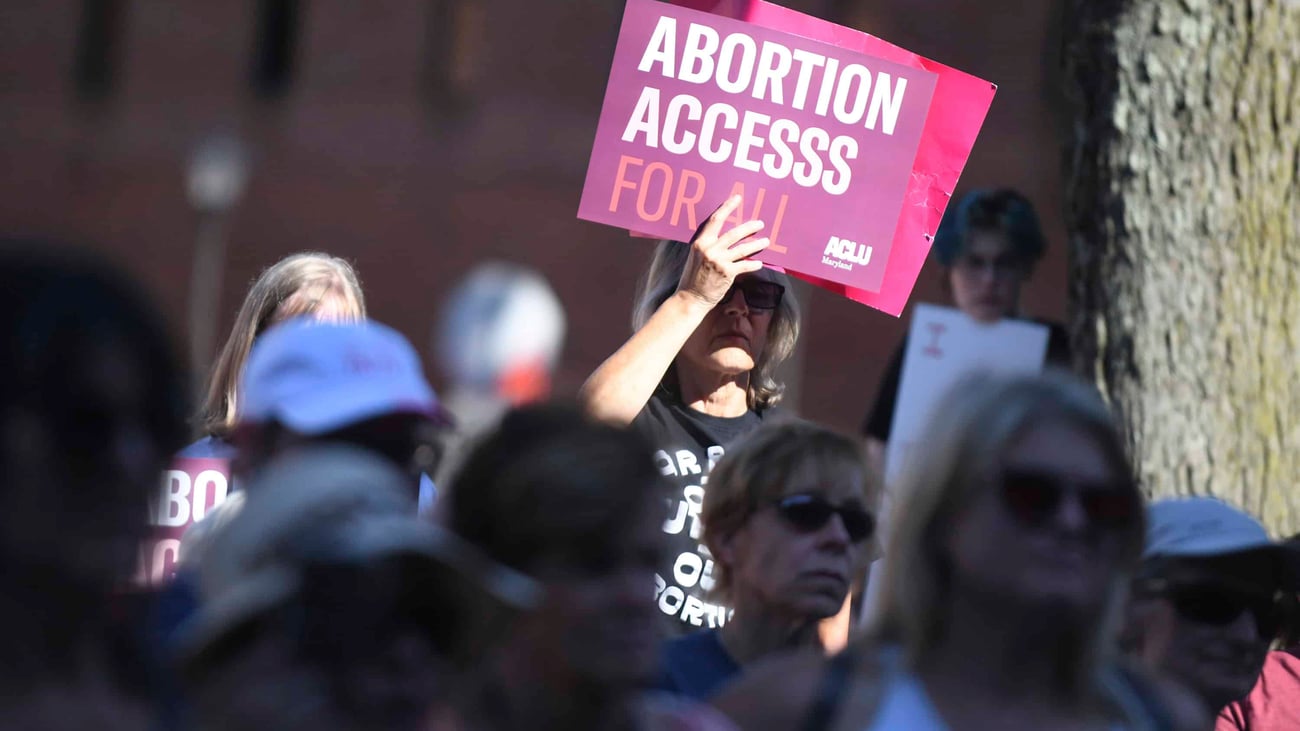
(CN) — The Montana Supreme Court delivered a victory for reproductive health advocates and abortion providers Tuesday, affirming a lower court’s injunction temporarily blocking a state law that imposed new licensing requirements on abortion clinics.
The justices ruled 4-2 that Minnesota House Bill 937, which required abortion clinics in the state to be licensed by the Department of Health and Human Services to offer abortion services legally, likely violated Montana’s equal protection clause.
“The state still has the opportunity to develop its arguments fully, but at this time, we conclude that the plaintiffs are likely to succeed on their equal protection claim on the basis that HB 937 and the rules improperly infringe on the fundamental right to privacy of women seeking abortion care,” Justice Laurie McKinnon wrote for the majority.
The justices also found the plaintiffs’ patients would suffer irreparable harm if the law were allowed to take effect because they would likely be prevented from accessing abortion care. Under HB 937, abortion clinics would have to comply with several new regulations, including rules on sanitation, staff, the layout of the clinic and inspection to secure a license from DHHS, or be forced to stop offering abortion services.
“As the district court explained, this outcome will happen by operation of law as soon as HB 937 and the rules become enforceable: It is not merely speculative,” McKinnon wrote.
In a joint statement, plaintiff Helen Weems, a nurse practitioner at All Families Healthcare, one of the three abortion clinics in Montana, celebrated the ruling.
“Today’s ruling makes me hopeful for Montana, our clinic, and my patients in the Flathead Valley and beyond,” she said. “We are the only abortion provider in Northwest Montana, and we are surrounded by states that ban abortion. I would have been forced to close All Families Healthcare if these restrictions took effect, leaving my patients to travel hundreds of miles or forgo care altogether.”
Hillary Schneller, senior counsel at the Center for Reproductive Rights, who represents the plaintiffs, said that “the court was right to keep the restrictions blocked.”
“There is no medical reason for abortion providers to be singled out and saddled with these extra medically unnecessary requirements. Montana lawmakers are simply trying everything to end abortion access in the state,” she said.
Representatives for the Montana Department of Justice did not immediately respond to a request for comment.
The new requirements only applied to “abortion clinics” and not “miscarriage-only treatment providers,” which the plaintiffs argued, and the court agreed, provide identical medications and procedures as abortion clinics.
“If there is something this court has been absolutist about over the decades, it is the appropriate protection of our citizens’ constitutional right to privacy and to make decisions that are inherently private without government interference, regardless of our personal feelings or reservations about those decisions. That is a badge of honor I will proudly wear,” Justice James Jeremiah Shea wrote in concurrence.
Writing for the dissent, Justice Jim Rice called the lower court’s ruling “overbroad and incorrect,” saying the decision allows abortion providers to perform services without the usual regulation from the state.
Rice noted HB 937 does not prohibit professionals from providing abortion services, but rather regulates facilities by imposing licensure requirements, including “basic health safety regulations.”
“The court is simply constitutionalizing the providers’ policy argument that they prefer no further regulation,” he said.
Justices Katherine M. Bidegaray and Ingrid Gustafson joined the majority opinion. Chief Justice Cory J. Swanson joined the dissent.
The case will proceed to trial in Lewis and Clark County District Court.
House Bill 937 was passed by the Montana Legislature and signed into law by Republican Governor Greg Gianforte in May 2023.
The plaintiffs, abortion providers All Families Health Care and Blue Mountain Clinic, and Weems, filed a lawsuit on behalf of themselves, their employees and their patients on Sept. 1, 2023, asking the court for an injunction preventing the law from going into effect on Oct. 1, 2023.
On Sept. 27, 2023, Judge Christopher Abbott issued an injunction temporarily blocking the enforcement of HB 937. Less than a month later, the judge issued a preliminary injunction, finding the plaintiffs were likely to succeed in showing the law violated their and their patients’ rights to equal protection under Minnesota law by “treating abortion providers differently than health care professionals who prescribe the same medication and perform the same procedures for purposes other than abortion.”
In November 2024, Montana voters approved a ballot measure enshrining the right to abortion in the state constitution by a 58% to 42% margin.
The state appealed Abbott’s order in January 2025, calling the injunction “grossly overbroad” and arguing that the lower court created a new “fundamental right” for abortion providers to provide services free from any additional regulation.
 Follow @mhattridge_
Subscribe to our free newsletters
Our weekly newsletter Closing Arguments offers the latest about ongoing trials, major litigation and rulings in courthouses around the U.S. and the world, while the monthly Under the Lights dishes the legal dirt from Hollywood, sports, Big Tech and the arts.