Search Articles


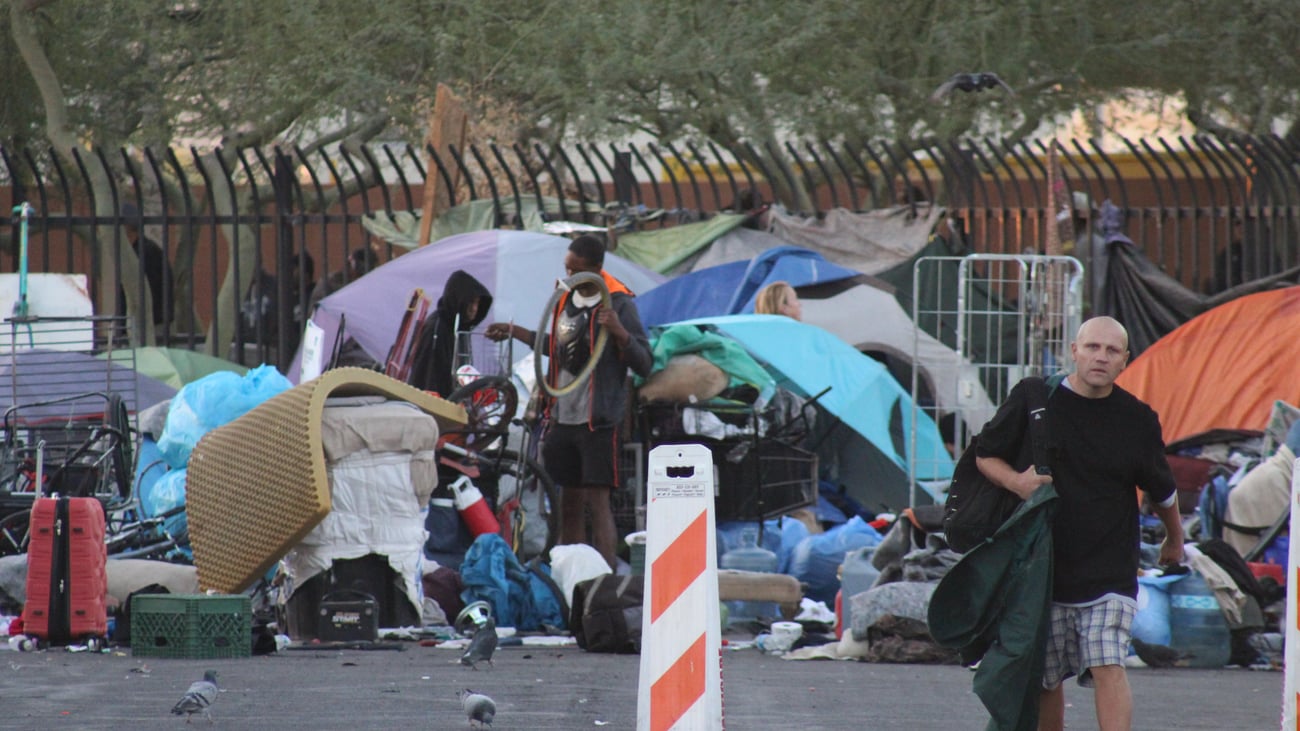
(CN) — Nearly half the states in the union took the Trump administration to court Tuesday in another challenge to the Department of Housing and Urban Development’s attempts to shift funding for homeless individuals away from permanent housing.
The 24-state coalition, led by attorneys general from Washington state, New York and Rhode Island, argues the Department of Housing and Urban Development’s attempted shift away from the “Housing First” model will dismantle safety nets and trigger a spike in nationwide homelessness.
“Instead of investing in programs that help people stay safe and housed, the Trump administration has embraced policies that risk trapping people in poverty and punishing them for being poor,” the states say in the complaint.
The 44-page complaint, filed in Rhode Island federal court, revolves around Administrative Procedure Act claims and the federal government’s purported changes to its flagship homelessness program, the Continuum of Care.
Every year, the Department of Housing and Urban Development (HUD) distributes billions of dollars through the Continuum of Care to state, local and nonprofit providers to deliver vital housing services to those facing homelessness. After its introduction in 1994, Congress structured the program in 2009 to offer long-term stability for these providers, directing the majority of its funding toward permanent housing, rental assistance and supportive service projects.
After more than two decades of operating under the Housing First model with a focus on permanent housing, the Trump administration changed course in favor of shorter-term transitional models.
Many states in the coalition already sued the federal government in November 2025, challenging its funding notice for that year that would have blocked funding for many Continuum of Care-funded projects.
Most notably, the notice sought to cap Continuum of Care funds for permanent housing projects at 30%, down from nearly 90% nationwide for funds set to expire this year.
A court order permanently enjoined enforcement of the federal government’s notice, and a later act passed by Congress requiring HUD to renew existing projects led to an eventual summary judgment ruling in favor of the states.
Despite the defeat, HUD published a new notice last month to reimplement a permanent housing cap at around 68% of Continuum of Care funds rather than the previous shock of a 30% cap — though states say it’s still too sharp a decline.
While the 2025 notice attempted to reverse existing policy through an arbitrary cap on permanent housing funding, this year’s notice purports to create a $1.3 billion set aside of the $4 billion available purely for projects relating to transitional housing and supportive service, the states say in the complaint.
“The ‘Housing First’ experiment failed Americans by warehousing the vulnerable without results,” HUD Secretary Scott Turner said in a June press release. “This ideology promised to end homelessness. Instead, billions of taxpayer dollars were spent while homelessness increased to record levels. Housing alone will not solve a crisis driven by addiction and mental illness.”
The Department of Housing and Urban Development recorded around 770,000 unhoused individuals nationwide in 2024, a record-setting number.
The notice, according to HUD, requires Continuum of Care (CoC) recipients to “scrutinize and prioritize” the most successful projects, as opposed to automatically renewing funding to “failed providers,” in an attempt to root out waste and abuse.
Housing First, which prioritizes permanent, stable housing without preconditions, has been the forward policy of HUD for over 20 years, and the model is largely recognized as one of the most effective means at addressing chronic homelessness.
National Alliance to End Homelessness’ estimates outlined in the complaint suggest the purported shift in funding will put 97,000 Continuum of Care-funded permanent housing residents at risk of losing their housing — a number on the low-end, according to the alliance.
Nearly 24,000 individuals would lose their housing in New York and California alone, according to that same data.
“The Trump administration is once again trying to undermine HUD’s longstanding Housing First approach that has kept and continues to keep our most vulnerable residents housed,” California Attorney General Rob Bonta said in a press release. “Congress and the courts have made clear that funding for permanent supportive housing must be protected. We will continue fighting to ensure that those who have secured housing stability do not lose it.”
The states claim HUD’s proposed funding conditions are designed to punish applicants who adhere to the widely adopted Housing First model.
“A large number of CoC-funded permanent housing projects will lose their funding or see it reduced, resulting in tens of thousands of formerly homeless individuals and families being evicted back to the streets, with states and local governments left to pick up the pieces,” the states say in the complaint.
The coalition argues the Trump administration’s actions are baseless and in direct violation of the 1987 Congress-passed McKinney-Vento Homeless Assistance Act, which directs HUD to prioritize renewal of existing projects to ensure housing stability.
By capping permanent housing at 68%, the states argue it’s impossible for HUD to meet congressional mandates requiring contract renewals for all projects within program requirements and standards that have a clear, demonstrated need.
Continuum of Care providers often operate permanent housing programs with long-term leases and staffing models dependent on annual funding renewal, and “typically have little capacity” to replace that funding, according to the states.
The coalition also worries about the potential snowball effect a loss of permanent housing funding would have, noting it would likely shift significant costs to other public services for members of the unhoused community suffering from behavioral health needs and other challenges.
“This escalation places new burdens on emergency medical systems, state and federally funded behavioral-health providers, long-term inpatient facilities, local jails, and child-welfare programs serving unhoused families,” the states say in the complaint.
In addition to Washington, New York and Rhode Island, the coalition includes attorneys general from Arizona, California, Colorado, Connecticut, Delaware, the District of Columbia, Illinois, Maine, Maryland, Massachusetts, Michigan, Minnesota, New Jersey, New Mexico, Oregon, Vermont, Virginia and Wisconsin, and the governors of Kentucky and Pennsylvania.
“I cannot sit by and let the Trump administration violate the law and jeopardize housing funding for over 2,000 of our neighbors who are struggling financially,” Minnesota Attorney General Keith Ellison said in a press release. “The Trump administration’s plan to cut funding for evidence-based strategies to reduce homelessness is unlawful and cruel, so I’m challenging it in court. Trump will not evict Minnesotans on my watch.”
The Department of Housing and Urban Development did not respond to an initial request for comment.
Subscribe to our free newsletters
Our weekly newsletter Closing Arguments offers the latest about ongoing trials, major litigation and rulings in courthouses around the U.S. and the world, while the monthly Under the Lights dishes the legal dirt from Hollywood, sports, Big Tech and the arts.