
 Search Articles


MANHATTAN (CN) — Lawyers for the National Collegiate Athletics Association and top college conferences met in court on Monday to convince a federal judge to drop a sweeping antitrust case brought by prolific college basketball players.
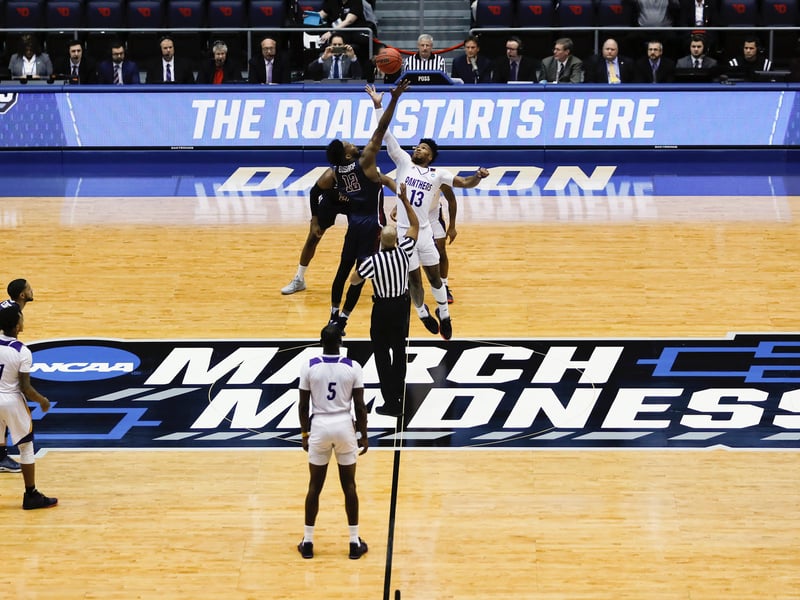
Former Kansas Jayhawk Mario Chalmers and 15 other former collegiate players filed the complaintin Manhattan federal court last year, claiming that the NCAA is unjustly enriching itself by continuously using the athletes’ name, image and likeness in promotional material for the annual March Madness basketball tournament.
In their lawsuit, the plaintiffs homed in on Chalmers’ game-tying three-pointer in the 2008 national championship game against Memphis, widely considered to be one of the most iconic moments in college basketball. They claim that the NCAA continues to profit from the prolific shot years later through online highlight videos and March Madness ads — without Chalmers seeing a cent for his efforts.
Chalmers is hardly the only player whose footage is used in this way, according to the complaint. The other plaintiffs, who include fellow Jayhawk Sherron Collins and University of Arizona alum Jason Terry, say they’re also entitled to backpay for the NCAA’s use of their highlights.
But lawyers for the NCAA argued Monday that Chalmers and his fellow plaintiffs haven’t been college players for years — far longer than the four-year statute of limitations that exists for violations of federal antitrust law. As such, the case should not be allowed to proceed.
“The lawsuit in this case is filed by student athletes who, by definition, completed more than eight years ago … often as far back as 20 or 30 years ago,” Rakesh Kilaru, an antitrust litigator from the Washington-based firm Wilkinson Stekloff, argued Monday to a federal judge.
Kilaru said the plaintiffs have not been injured by the NCAA’s supposedly illegal conduct since their college basketball days. That would mean that their standing to sue has dried up.
Elliot Abrams, a partner at the North Carolina-based firm Cheshire Parker Schneider representing Chalmers and the plaintiffs, sees things differently.
“This is a monopoly,” Abrams told the court Monday. “They obtained a monopoly power illegally, and they continue to flex that monopoly power.”
Abrams’ argument was that his clients are continuing to be harmed by the NCAA’s use of their footage to this day. Every time the organization or one of its conferences posts a highlight video online, there’s revenue on the table that Chalmers and the plaintiffs could be seeing, Abrams said. Instead, that money is going straight into the NCAA’s pocket.
“You have to watch an ad before you watch our people perform,” Abrams said of highlight videos posted to the NCAA’s website. “The NCAA is keeping all of the money made.”
U.S. District Judge Paul Engelmayer, a Barack Obama appointee, didn’t immediately issue a ruling following Monday’s arguments. But he did press Abrams on the timeliness of the claims, acknowledging that the plaintiffs lost the property rights to the scrutinized footage “long, long ago” when they signed their college contracts, and could have brought the suit much sooner than 2024.
Engelmayer also implied that past litigation could hurt the plaintiffs, as he noted that “all the named plaintiffs” in this action were also class members of O’Bannon v. NCAA — a U.S. Supreme Court class action that similarly challenged the NCAA’s use of athletes’ likeness for commercial gain.
Kilaru argued that Chalmers’ case relitigates many of the same issues already decided in O’Bannon , an argument to which Engelmayer appeared sympathetic. O’Bannon could also serve to help the plaintiffs, however, as its presiding judge found that there could be a right of publicity in a broadcast.
Chalmers’ claim is one of several lawsuits to crop up in recent years against the NCAA amid a shifting landscape for the likeness rights for college athletes. In 2021, the NCAA implemented a groundbreaking policy to allow student athletes to earn endorsement money using their own likeness for the first time in the organization’s history.
 Follow @Uebey
 Follow @uebey.bsky.social
Subscribe to our free newsletters
Our weekly newsletter Closing Arguments offers the latest about ongoing trials, major litigation and rulings in courthouses around the U.S. and the world, while the monthly Under the Lights dishes the legal dirt from Hollywood, sports, Big Tech and the arts.