
 Search Articles


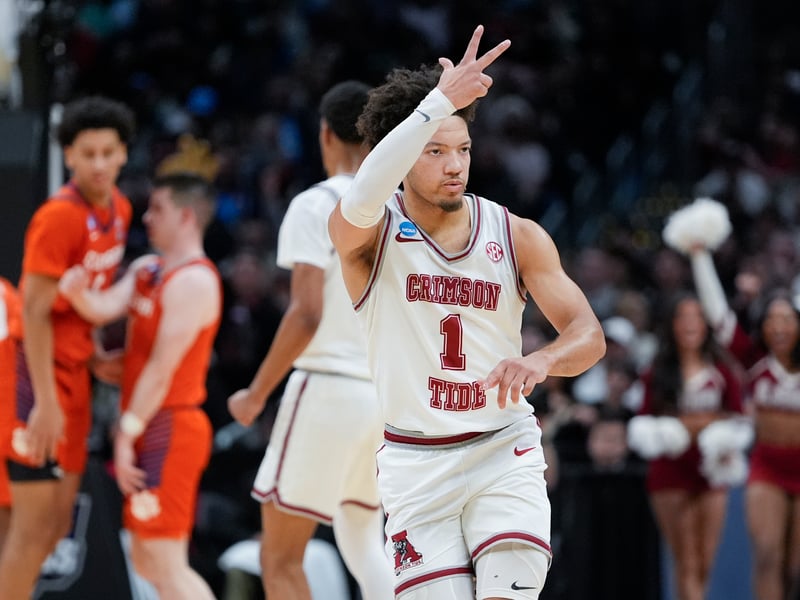
(CN) — An Alabama judge who allowed a former professional basketball player to return to Tuscaloosa to play for the Crimson Tide last week is the target of a motion for recusal, as attorneys for the defendant National Collegiate Athletic Association claim a combination of media scrutiny and perceived ties to the University of Alabama’s athletic culture has created an “appearance of impropriety” that could undermine confidence in the proceedings.
On Jan. 21, Presiding Tuscaloosa County Circuit Judge James “Jim” H. Roberts granted a temporary restraining order against the NCAA, allowing Alabama center Charles Bediako to return from a three-year absence and rejoin the team. Bediako, who is 7-feet tall and 23 years old, initially enrolled at Alabama in 2021 and played two seasons before declaring for the 2023 NBA Draft.
He went undrafted and later signed a two-way contract that led to limited G League play over parts of two seasons in a career that has been hampered by injuries. But earlier this year, he reenrolled at Alabama and asked the NCAA, through the university, to reinstate his eligibility. The NCAA denied that request, prompting Bediako’s lawsuit.
The case was assigned to Roberts, and he issued his order the same day. The TRO allowed Bediako to immediately return to play, pending a hearing on his eligibility. Bediako debuted on the team Friday night in a loss to SEC rival Tennessee, in which he scored 13 points.
Collegiate sports media subsequently raised conflict of interest concerns, reporting that Roberts and his wife, Mary Turner Roberts, are listed as active donors to the University of Alabama’s athletic department via the Crimson Tide Foundation website, with lifetime contributions in the $100,000–$249,999 range. Mary Turner Roberts is also a lawyer who, separately, is defending former Alabama player Darius Miles in a high-profile capital murder case.
The hearing on Bediako’s eligibility, initially scheduled for Tuesday morning, was postponed due to winter weather, while the TRO was extended 10 days. Bediako is expected to play again against SEC rival Missouri Tuesday night.
In its motion for recusal Monday evening, the NCAA stressed that it was not accusing Roberts of actual bias or misconduct. Instead, it claims the combination of media coverage, public commentary and the judge’s publicly reported financial and familial connections to the University of Alabama athletics program risk undermining confidence in the court’s impartiality.
“Proceeding in this court has created an impermissible appearance of impropriety,” the NCAA wrote, pointing to national and local news articles that questioned whether Bediako had received a “home-court advantage” by filing suit in Tuscaloosa. The filing cited reports members of the judge’s family had donated significant sums to Alabama athletics and that his wife had represented a former Alabama basketball player in an unrelated criminal case.
The NCAA argued that, under Alabama’s Canons of Judicial Ethics, recusal is required not only when actual bias exists but also when a reasonable member of the public could question a judge’s impartiality. The association emphasized the stakes of the case — which could reshape the boundary between professional and collegiate basketball — make public confidence in the proceedings particularly critical.
Bediako’s attorneys pushed back sharply on the premise of the motion in a response filed Tuesday, describing the NCAA’s arguments as resting largely on online speculation and anonymous social media commentary rather than any legally meaningful conflict of interest.
“The University of Alabama is not a party to this lawsuit,” Bediako’s lawyers wrote, adding that the NCAA itself acknowledged the court has no financial relationship with Bediako and no direct stake in the outcome. They argued that ties to a large public university, including alumni status or athletic donations, are commonplace among Alabama judges and cannot alone justify recusal.
The response noted that much of the NCAA’s motion relied on commentary from Reddit users and sports media coverage, which Bediako’s attorneys characterized as an improper basis for disqualifying a judge. Still, the filing concluded by stating that Bediako does not oppose reassignment of the case despite expressing full confidence in the judge’s fairness.
“Whatever the ultimate outcome may be,” the response said, “someone, somewhere will allege impropriety in the result.”
Bediako’s lawsuit challenges the NCAA’s enforcement of its five-year eligibility rule and related bylaws governing professional participation, arguing the association is arbitrarily counting his G League seasons against his eligibility while granting waivers to similarly situated players.
Bediako is challenging the NCAA’s application of its five-year eligibility clock and related “intercollegiate competition” bylaws as applied to athletes who leave college, play professionally in the U.S., and then seek to return.
In public comments, Alabama Head Coach Nate Oats has described the NCAA’s current eligibility system as “clearly broken.” He argued that because many teams already have former professionals on their rosters, he didn’t feel right telling Bediako he couldn’t play when the court said he could. In a news conference Monday previewing the Missouri game, Oates expressed support for Bediako and stressed the player had done nothing wrong.
“Charles and his agent and his attorneys have seen what has gone on in the landscape of college basketball and all the former pros that are playing,” he said. “Just about everybody we play has got one. And they’ve seen who the NCAA has allowed to be eligible and don’t see any reason why Charles wouldn’t be eligible. … They came to me and wanted to get him eligible, and I agreed with their reasoning.”
Alabama currently has a 13-6 record and is ranked 23rd in the AP poll. Oates has led the team to four consecutive NCAA tournament qualifications, reaching the Final Four in 2024.
The hearing on Bediako’s eligibility has not yet been rescheduled.
 Follow @gabetynes
Subscribe to our free newsletters
Our weekly newsletter Closing Arguments offers the latest about ongoing trials, major litigation and rulings in courthouses around the U.S. and the world, while the monthly Under the Lights dishes the legal dirt from Hollywood, sports, Big Tech and the arts.