Search Articles


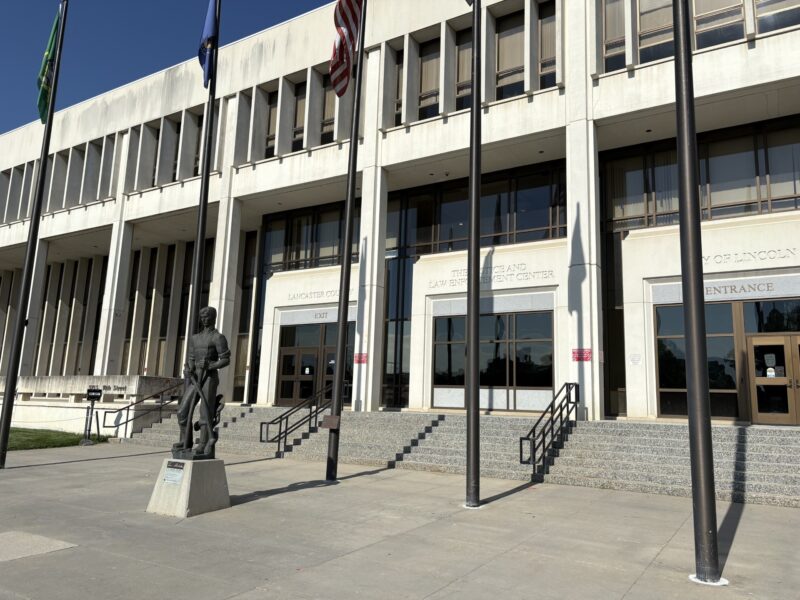
LINCOLN, Neb. (CN) — In a case of four gunowners suing the city of Lincoln, the key issue Thursday was whether the city’s authority to regulate firearms on its private property extends to parks and trails.
The city says it has the authority to ban guns from those spaces, arguing in the downtown Lincoln courtroom of Lancaster County District Court Judge Andrew R. Jacobsen during a hearing on dueling motions for summary judgment.
The gunowners say a 2023 “Constitutional Carry” bill passed by the Nebraska Legislature means it does not.
“The true owner of the city parks, sidewalks and streets is the public," said Ryan Morrison, senior counsel for the Liberty Justice Center, representing the plaintiffs. “And because defendants are not the true owners of city parks, sidewalks and streets, they lack the same proprietary authority as a private property owner.”
Yohance Christie, arguing for the city, said: “The intent of the Legislature was not to take away cities’ ability to control their own property.”
In 2023, the Nebraska Legislature passed Legislative Bill 77, which legalized the concealed carry of firearms without a permit. The measure was spearheaded by then-state Senator Tom Brewer, a Republican and prominent gun rights advocate. It passed on a nearly party-line 33-14 vote in the officially nonpartisan GOP-dominated body. Nebraska is the only state with a unicameral Legislature.
The mayors of Nebraska’s two largest cities, Lincoln and Omaha, responded by banning weapons across parks, municipal buildings and trails.
The Nebraska Firearms Owners Association sued both, arguing the local ordinances were superseded by state law. In February 2024, Jacobsen dismissed the Lincoln case, finding the plaintiffs had been unable to prove they had or will suffer an injury due to the ordinance. He did not rule on the merits.
In the Omaha case, a different judge issued a temporary injunction blocking the law that remains in effect.
The Lincoln case ended up back in Jacobsen’s courtroom following a ruling by the Nebraska Supreme Court last August that the gunowners who sued Lincoln with the Firearms Association have standing. However, the Firearms Association did not and is no longer a plaintiff.
The four gunowners haven’t been arrested. They have said they no longer visit city parks and trails as they once frequently did, for fear of criminal prosecution. Three of them said they carry firearms “100% of the time,” while the fourth said he “usually” does.
The city has pointed out in court documents that when the matter was debated in the Nebraska Legislature, Brewer himself said, in response to a Democratic lawmaker, that owners — including cities — could regulate the presence of firearms on their own property, including the Pinnacle Bank Arena in Lincoln.
Morrison said in Thursday’s hearing there was a big difference between a building and a sidewalk, park or trail. Those places, he said, citing caselaw from both the Nebraska and United States Supreme Courts, are held in “public trust.”
While in some cases the government is a private property owner, rights like search and seizure and free speech apply differently in the open.
Christie said the executive order on city parks and trails was a regulation, not a law. In court documents, the city has argued its policy does not create a criminal offense. It says violators are trespassing if they refuse to leave city property.
“There are no criminal penalties for violating the executive order," Christie said. “It is simply a policy.”
The gunowners also believe Lincoln Mayor Leirion Gaylor Baird did not have the authority to issue an executive order in the matter. Instead, it was an issue for the City Council. “There is no provision in the city charter that allows the mayor to make law," Morrison said.
Another key issue Thursday was the city’s ban on multiburst trigger activators, attachments that enable guns to fire two or more shots with one squeeze. The city believes it has the right to regulate gun components. The four plaintiffs argue since these devices are essential components for some firearms, banning the parts is equivalent to banning the firearms.
Jacobsen asked the attorneys to provide proposed orders. He did not indicate when he would issue his own.
 Follow @nelson_aj
Subscribe to our free newsletters
Our weekly newsletter Closing Arguments offers the latest about ongoing trials, major litigation and rulings in courthouses around the U.S. and the world, while the monthly Under the Lights dishes the legal dirt from Hollywood, sports, Big Tech and the arts.