
 Search Articles


OMAHA, Neb. (CN) — A federal judge on Thursday sentenced a Chinese man who pleaded guilty to photographing sensitive U.S. military aircraft at a Nebraska Air Force base to time served, rejecting the prosecutors’ request for a harsher sentence.
Authorities arrested Tianrui Liang, 21, at John F. Kennedy International Airport in April as he attempted to leave the country. The case drew national attention after being highlighted by the U.S. Department of Justice.
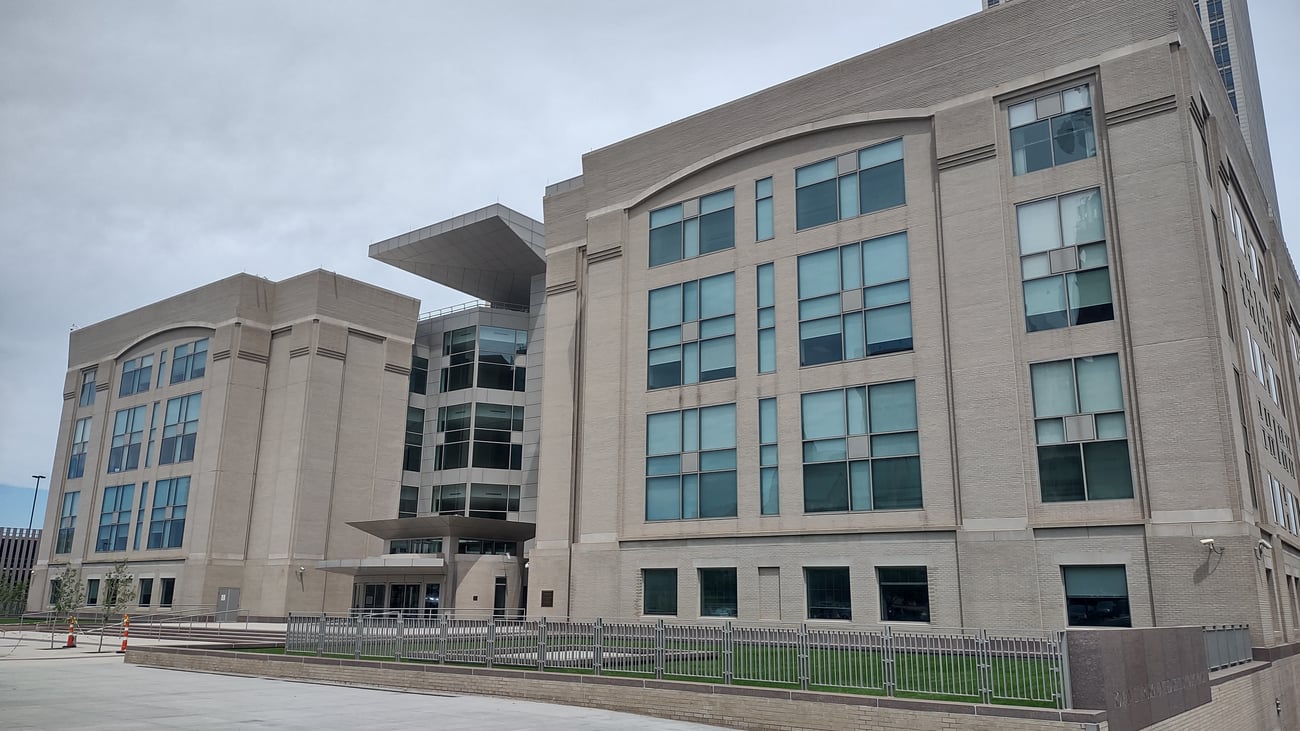
At a sentencing hearing Thursday morning at the Roman L. Hruska Federal Courthouse, U.S. Magistrate Judge Michael D. Nelson acknowledged lingering questions about Liang’s travels and aspects of his account that investigators were unable to fully explain.
“It just seems incredibly odd, but we have had some time pass here, and no doubt the government has exhausted its efforts to determine if there is any there there,” Nelson said before imposing the sentence.
Nelson noted that despite the seriousness of the conduct, Liang pleaded guilty to a misdemeanor offense. The U.S. Probation Office also recommended a time-served sentence.
The judge declined to waive a one-year term of supervised release despite arguments from Liang’s attorney, Jeffrey L. Thomas of the Federal Public Defender’s Office in Omaha,**** that such conditions would be impractical because Liang intends to return to Scotland. Liang studies aeronautical engineering there at the University of Glasgow.
Nelson said that the conditions would remain in place should Liang remain in or later return to the United States.
While Nelson ordered Liang released, his immediate future remained unclear. Both Thomas and Assistant U.S. Attorney Matt E. Lierman declined to answer questions after the hearing.
Liang pleaded guilty in May to violating a federal law prohibiting the photographing or sketching of defense installations. The offense is a Class A misdemeanor, the most serious misdemeanor category under federal law. The case was investigated by the counterintelligence squad of the FBI’s Omaha field office.
According to the criminal complaint, a witness reported seeing a man photographing aircraft from outside Offutt Air Force Base, south of Omaha. The installation houses the headquarters of U.S. Strategic Command and some of the nation’s most sensitive command-and-control aircraft.
Base security personnel and Air Force investigators found Liang carrying a camera equipped with a telephoto lens. After determining he held a Chinese passport, they contacted the FBI.
Authorities said Liang admitted photographing military aircraft at Offutt, including an RC-135 and E-4B. Investigators also said he had previously visited a military installation near Rapid City, South Dakota, hoping to photograph B-1 bombers, and planned to visit another base near Oklahoma City.
After interviewing Liang, the FBI searched his phone and camera with his consent. Investigators said they found multiple photographs of the Offutt flightline.
Thomas argued Thursday that prosecutors’ request for an upward variance relied largely on unanswered questions rather than evidence.
“That’s not valid. You can’t just say, ‘maybe he has more of a record,’” Thomas told Nelson. “There are channels through which that can be checked.”
Thomas characterized his client as “an airplane nerd who took his nerdiness over the legal line” by photographing aircraft and facilities visible from a public roadway.
“This young man, who you will be sentencing in a moment, is not an adversary government,” Thomas told Nelson. “He is a citizen of that government. Nothing has shown that he is an agent of that government. He is not.”
Liang, whose voice cracked as he addressed the court, apologized for his actions.
“I feel very ashamed,” he said. “I am very, very sorry. I really respect the people who work in aviation… I don’t want to hurt anybody.”
Lierman emphasized that Liang admitted knowing his conduct was unlawful.
“It is a national security case and the government should take it seriously,” Lierman said. “A great deal of damage can be done by behavior of this issue.”
In announcing the sentence, Nelson observed that Congress had classified the offense as a misdemeanor and had not chosen to elevate it to a felony. He also noted that the conviction itself could affect Liang’s studies and future ability to enter the United States.
“I think that provides deterrence itself for defendant,” Nelson said. “A sentence of time served is appropriate in this case.”
Liang faced up to one year in prison and a $100,000 fine.
 Follow @nelson_aj
Subscribe to our free newsletters
Our weekly newsletter Closing Arguments offers the latest about ongoing trials, major litigation and rulings in courthouses around the U.S. and the world, while the monthly Under the Lights dishes the legal dirt from Hollywood, sports, Big Tech and the arts.
Additional Reads


 Finnish Parliament backs lifting ban on nuclear weapons June 17, 2026