
 Search Articles


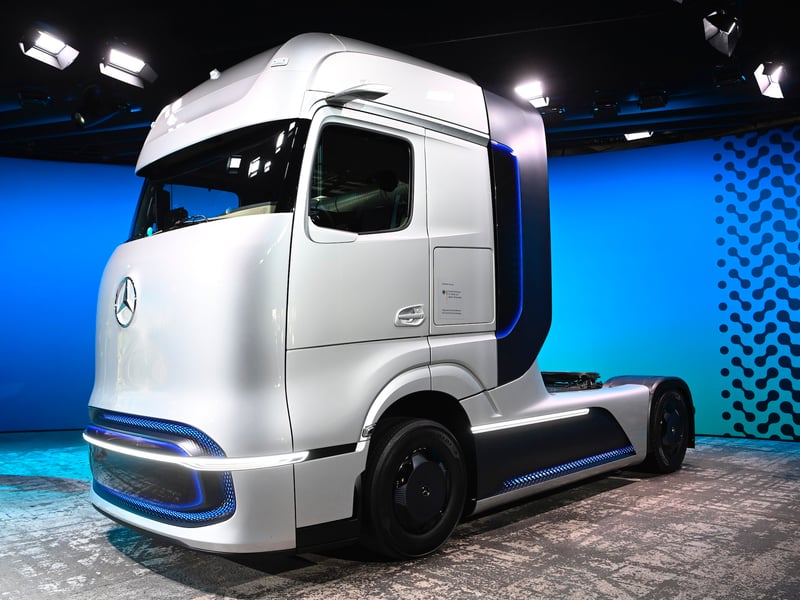
(CN) — Four truck manufacturers in the Cornhusker State agreed Monday in court that a California electric truck mandate has broken down, leading Nebraska officials to signal victory.
In a joint stipulation for dismissal, the truck manufactures and Nebraska’s attorney general, along with two trade associations, Energy Marketers of America and Renewable Fuels Nebraska, agreed that the California-based “Clean Truck Partnership” is void and unenforceable.
The plaintiffs had accused the leading truck manufacturers and a trade association of colluding to limit availability of semitrucks with internal combustion engines and raise their prices, while favoring trucks with electric engines.
The link to California lay in the Golden State’s zero-emission goals. Nebraska Attorney General Mike Hilgers argued the manufacturers agreed to withhold opposition to electric-truck mandates and drop the construction of diesel-powered semitrucks in the “Clean Truck Partnership.”
“The [partnership] requires [original equipment manufacturers] to comply with these regulations even if they are found to be unlawful in litigation,” attorneys for the Nebraska Department of Justice said in their Nebraska district court suit. “The [partnership] also requires the [original equipment manufacturers] to comply with these regulations outside of California — in every state that has or ‘will’ adopt them — again, even if they are ultimately found to be unlawful.”
The speed bump came when President Donald Trump issued resolutions of disapproval of the U.S. Environmental Protection Agency’s waivers of preemption for standards adopted by the California Air Resources Board.
Those waivers, dozens of which have been granted to California over decades, allow the state to set its own air standards without federal oversight, as the Golden State has experience in controlling vehicle emissions and air pollution.
California’s governor responded by issuing an executive order reaffirming the state’s commitment to zero-emission vehicles and keeping its original goal of having all in-state sales of new passenger vehicles and trucks be zero-emission by 2035.
“The [partnership] is nakedly anti-competitive,” said Nebraska justice department attorneys in their complaint. “It represents an industry-wide commitment by companies to reduce their output of [internal-combustion engine] vehicles and eliminate consumer choice, which will drive up prices for those same vehicles in Nebraska and elsewhere to subsidize the so-called ‘transition’ to [zero-emission vehicles].”
However, the defendants in that stipulation said that the partnership had no effect on product availability, price or the markets for medium- and heavy-duty trucks. The defendants added that they followed California’s standards because of law, not the partnership.
“Each defendant was obligated to follow California’s ACT and Omnibus standards as a matter of law, not as a result of the CTP. Once the president signed these joint resolutions of disapproval, preempting the ACT and Omnibus regulations and rendering them unenforceable, each defendant contends that it was under no obligation to otherwise follow the ACT or Omnibus regulations,” they say in the stipulation.
The defendants include Daimler Truck North America, International Motors Inc., PACCAR Inc., Volvo Group North America and Truck & Engine Manufacturers Association.
All parties said the stipulation was not an admission of liability or wrongdoing.
California officials for years have pushed back on the use of fossil fuels, pointing to the negative impacts on air quality and climate change. Electric energy is cleaner and favored by the Golden State’s Democrats.
Hilgers has argued that electric vehicles bring disadvantages. Electric batteries don’t work well in Nebraska’s cold winters. Also, electric vehicles have 200- to 500-mile ranges, while a vehicle with an internal-combustion engine can travel for 1,000 to 2,000 miles before refueling.
Hilgers in a statement called the dismissal the culmination of a multi-front battle fought against a destructive ideological agenda.
“Our economy depends on diesel-powered semi-trucks, the companies that provide them, and the truckers that drive them,” Hilgers said. “That industry is critical to keeping costs low for consumers and to supplying rural America. That industry has been under assault by California, and today’s victory ensures that the availability and costs of those trucks will be dictated by market forces, not unelected bureaucrats in another state.”
Attorneys for the defendants couldn’t be reached for comment as of publication time.
Subscribe to our free newsletters
Our weekly newsletter Closing Arguments offers the latest about ongoing trials, major litigation and rulings in courthouses around the U.S. and the world, while the monthly Under the Lights dishes the legal dirt from Hollywood, sports, Big Tech and the arts.