
 Search Articles


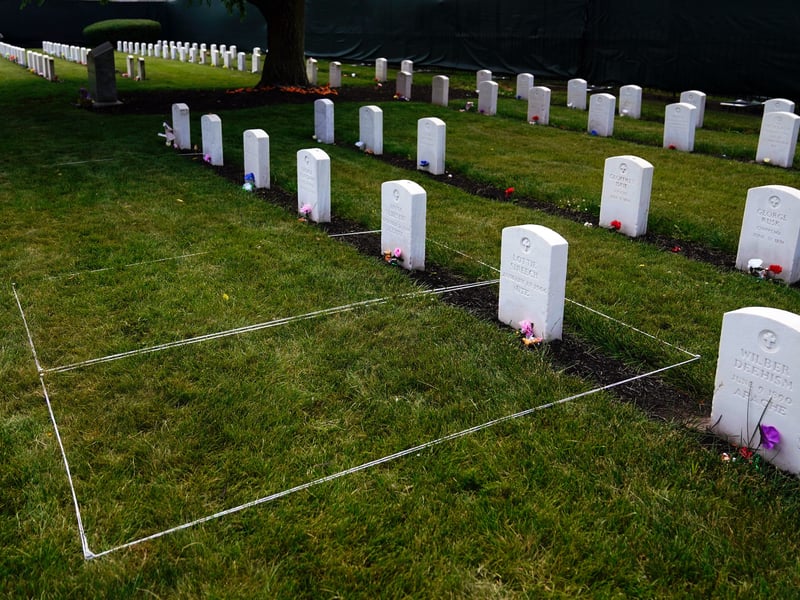
(CN) — A Fourth Circuit panel weighed whether the remains of two boys should be returned to a Nebraska tribe after their death more than a century ago at a Native American boarding school.
Samuel Gilbert and Edward Hensley are buried at Carlisle Indian Industrial School, where they died in the 1890s while attending the controversial institution.
The Winnebago Tribe of Nebraska argued at a hearing Wednesday that the U.S. Department of the Army, which now controls the land, is obligated to repatriate the students’ bodies under the Native American Graves Protection and Repatriation Act, which governs the return of human remains and tribal cultural artifacts in possession of federal agencies.
Federal authorities say the 1990 law applies to artifacts or human remains housed by museums or educational institutions — not bodies interred in a cemetery.
A federal judge agreed with the U.S. Army in a decision last year.
Senior U.S. District Judge Claude M. Hilton wrote in an eight-page opinion that the tribe misinterpreted the statute, which was intended to protect Native American burial sites from unpermitted excavation.
“While the court acknowledges Winnebago’s interest in possessing Samuel and Edward’s remains, the court will not order the excavation of buried remains where (the law) does not confer such authority,” the Ronald Reagan appointee wrote.
The Office of Army Cemeteries has offered to return the bodies of Samuel and Edward, subject to its disinterment policies, but an attorney for the tribe told the court Wednesday the government was requiring the tribe to identify living relatives of the boys before they would return the bodies.
Attorney Beth Margaret Wright of the Native American Rights Fund of Boulder, Colorado, said the tribe has attempted to do so without success.
“Samuel and Edward died as children, without any lineal descendants of their own, and now asking the tribe to identify that person is a challenging task,” Wright said.
Founded in 1879, Carlisle was the first government-run boarding school in the nation and became a model for hundreds of other schools that sought to assimilate Native Americans. Children were forced to leave their communities and travel hundreds of miles to attend the military-style schools, where they received a formal education while being indoctrinated in U.S. customs and practices.
Students were exposed to foreign diseases, particularly tuberculosis, which killed hundreds of children before the school closed in 1918. The Army established a medical school on the grounds in 1920, before the site eventually became part of the U.S. Army War College.
The tribe argues the Army was callous in its handling of the students’ remains. Officials mixed up gravestones while relocating bodies during an expansion in 1927, the tribe claims, while other graves appeared to have been forgotten and now remain beneath a base parking lot.
Wright told the court Wednesday that the government disinterred students’ bodies and reburied them in Carlisle Indian burial ground, which is the resting place for at least 179 students, without family or tribal permission. By doing so, the government created a “collection or holding” of human remains that should be returned to the tribes for burial according to their customs and traditions.
U.S. Circuit Judge Allison Jones Rushing, a Donald Trump appointee, questioned whether NAGPRA created an obligation for the federal government to disinter bodies. Would Wright’s reading of the law require repatriating bodies buried at Arlington National Cemetery, she asked.
“Carlisle is not like Arlington,” Wright said. “Carlisle was established because the government dug up these remains without consent of the families and tribes and moved them to build a parking lot.”
U.S. Appellate Attorney Tamara Rountree argued NAGPRA was intended to protect Native American graves from disturbances — not to justify digging up a cemetery.
U.S. Circuit Judge Pamela A. Harris, a Barack Obama appointee, questioned whether protecting the sanctity of the cemetery made sense in this case.
“These kids were kidnapped, dumped in a grave after they died at the government’s hands, and then moved so that they could pave over the graves with a road,” Harris observed.
Senior U.S. Circuit Judge Henry F. Floyd, a fellow Obama appointee, also served on the panel.
 Follow @SteveGarrisonPC
Subscribe to our free newsletters
Our weekly newsletter Closing Arguments offers the latest about ongoing trials, major litigation and rulings in courthouses around the U.S. and the world, while the monthly Under the Lights dishes the legal dirt from Hollywood, sports, Big Tech and the arts.