
 Search Articles


DENVER (CN) — Arguing that the plaintiff class no longer exists, the New Mexico Human Services Department asked the 10th Circuit on Wednesday to reverse a lower court’s order and dismiss a 36-year-old lawsuit over benefits delays.
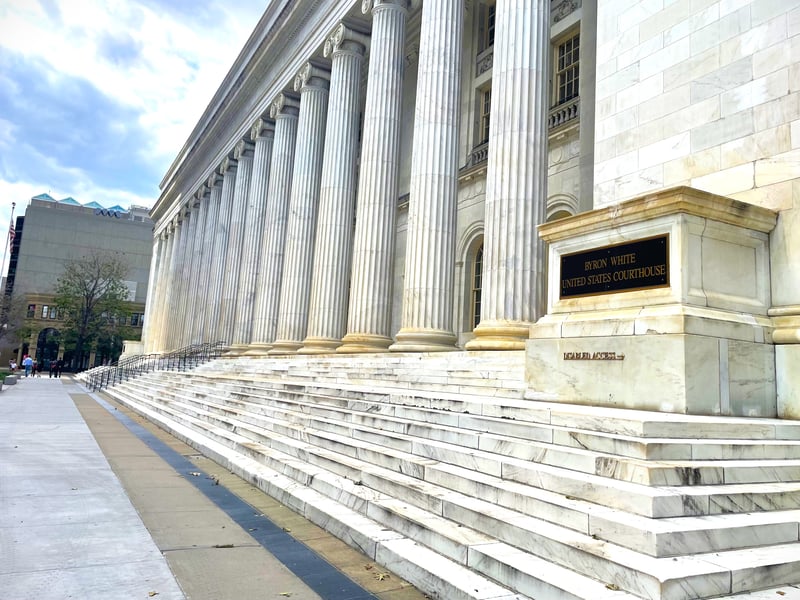
“The definition of class is not in dispute, and that definition is limited to people denied timely benefits — not all applicants,” attorney Taylor Rahn argued on behalf of the state at the Byron White U.S. Courthouse in downtown Denver. Rahn practices with Robles Rael in Albuquerque.
With the help of the New Mexico Center on Law and Poverty, Debra Hatten-Gonzales first sued the New Mexico Human Services Department in 1988 over application delays for federal benefits that resulted in a class of residents not receiving timely access to health care through Medicaid or food under the Supplemental Nutrition Assistance Program, or SNAP.
In 1989, the plaintiff class was certified to include “all present and future applicants to the federal food stamp program, Medicaid program or Aid to Families with Dependent Children program who have not or will not receive eligibility determination or benefits under these programs from the New Mexico Human Services Department within the time limits imposed by law.”
Since then, the plaintiff class and New Mexico hammered out two consent decrees and filed three other 10th Circuit appeals.
The original plaintiff, Hatten-Gonzales, has long since died, as has the case’s original judge, John Conway, a Ronald Reagan appointee who died in 2014. As benefits delays persisted, other judges picked up the mantel and new plaintiffs joined the case.
In 2020, New Mexico finally met one of the consent decree’s requirements — a rate of 96% of applications being processed on time for six months straight. The government petitioned the lower court to dismiss that portion of the state’s requirements, a request the court granted — apparently not realizing that doing so threatened to render the rest of the case moot.
Under New Mexico’s argument, the plaintiff class was defined by a delay in benefits, so a court finding that the delays had been remedied also eliminated the class.
U.S. District Judge Kenneth Gonzales, a Barack Obama appointee, rejected the state’s mootness theory in 2023 along with a motion to dismiss. New Mexico appealed.
“So individuals who don’t receive benefits in a timely fashion, they wouldn’t have relief under the consent decree today?” asked U.S. Circuit Judge Joel Carson, a Donald Trump appointee.
While Rahn responded by reiterating New Mexico’s documented compliance, the plaintiff class’ attorney, Daniel Yohalem, quickly circled back to answer the question.
“Relief in this case ensures that very poor New Mexico residents get timely relief through federal benefits programs,” Yohalem said. “Judge Carson asked if under the state’s interpretation those people would be without relief, and the answer is yes.”
As of 2020, court documents indicate New Mexico Human Services was still causing delays by making as many as 1,600 requests to applicants for information not required to receive federal benefits.
Thus Yohalem said, “the class is not based on timeliness. It includes those who were denied benefits due to illegal eligibility requirements and it includes those who do not receive timely benefits.”
U.S. Circuit Judges Veronica Rossman and Richard Federico rounded out the panel. Both judges are former public defenders appointed by Joe Biden.
 Follow @bright_lamp
Subscribe to our free newsletters
Our weekly newsletter Closing Arguments offers the latest about ongoing trials, major litigation and rulings in courthouses around the U.S. and the world, while the monthly Under the Lights dishes the legal dirt from Hollywood, sports, Big Tech and the arts.