Search Articles


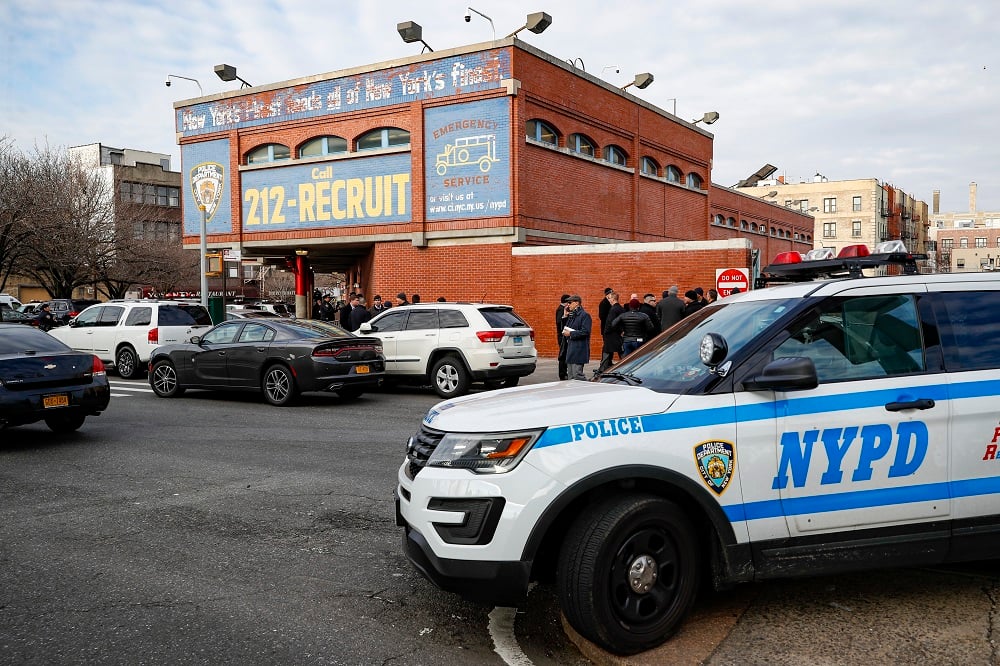
MANHATTAN (CN) — New York’s high court on Tuesday allowed NYPD precincts to bar citizens from filming in its public lobbies, despite city and state laws protecting the recording of public police activity.
In a 14-page order, the New York Court of Appeals ruled against SeanPaul Reyes, otherwise known as Long Island Audit, a YouTuber with more than 1 million subscribers known for testing the limits of the First Amendment with his confrontations with police officers and other public officials.
One of those encounters got Reyes arrested for trespassing after he entered two Brooklyn precincts while filming in 2023. He sued over his arrest, leading to a labyrinth of litigation to determine whether filming inside police stationhouses is protected activity under state and local laws passed in 2020.
It is not, the Court of Appeals found Tuesday. In the court’s order, unanimous among its seven judges, it ruled that Reyes’ interpretation of the two so-called Right to Record Acts would lead to “absurd results.”
“Permitting members of the public to record events and individuals in precinct lobbies would violate the privacy interests of crime victims, witnesses, confidential informants and undercover officers,” the judges found. “Indeed, when victims of sensitive crimes like human trafficking, domestic violence, or sexual assault enter a stationhouse lobby to report the crime, officers — as a matter of policy — turn off their body-worn cameras.”
In reaching this conclusion, the court looked to the legislative history of these right-to-record bills.
Both the Legislature and the New York City Council drew on at least two high-profile examples of police misconduct when crafting the legislation, including a NYPD officer’s fatal chokehold of Eric Garner in 2014 and the police murder of George Floyd on a Minneapolis sidewalk in 2020 — both of which were recorded by bystanders.
“In each case, the person recording was standing in a public space, not a police stationhouse, witnessing police activity with a camera,” the court wrote.
These laws were passed to combat accountability issues, the judges found, which doesn’t explicitly cover Reyes’ conduct in the station lobby. Debates on the city council floor focused on protecting the right to record police misconduct by the public, “without any mention of police stationhouses as a site of unchecked and unrecorded police misbehavior,” the court ruled.
“The legislative history, read as a whole, establishes that the RTRAs were not enacted to ensure the right to record in police stationhouses and precinct lobbies,” wrote the judges. “Police stationhouses were not the topic of legislative discussion at all.”
Reyes currently has an outstanding federal case on this issue as it pertains to the U.S. Constitution. Tuesday’s ruling came after the Second Circuit certified this question — relating specifically to city and state laws — to the Court of Appeals.
In a statement to Courthouse News, Reyes and his team said they remain optimistic of their First Amendment claims in federal court.
“While I am obviously disappointed and disagree with the court’s decision, I will continue to fight for transparency and accountability of law enforcement,” he said. “The First Amendment protects people’s right to know what their government is doing, and I will continue to fight so that all can exercise that right.”
Reyes is being represented by Andrew Case, supervising counsel for LatinoJustice PRLDEF.
“The New York State Court of Appeals held today that the city and state Right to Record Acts, passed in the wake of George Floyd’s murder, only protect the right to record on public streets and sidewalks and provide no protection in the public lobbies of precincts because the legislative debate took place ‘without any mention of police stationhouses,’” Case said in a statement. “We believe that the legislature intended the right to record acts to apply broadly to all public spaces. In any event, the NYPD’s rule provides no exceptions and has not been tailored at all, as the First Amendment requires. We believe the federal court will agree.”
 Follow @Uebey
 Follow @uebey.bsky.social
Subscribe to our free newsletters
Our weekly newsletter Closing Arguments offers the latest about ongoing trials, major litigation and rulings in courthouses around the U.S. and the world, while the monthly Under the Lights dishes the legal dirt from Hollywood, sports, Big Tech and the arts.
Additional Reads
 ICE arrestee’s FOIA requests were wrongly ignored June 23, 2026
 Virginia governor highlights prison safety reforms June 23, 2026
 DC Circuit restores Trump's expedited deportation policy June 23, 2026