
 Search Articles


CONCORD, N.H. (CN) — A group of white supremacists who hung a banner off a highway overpass saying “Keep New England White” cannot be punished for it, the New Hampshire Supreme Court ruled Friday.
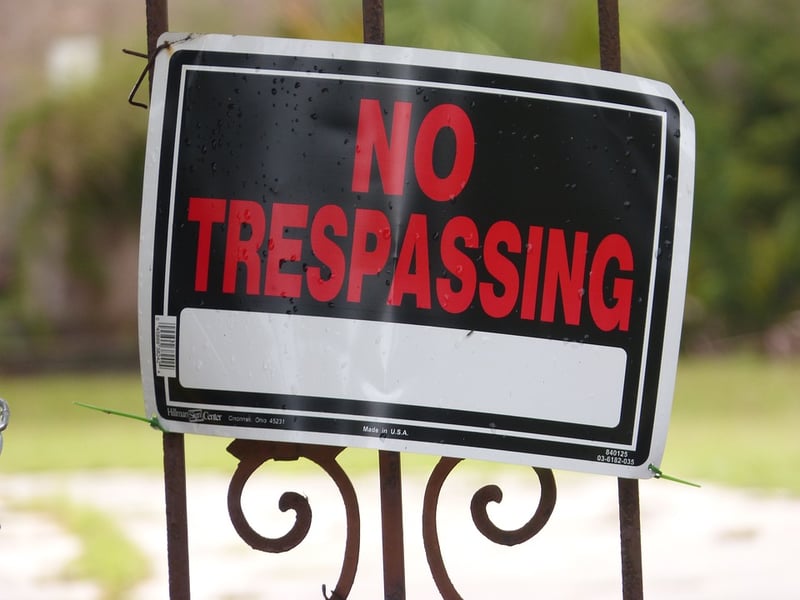
The case turned on a technicality — the state failed to prove that the group knew they were trespassing at the time.
The state attorney general brought civil charges against the group under a state civil rights act that prohibits “trespass on property … motivated by race.”
There was no question that the group trespassed on public property and was motivated by race. But a lower court found — and the Supreme Court unanimously agreed — that the civil rights act violates free speech rights under the state constitution to the extent it punishes accidental, as opposed to deliberate, trespassing.
“The absence of a ‘knowing’ mental state would charge the public with maintaining an actual, encyclopedic knowledge of a potentially limitless number of existing and future regulations governing all types of public fora on all government property before engaging in otherwise protected speech,” the court said in a per curiam opinion.
“We agree that such an expectation of citizens who enter public property is not reasonable.”
The civil rights act raises particular free-speech concerns because it isn’t a content-neutral restriction but instead applies only to certain types of speech and certain viewpoints, the court said.
“The Act creates an unacceptable risk of a chill on speech” and “discourages the expression of certain messages for fear of government sanctions under the Act based on the content of the messages expressed,” the judges wrote.
The court effectively rewrote the statute to change “trespass on property” to the knowing or deliberate trespass on property. It then reviewed the facts and determined that there was insufficient evidence that the supremacist group knew at the time that they were trespassing.
The ACLU filed an amicus brief in the case siding with the white supremacists. “The message involved in this case is hateful and repugnant. But the First Amendment protects hateful and repugnant speech,” David Cole, legal director of the ACLU, said in a statement.
A contrary ruling could allow the state to publish other protected speech, including “a Black Lives Matter protest on a public street,” Cole said.
“While we are disappointed by the court’s decision, we respect it,” said a spokesperson for the attorney general’s office. “We will continue to explore all options to protect the rights and safety of our communities.”
The attorney general has filed a second complaint against the supremacist group based on a rowdy protest it conducted in June 2023 outside a Concord café that was hosting a drag-queen story hour.
Subscribe to our free newsletters
Our weekly newsletter Closing Arguments offers the latest about ongoing trials, major litigation and rulings in courthouses around the U.S. and the world, while the monthly Under the Lights dishes the legal dirt from Hollywood, sports, Big Tech and the arts.