
 Search Articles


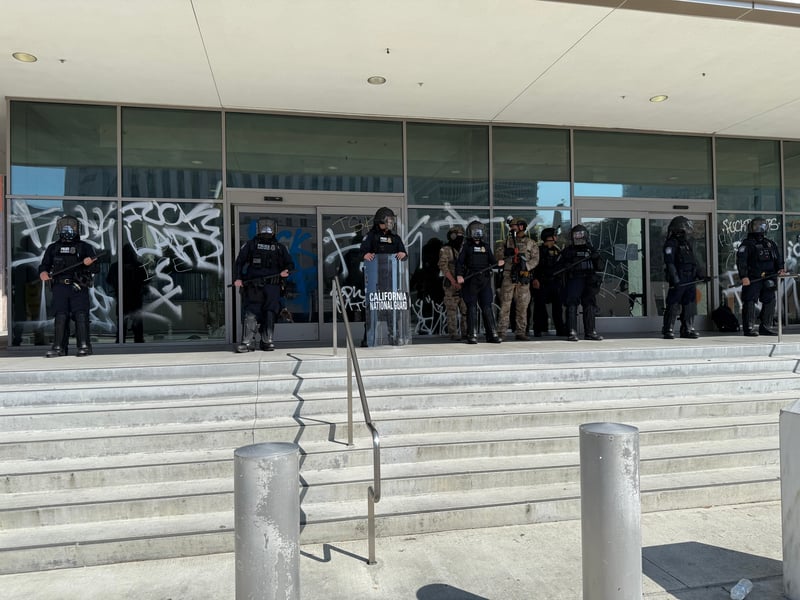
SAN FRANCISCO (CN) — Despite a brief victory for California Governor Gavin Newsom earlier in the day, a Ninth Circuit Court of Appeals panel determined that President Donald Trump could keep “federalizing” the state’s National Guard he ordered into Los Angeles during protests over ICE immigration raids.
The California National Guard will remain posted at federal buildings in Los Angeles, where they have been for nearly a week since protests began.
The Ninth Circuit panel’s ruling grants the federal government the emergency stay they requested Thursday after a lower court granted a temporary restraining order to Newsom that barred the Trump administration from mobilizing the state National Guard in LA.
The panel — consisting of U.S. Circuit Judges Mark J. Bennett, Eric D. Miller, both Trump appointees, and U.S. Circuit Judge Jennifer Sung, a Joe Biden appointee — set a hearing for June 17 on the merits of the temporary restraining order.
The government had quickly appealed the issue to the Ninth Circuit after U.S. District Judge Charles R. Breyer first issued the order that was meant to go into effect Friday at noon.
“His actions were illegal — both exceeding the scope of his statutory authority and violating the Tenth Amendment to the United States Constitution,” Breyer said in his order, which also returned control of the state National Guard to Newsom.
“We’re talking about the president exercising his authority. And the president is, of course, limited in his authority. That’s the difference between a constitutional government and King George,” Breyer added.
The Bill Clinton appointee had initially seemed hesitant during a hearing earlier Thursday to issue any kind of relief without a concrete injury, questioning if the governor had properly proved one in the absence of the military making any arrests or detaining any protestors.
“I just don’t get into that kind of analysis unless it becomes real,” Breyer said.
Newsom sued Trump in federal court Monday, arguing that Trump’s deployment of the National Guard violates the 10th Amendment and the Administrative Procedure Act by exceeding his constitutional authority.
Newsom claims that federal law requires a governor’s consent before the president can mobilize a state’s National Guard for domestic law enforcement. Without immediate court intervention, he warns, the unauthorized use of troops will harm state sovereignty, inflame tensions and fuel unrest.
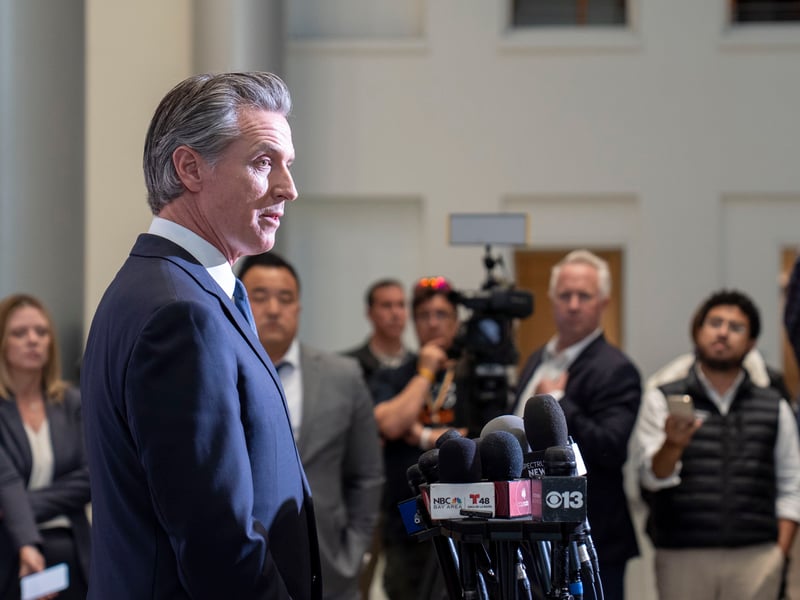
“The president is looking for any pretense to place military forces on American streets to intimidate and quiet those who disagree with him. It’s not just immoral — it’s illegal and dangerous,” Newsom said in a statement.
Trump has defended the move by invoking Title 10 of the U.S. Code, which allows federal use of state National Guard when there is a “danger of rebellion” against the government.
“To the extent that protests or acts of violence directly inhibit the execution of the laws, they constitute a form of rebellion against the authority of the Government of the United States,” Trump said in a memo on June 7.
Newsom countered that the Los Angeles Police Department was more than capable of handling the protests and that tensions were subsiding until the president exacerbated the situation by deploying the military.
“The authority to use the military domestically for civil law enforcement is reserved for dire, narrow circumstances, none of which is present here,” Newsom said in his lawsuit.
Los Angeles Mayor Karen Bass said the president was using her city as an “experiment” to test the boundaries of his authority.
Breyer, clad in his signature bowtie, noted that the issues before the court were “extremely significant” and required a timely decision in response to the L.A. protests.
Trump argued that his findings, as the executive, were not subject to judicial review because the statute, and by extension Congress, left that choice to the president.
“Is there an invasion? That is an inherently political question that the president gets to decide,” Attorney Brett A. Shumate of the U.S. Attorney’s Office, who represented Trump.
The judge seemed to disagree, noting that the law’s provision that such orders “shall be issued through the governors of the states” implies a mandatory requirement on the part of the federal government.
The government insisted that the orders were, in fact, through Newsom because they were passed through his adjutant general, a senior member of the state National Guard, who represented Newsom.
“It would be the first time I’d ever seen something go through somebody if it never went to them directly,” Breyer replied.
Newsom said Trump’s arguments embodied a “dangerous” expansion of presidential power, if the court were to accept them.
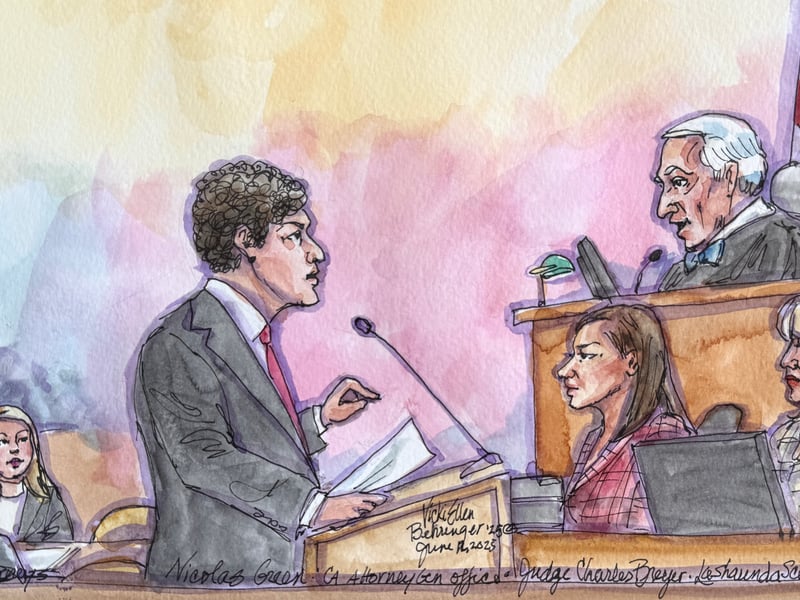
“They are saying that the president, by fiat, can federalize the National Guard and send it into American cities whenever he wants,” said Nicholas Green from the California Attorney General’s Office, which represented Newsom.
In general, the judge stuck to a close textual analysis of the Constitution during the hearing, even producing his own pamphlet copy of the document, which he quoted from at times.
“If you can point me to something in this little book called the U.S. Constitution, I’ll look at it,” Breyer said, waving it back and forth for the attorneys.
The Trump administration has ordered as many as 4,000 California National Guard troops and 700 Marines into LA since protests erupted last week over U.S. Immigration and Customs Enforcement raids of downtown LA businesses for migrant workers and of Home Depot parking lots, where day laborers gather to get hired.
This case was filed in the Northern District of California and heard at the Phillip Burton Federal Courthouse in San Francisco.
Subscribe to our free newsletters
Our weekly newsletter Closing Arguments offers the latest about ongoing trials, major litigation and rulings in courthouses around the U.S. and the world, while the monthly Under the Lights dishes the legal dirt from Hollywood, sports, Big Tech and the arts.