
 Search Articles


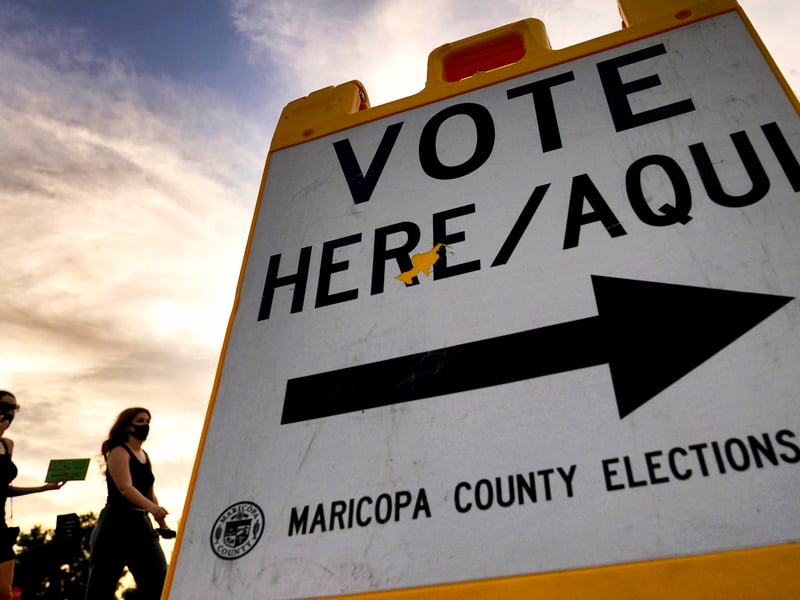
PHOENIX (CN) — A Ninth Circuit panel reversed an injunction against a new election guideline conservative activists say could disenfranchise whole counties of Arizona voters but affirmed an injunction against another it says could violate First Amendment free speech.
Known as the canvass provision, the first challenged guideline in Arizona’s 2023 Elections Procedures Manual requires the secretary of state to toss a county’s votes if its supervisors refuse to canvass the county’s results by the secretary’s legal deadline to certify the statewide vote. Nonprofits American Encore and the America First Policy Institute lack standing to challenge the first provision, the judges say, having shown no past injury or likelihood of future injury.
“The secretary is unquestionably under a statutorily mandated duty to ‘enforce’ the canvass provision, i.e., canvass the state’s election results by the state canvass deadline,” U.S. Circuit Judge Kim Wardlaw wrote in a 43-page opinion published Tuesday morning. “However, plaintiffs would suffer injury (disenfranchisement) only if the county in which they voted failed to certify its election results by the state’s canvass deadline.”
That has never happened before.
The provision is a direct response to a situation in Cochise County in 2022, when its supervisors delayed the county canvass until just days before the secretary of state’s deadline, citing election integrity concerns. Though every vote was counted that year, the plaintiffs call the provision a threat to those who may question the security of Arizona elections. They say the close call is enough to establish concrete injury.
The judges say what happened in Cochise County was an “isolated incident” and that there’s nothing on the record to suggest that it’s likely to reoccur elsewhere.
“On this record, plaintiffs fail to make a clear showing that it is more than hypothetical or conjectural that a county would fail to timely canvass its election results,” Wardlaw wrote. “Even if plaintiffs had shown the likelihood that a county would fail to timely certify its election results, plaintiffs provide no evidence to undermine the intuitive conclusion that some other statutorily bound entity would intervene to require compliance, as the secretary did just that in 2022 with Cochise County.”
The plaintiffs still hold onto a win, though. The panel affirmed the injunction against the second challenged guideline, known as the speech provision, which expands the definition of voter intimidation at polling places to things like “aggressive behavior” and “using threatening, insulting or offensive language” and encourages poll workers to report suspicious behavior.
The provision was first introduced in 2019 and was only challenged after its renewal in 2023.
The state argues that the provision only summarizes what is already written in Arizona intimidation and harassment statutes, and Attorney General Kris Mayes has already disavowed criminal prosecution based on violations of the provision rather than state criminal code. But the panel agreed with the trial judge that the provision could lead to First and 14th Amendment violations of voters at polling places and result in unfair removals if not arrests.
“Although plaintiffs do not state the exact nature of the political speech in which they intend to engage in the next election, that they will engage in First Amendment speech is sufficient given the vagueness and overbreadth of the speech provision itself,” Wardlaw wrote. “The speech provision’s purported prohibition on activity that has the “effect” of “threatening, harassing, intimidating, or coercing voters” could conceivably reach any speech related to elections and politics, rendering plaintiffs’ self-censorship reasonably premised on a credible and substantial risk of prosecution.”
Wardlaw added that despite the state’s claims, the provision goes further than summarizes existing law and “adds new criminal prohibitions.”
The state argued the plaintiffs lacked standing to challenge this provision as well, given that they’ve outlined no plan to engage in any conduct that the provision would bar.
But the American First Policy Institute submitted declarations specifying the types of speech they plan to engage in at polling places, much of which the panel agrees could violate the speech provision and be subject to unconstitutional retaliation.
Neither side replied to a request for comment.
 Follow @JournalistJoeAZ
Subscribe to our free newsletters
Our weekly newsletter Closing Arguments offers the latest about ongoing trials, major litigation and rulings in courthouses around the U.S. and the world, while the monthly Under the Lights dishes the legal dirt from Hollywood, sports, Big Tech and the arts.