
 Search Articles


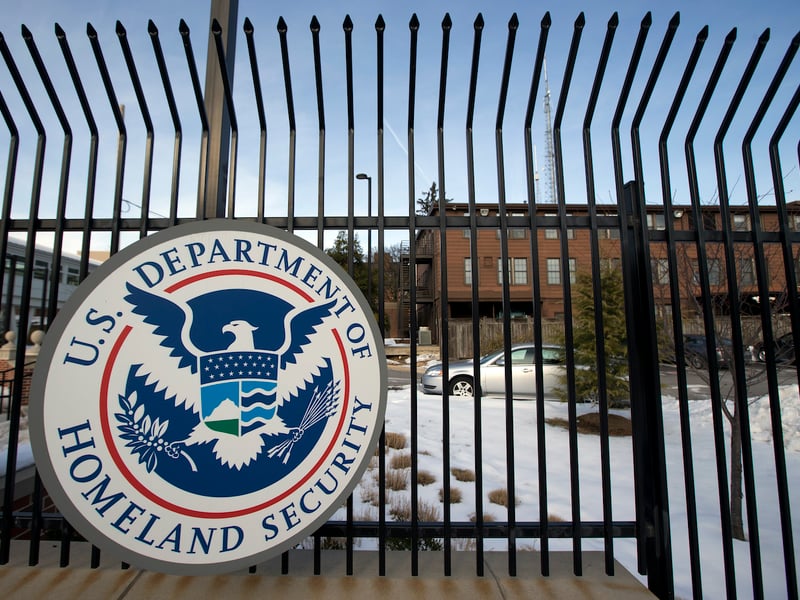
SAN FRANCISCO (CN) — The Ninth Circuit sided with the government on Thursday, finding the feds had properly enforced a rule on migrants awaiting detention proceedings.
The rule — adopted by former acting deputy Department of Homeland Security secretary Chad Wolf during the Trump administration in July 2020 — reiterated that bond companies representing migrants would be on the hook if those migrants jumped bail.
ICE was also given discretion to reject bonds from companies with outstanding balances. Companies would have to go through the administrative appeals process to contest bond-breach determinations. As a general policy, DHS releases migrants facing deportation while removal proceedings are pending.
A group of bond companies challenged that rule in 2020, arguing that under the Administrative Procedure Act, the feds were not allowed to refuse business from them.
Those companies — Gonzales & Gonzales Bonds & Insurance Agency, Topper Brokerage, Lexington National Insurance, American Surety and Allegheny Casualty — also argued that because Wolf was never officially confirmed by the Senate as DHS secretary, he did not have the authority to promulgate or enforce such rules.
A Ninth Circuit panel on Thursday disagreed, sending the Oakland lawsuit back to a lower court. The panel said a lower judge had erred in granting summary judgment to the companies.
Presiding over the case were Justices Carlos Bea, Morgan Christen and Anthony Johnstone. Neither attorneys for the feds nor for the bond companies immediately responded to requests for comment.
The companies not only questioned whether Wolf could enforce such rules but also whether his time as acting secretary violated the Federal Vacancies Reform Act of 1998, a federal law establishing procedures for temporary and acting heads of government agencies like DHS.
In a 64-page opinion, the panel found that restrictions on what federal department heads could do only applied to duties that were “nondelegable.”**** Moreover, they found that Alejandro Mayorkas, the DHS secretary under Biden who was officially confirmed by the Senate, had authority to ratify the rule later and cured any possible issues with it when he did so.
“Thus, ratification of the rule by Secretary Mayorkas cured any defect in the rule’s promulgation,” Justice Bea, a George W. Bush appointee, wrote for the majority. Johnstone, a Joe Biden appointee, concurred.
But Justice Christen, an Obama appointee, dissented, arguing her colleagues were creating a standard that applies to all the duties Congress assigns to a federal office. That reading, she wrote, effectively killed the Federal Vacancies Reform Act.
“The permissible reading of ‘function or duty’ that allows the FVRA’s provisions to work together is also the plainest reading of the words Congress used," Christen wrote. “When officials improperly serve in positions that require presidential appointment and Senate confirmation, the FVRA bars ratification of actions those officials take in performing any function or duty that Congress required a single officer to perform.”
 Follow @nhanson_reports
Subscribe to our free newsletters
Our weekly newsletter Closing Arguments offers the latest about ongoing trials, major litigation and rulings in courthouses around the U.S. and the world, while the monthly Under the Lights dishes the legal dirt from Hollywood, sports, Big Tech and the arts.