
 Search Articles



TUPELO, Miss. (CN) — As protests against immigration raids began this month in Los Angeles, Jamie Rebentisch was at home in Tupelo, some 2,000 miles from the tear gas.
Some might argue that Tupelo, a town of around 37,000 in deep-red northeast Mississippi, is whole worlds away from liberal L.A. Best known as the birthplace of Elvis Presley, few people here are migrants at risk of deportation.
And yet not even tiny Tupelo has been spared the chaos of a second Donald Trump administration, Rebentisch said in a recent phone interview.
“A lot of people have been affected by the health care cuts in our area,” she said, “and the food cuts that have happened and are looking to happen.” She said local food banks and the local Meals on Wheels program had already been impacted. All that as “more people in the area are relying on those food pantries than ever before.”
Fewer than five months into a second Trump presidency, Rebentisch is hardly the only American with a litany of complaints against the controversial administration.
This Saturday, June 14, a broad coalition of democracy activists, labor organizers and civil rights groups plan to mobilize demonstrations across the country. Dubbed the “No Kings” protests, the movement vows to flood the streets with thousands or even millions of demonstrators in opposition to what activists call Trump’s authoritarian overreach.
Organizers accuse the Trump administration of attacking democratic norms with crackdowns on free speech, politically motivated detentions, defiance of judicial orders and illegal deportations. They say he’s gutting social services like Social Security and Medicaid while funneling tax breaks to his corporate allies.
The protests will coincide with the 250th anniversary of the U.S. Army and with Trump’s own 79th birthday. As demonstrators gather nationwide, Trump plans to commemorate the occasion with a taxpayer-funded military parade in Washington, D.C.
Rebentisch first got involved in anti-Trump activism in 2017, during his first term.
That year, women in the region formed Indivisible Northeast Mississippi, part of a national organization that seeks to elect progressive leaders and “defeat the Trump agenda.” The chapter has since grown to include more than 300 members.
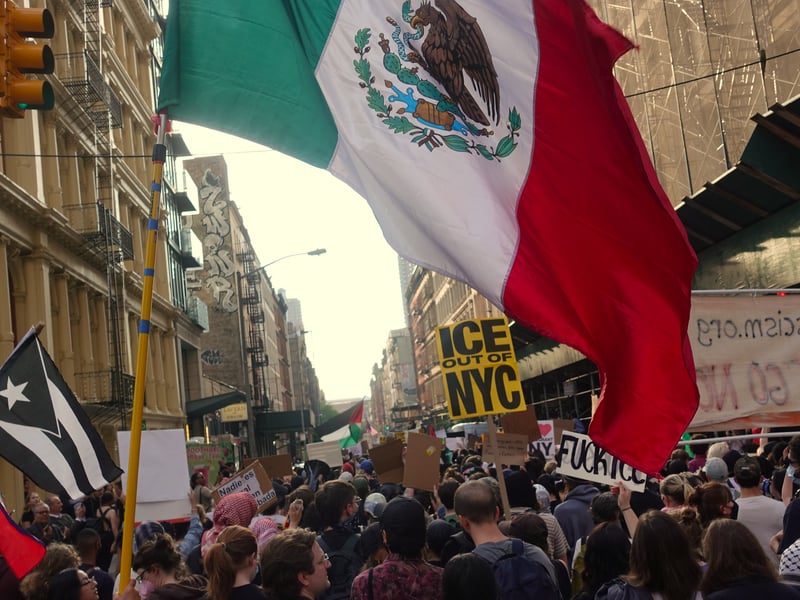
As Trump oversees his military parade in D.C., No Kings organizers are encouraging Americans to hold protests in their own cities and towns. Demonstrations have been planned in big cities like Chicago and Atlanta, as well as in smaller and more rural places like Tupelo.
Aimed at “reject[ing] strongman politics,” the protests will come around the same time as Flag Day, Pride Month and Juneteenth. The goal is to overshadow Trump’s military/birthday parade messaging with a show of diverse, grassroots opposition.
“Our message is that do not bow to kings,” Rebentisch said of the upcoming protests. “That was the premise of our country to begin with.”
“We got away from kings — and [Trump] is trying to act like a king,” she added. “We’re saying no. We’re pushing back.”
Brett Edkins is managing director of policy and political affairs at Stand Up America, a pro-democracy nonprofit.
With more than 2 million members, the group has emerged as one of the largest sponsors behind No Kings.
“We’re demanding a government that works for the people, not for the billionaires and the politicians obsessed with power,” Edkins said in a phone interview. “That means the president and government officials must uphold and subject themselves to the rule of law, not ignore it.”
Stand Up America has seen significant growth since Trump’s reelection, Edkins said. This year, nearly 10,000 protesters have shown up at in-person events.
While there’s no shortage of criticisms around the second Trump administration, Edkins said he and others are especially concerned about the recent developments in Los Angeles.
On June 9, as Angelenos protested against community deportation raids, Trump deployed thousands of National Guard members and marines to the city. Comparing the mostly peaceful protests to an insurrection, Trump warned that without the deployment, Los Angeles could have been “completely obliterated.”
Critics have a very different take. Democratic California Governor Gavin Newsom, who is fighting the deployments in court, blasted Trump for “turning the military against American citizens” and “behaving like a tyrant.”
Edkins agrees. Deploying federal forces “against Americans on American soil, against the wishes of the governor and local elected leaders, is nearly unprecedented in American history,” he said. “It is a dangerous abuse of power.” He thinks Trump is trying to distract from other controversies, including his so-called “big beautiful” budget bill. He hopes No Kings will shift attention back to Trump’s questionable leadership.
“The right to peaceful protest in America is sacrosanct,” Edkins said. “No president can stop that.”
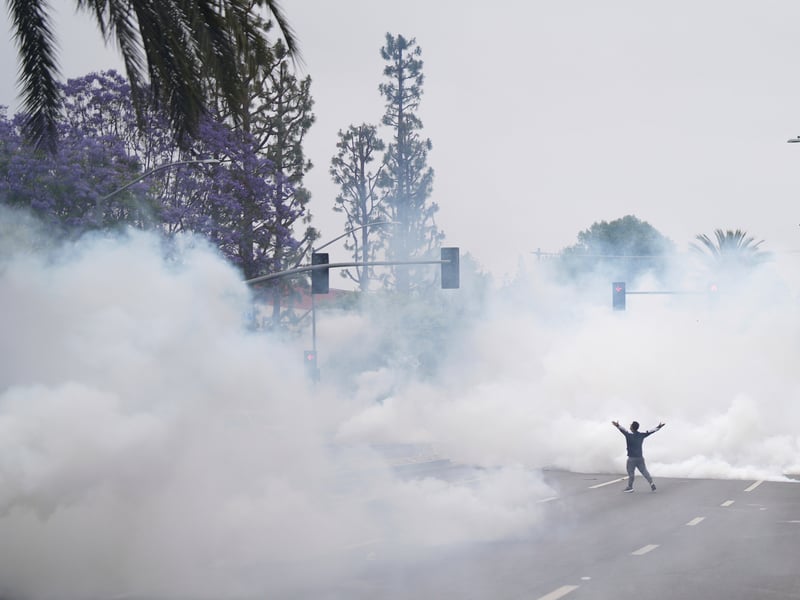
No Kings follows a long American tradition of grassroots protesting, said Darrell West, a senior fellow in governance studies at the nonpartisan Brookings Institute.
“Protest is as American as apple pie,” West said in a phone interview. “Every generation has used protests,” and some “have actually been very successful.” Furthermore, as West noted in a recent essay, protests and civil unrest seem to pick up whenever Trump is back in office.
Anti-Trump movements like No Kings have the potential to affect real change, West said. Even so, he says they risk fizzling out unless organizers articulate clear demands, recruit powerful allies and channel energy into electoral politics. He pointed to the Civil Rights Movement and Tea Party protests as examples of movements that stayed on-message and achieved real policy goals. Compare that to something like Occupy Wall Street, which could never agree on demands and ultimately fell apart as it alienated potential allies.
In an era of misinformation and political division, West stressed it was more important than ever for No Kings to stay peaceful. If Saturday’s protests turn violent, the movement could risk negative publicity and police crackdowns.
“I think protests can be successful as long as they remain peaceful,” West said. “Conservatives want to portray the entire city of Los Angeles as up in flames.” With access to powerful artificial-intelligence tools, bad-faith actors would no doubt be happy to help spread those false narratives.
“If this generates mass rioting, that would be a disaster for Democrats,” West said. “Trump would jump on that and use that to justify a police crackdown.”
While there are obvious strategic benefits to staying peaceful, it remains to be seen if No Kings organizers can keep Saturday’s protests that way.
An aggressive police response at just one event could set off a chain reaction of civil unrest, as happened during George Floyd protests in 2020. Indeed, with tensions already high, June 14 could mark an inflection point — either galvanizing Trump’s base or energizing a fractured opposition, or both.
Observers are paying particular attention to Philadelphia, where No Kings will hold its main “flagship” protest. In a statement, Philadelphia Police Sergeant Eric Gripp said law enforcement was monitoring the situation and would be prepared for violence if things go awry.
“As with all demonstrations, our priority is to facilitate peaceful protest, prevent violence or disorder, and protect the rights of all residents,” Gripp stated. “We encourage anyone who plans to demonstrate to do so peacefully and in accordance with the law.”
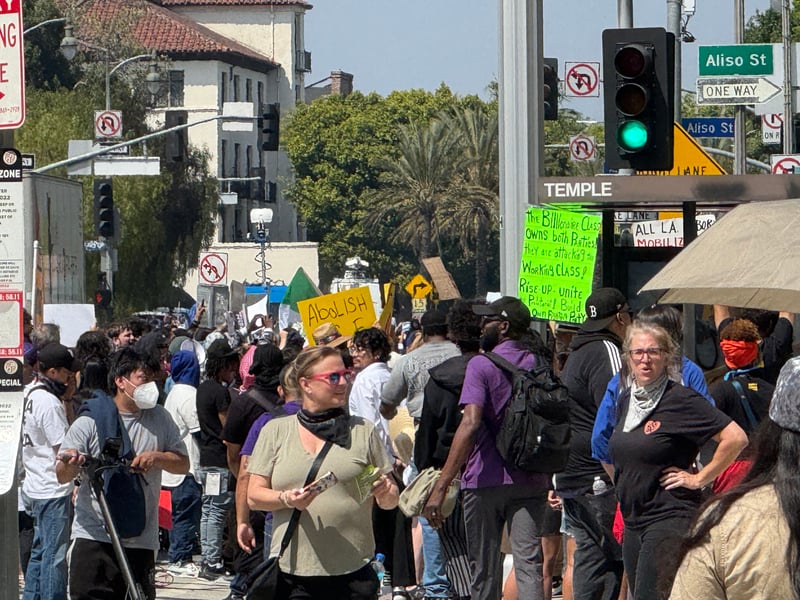
Back in the small Mississippi city of Tupelo, Saturday’s No Kings protest will be held outside the local office of U.S. Representative Trent Kelly, a Republican.
Aligned with the congressional “anti-woke caucus,” Kelly is a strong supporter of Trump’s agenda, including the president’s efforts to ramp up deportations. Kelly was also among the Republican House members who signed onto a Supreme Court amicus brief in support of Trump’s efforts to overturn the 2020 election results.
On the Tuesday before the protests, No Kings organizers hosted a virtual town hall. Randi Weingarten, president of the American Federation of Teachers, led a discussion about the group’s goals and intent.
“It is about attempting to get to the best of what our founders and framers did,” Weingarten emphasized at the virtual meeting. “They said ‘no kings.’”
“The power of the president derives from one people — not from one man, not from one party and not from a crown,” she added. “That is what June 14 is about.”
It will be at least the third time this year that Indivisible Northeast Mississippi will hold a protest outside Kelly’s Tupelo’s office, after Hands Off and May Day protests.
Among those attending on Saturday will be native Mississippian and Tupelo resident Jamie Rebentisch. Rebentisch was a lifelong Republican until Trump’s first term, when she says she became more civically active. She says residents have tried to raise concerns with local Republicans like Kelly but that their complaints have fallen on deaf ears. “We live in a very red state, and I will be honest with you: They really don’t listen.”
 Follow @gabetynes
Subscribe to our free newsletters
Our weekly newsletter Closing Arguments offers the latest about ongoing trials, major litigation and rulings in courthouses around the U.S. and the world, while the monthly Under the Lights dishes the legal dirt from Hollywood, sports, Big Tech and the arts.