
 Search Articles


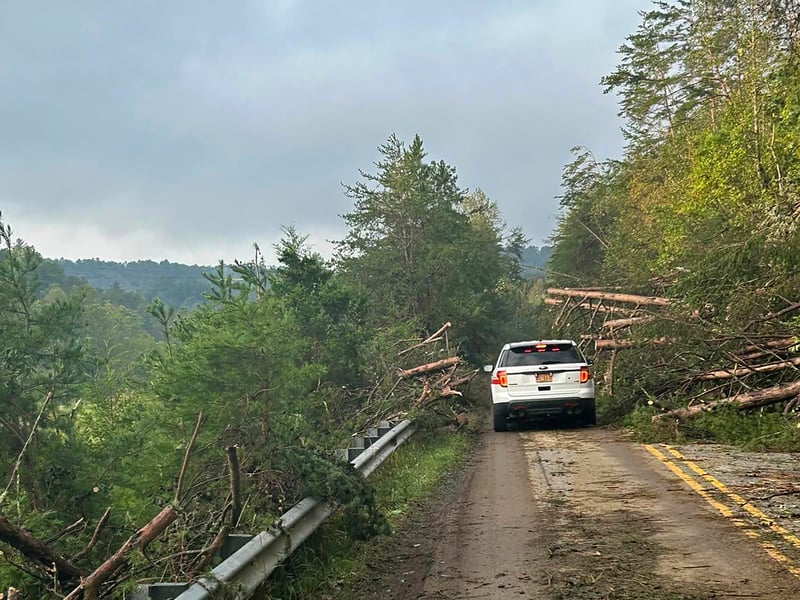
RALEIGH, N.C. (CN) — North Carolina is working toward sending additional recovery funds to counties impacted by Hurricane Helene, with the House passing hurricane and wildfire relief measures on Thursday.
In a bill brought rapidly to the House floor, representatives spearheaded additional disaster resources for areas still recovering from Helene’s damage last September, allocating congressional funding and acknowledging the need for wildfire services. The measure passed unanimously Thursday, and will go next to the Senate.
Following Hurricane Helene, western North Carolina has had wildfires burn through over 25,000 acres of land, as lingering storm debris and dry conditions contribute to the flames and spurred evacuations.
The state has experienced twice the normal number of wildfires in 2025, a struggle compounded by felled trees in forests decimated by the hurricane. In the most heavily hit areas of the state, more than a quarter of the forest is damaged. The steep terrain complicates firefighting efforts, as do vacancies in the forest service and dated equipment.
In the state’s second disaster bill of the year, lawmakers apportioned $10 million to contract additional firefighting staff and respond to wildfires, with an additional $5 million to purchase new firefighting equipment. An additional $18 million goes to the office of the fire marshal to rebuild damaged fire facilities and strengthen the response to wildfires.
North Carolina’s degree of wildland urban interface, where buildings meet undeveloped forests, has changed the dynamics of firefighting, said Representative Mike Clampitt. And, lawmakers agreed, months after the storm, debris is still a problem complicating efforts.
The disaster bill will allocate over $464 million in total toward stabilization and reinstatement efforts, supporting the rebuilding of farms, public school buildings, colleges and private roads and bridges, along with the continuing debris removal process. Additional funds will go to renovating state parks, libraries and museums.
Bill authors worked with local governments, nonprofits and residents in identifying pressing needs. The state has allocated $1.8 billion in repair and relief efforts to recover from Helene, with nearly $60 billion in damages estimated.
“To the folks in western North Carolina: Your voice has been heard,” said Representative Karl Gillespie, who served on the committee that sponsored the bill.
Governor Josh Stein urged the Legislature earlier in the month to pour more money into the western part of the state, recommending an additional $891 million to spur economic recovery, support businesses and help bolster the tourism industry. He also recommended funds be spent to provide housing assistance, combat food insecurity and safeguard against future disasters.
The measure also allocated $60 million to one-time grants for small businesses, many of which have struggled to rebuild. Republican leadership in the General Assembly has been hesitant to issue grants during their multi-bill process of tackling relief, instead offering loans to impacted companies, while Democrats have pushed for more immediate strings-free relief.
Republicans want to ensure state funds were being wisely spent, said Speaker of the House Destin Hall, and to confirm only businesses in need of the funds would be eligible to receive them. Only businesses who have experienced losses of at least $25,000 are eligible for grants.
The disaster bill follows the state’s ongoing fiscal budget process, with the House also sending its spending plan to the Senate on Thursday. Additional disaster relief would have been added into the budget, Hall said, but it wasn’t completed quickly enough to be rolled in.
Lawmakers also pushed for additional financial flexibility in the future, emphasizing the need for counties in western North Carolina to reach financial stability while rebuilding. Local governments are facing “daunting” budget deficits, said Representative Lindsay Prather, who represents the hard-hit county of Buncombe, since they are lacking their normal levels of revenue from sales taxes, property tax collection and intergovernmental fees.
These local governments will soon need funds to “fill in the gaps” for school budgets, emergency services and social services, she said.
“Local governments in western North Carolina are making the decision today on whether they’re going to have to fire people who just went through the state’s worst natural disaster, or they’re going to have to raise property taxes on people who just went through the state’s worst natural disaster,” Prather warned.
Once passed, the bill will also distribute over $685 million in congressional funds to repair and replace drinking water facilities and wastewater treatment systems damaged by Helene.
It will now go to the Senate.
 Follow @SKHaulenbeek
 Follow @shaulenbeek.bsky.social
Subscribe to our free newsletters
Our weekly newsletter Closing Arguments offers the latest about ongoing trials, major litigation and rulings in courthouses around the U.S. and the world, while the monthly Under the Lights dishes the legal dirt from Hollywood, sports, Big Tech and the arts.