Search Articles


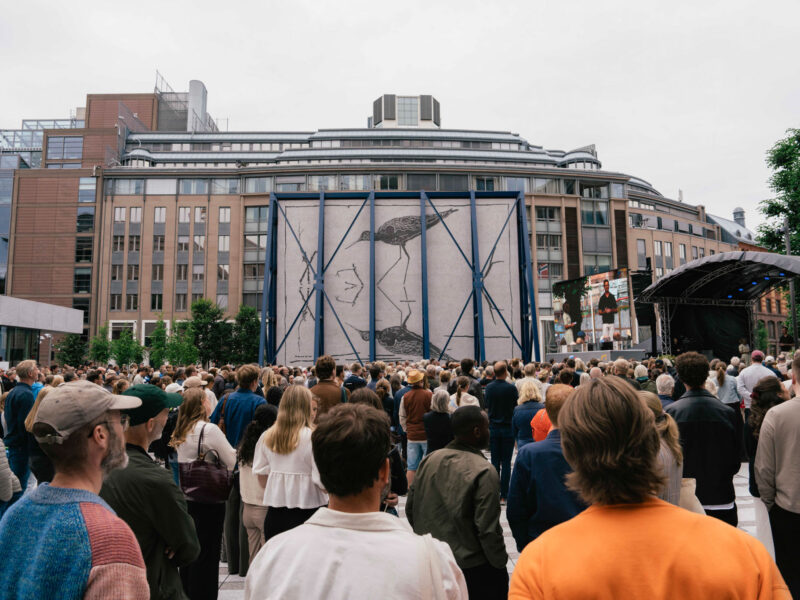
COPENHAGEN, Denmark (CN) — Wednesday marked 15 years since one of the darkest chapters in modern Norwegian history, as residents across the Nordic country gathered to remember July 22, 2011, when a far-right terrorist murdered 77 people in a brutal terrorist attack.
In Oslo, people gathered in the city’s government quarter near where the attack started. Gaute Skjervø, chairman of Norway’s Workers’ Youth League, recalled the aftermath of the massacre he survived that day.
“Norway has been mourning for 15 years. Many knew that it was our children who were killed, but no one can understand the grief of those left behind,” said Skjervø. There are those who believe the terrorist was right. Who, 15 years after the last bullet was fired, wish he had killed more."
Norway’s Police Security Service has recently expressed concern about an increasing number of minors engaging in far-right activity in the West. Officials told Courthouse News that influence from U.S. extremist communities has contributed to the development.
“We must continue to speak openly and honestly about what happened, about the terrorist’s motives, his background, and the consequences of right-wing extremism, hatred, and contempt for democracy,” said Prime Minister Jonas Gahr Støre from the podium.
On Wednesday, Norwegian King Harald and Queen Sonja joined politicians at Oslo Cathedral for a memorial service to commemorate the victims.
Crown Prince Haakon visited the government district last Sunday, along with survivors and relatives, witnessing the unveiling of a new memorial for the victims.

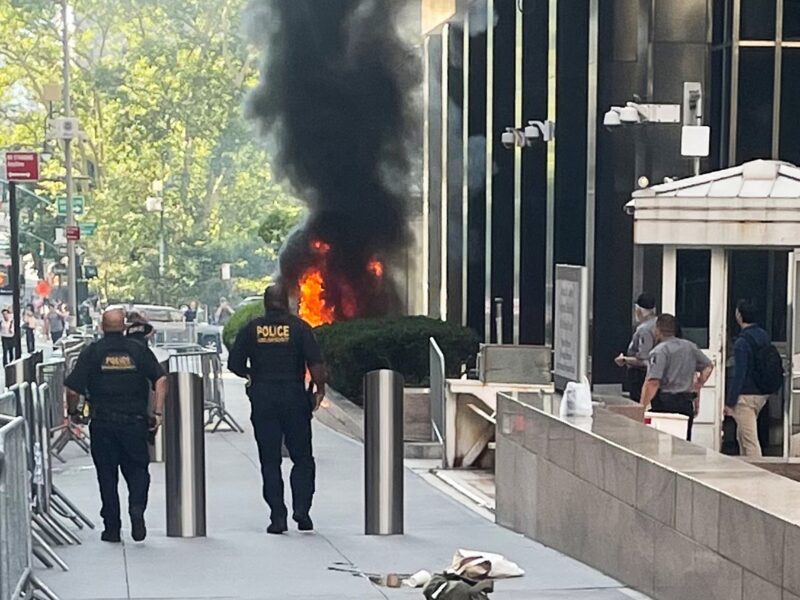
It was in the late afternoon of July 22, 2011, that the Norwegian far-right terrorist Anders Breivik detonated a car bomb parked in front of the prime minister’s office in downtown Oslo, claiming eight lives. Within two hours of the initial attack, Breivik was on the small, secluded island of Utøya, just around 25 miles from the center of Oslo. Dressed in a fake police uniform, the he shot and killed 69 people, mostly teens, at the yearly Workers’ Youth League summer camp before police arrived to arrest him.
The league is the largest youth party in the Nordic country and is affiliated with the center-left Labor Party that was in power during the massacre, which is remembered as the country’s deadliest attack since World War II.
“July 22 will always stay with us at the Workers’ Youth League, even on the day when none of our members bears personal memories from the attack. We lost so much on the day. That is why we need to keep the memory of the people we lost alive and continue talks on how July 22 was a political attack on our values and ideas,” said Fabian Wahl Sandvold, a spokesperson from the youth organization and leader of the party’s July 22 committee, in an email to Courthouse News.
A new generation of members in Norway’s largest youth organization will have distant, if any, memories of that tragic day in the party’s, and nation’s, history.
“Most youths under the age of 18 today are too young to have memories from the terror attack. For that reason, it remains important that we continue to talk about July 22, how brutal the attack was, and highlight the responsibility all of us have to protect democracy, freedom of speech and our community," Sandvold said.
While serving as a place of remembrance, Utøya today also continues to serve as an open and inclusive arena for democracy. Every year, thousands of people from Norway and abroad travel to the secluded island to engage in debate and participate in seminars.
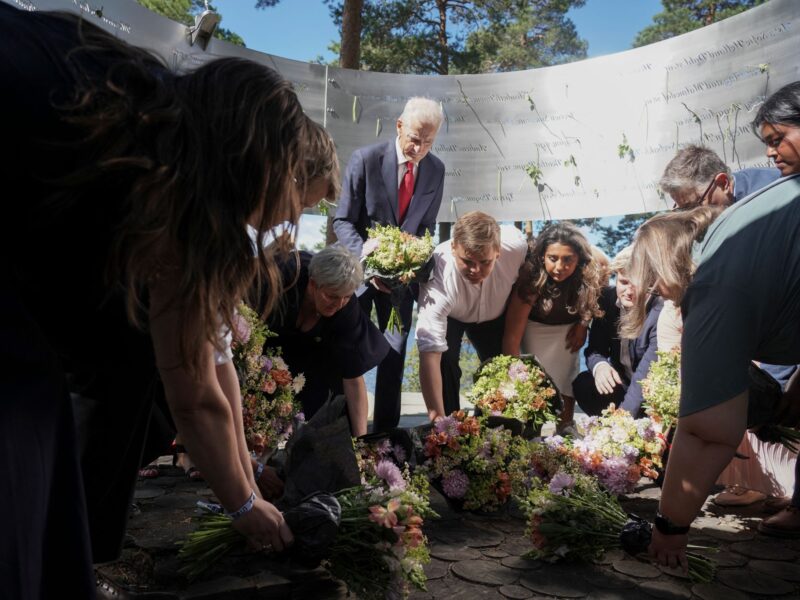
Anne-Marte Kolbjørnshus, the daily leader administering the island, said the nation was gripped by shared sorrow until the attacks’ 10-year mark in 2021. From there, youth politicians have stepped up to face the far-right mindset, which is on the rise, Kolbjørnshus said.
“I believe that July 22, 2011, should play a bigger role in the Norwegian public debate, for a common memory that can create action that fights against extremism,” Kolbjørnshus said in an email.
It is vital for Norway to remember who was lost at the attack, she said. Many of them were children. The median age of the victims was around 18, and the youngest was just 14 years old.
“It’s gruesome what one man’s radicalization can lead to. We must talk about what happened on July 22, 2011. We must provide clear traces of the attack, as we do in Utøya, and talk about those we lost. That is how we remember, and will never forget,” said Kolbjørnshus.
According to the Norwegian Police Security Service, Breivik targeted members of the Workers’ Youth League because he was a believer in a far-right conspiracy theory claiming that Western elites aimed to create a Muslim majority.
The past six years of Norwegian cases affiliated with far-right extremism show Breivik’s attacks and mindset have contributed to increased radicalization. Perpetrators and planners of terror attacks since 2019 have more often drawn inspiration from the Norwegian terrorist compared to cases before that, the security service found.
“In far-right extremist networks, we see that new terror attacks often credit past terrorists, because far-right extremists often rank each other based on the damage they have caused,” Caroline Iwarsson, senior advisor at the counterterror unit of the Norwegian Police Security Service, said in an email.
In a 2018 policy brief published by the Center for Strategic & International Studies, the Washington-based think tank highlighted right-wing extremism as a rising trend in the U.S. and Europe.
Michelle Lynn Kahn, an associate professor of history at the University of Richmond with a specialty in neo-Nazis and far-right extremism, wrote in a column last year that the rise of the internet and new technologies like artificial intelligence have offered extremists a global platform to share propaganda and spew hatred.
“Far-right extremism in 2026 is transnational to a larger degree and more complex. A lot of ideas are fetched from multiple diverse directions, including extremists from the U.S., without us wishing to comment on single cases or concrete statements. Additionally, we see that daily events also can intertwine with far-right extremist narratives. Something that makes the threat more dynamic,” said Iwarsson.
The Police Security Service also found an increase in minors and young adults being radicalized. Many of them credit Breivik as inspiration.
While far-right extremism is a growing concern in the Nordic country, the Trump administration recently launched a global offensive against what it calls “Radical Left terrorism,” mentioning cities in Europe subjected to attacks it says belong to this flank.
In 2012, Breivik received Norway’s maximum prison sentence of 21 years, with a possible extension if he is judged a risk to society.
Courthouse News correspondent Lasse Sørensen is based in Copenhagen, Denmark.
 Follow @LasseSrensen13
Subscribe to our free newsletters
Our weekly newsletter Closing Arguments offers the latest about ongoing trials, major litigation and rulings in courthouses around the U.S. and the world, while the monthly Under the Lights dishes the legal dirt from Hollywood, sports, Big Tech and the arts.