
 Search Articles


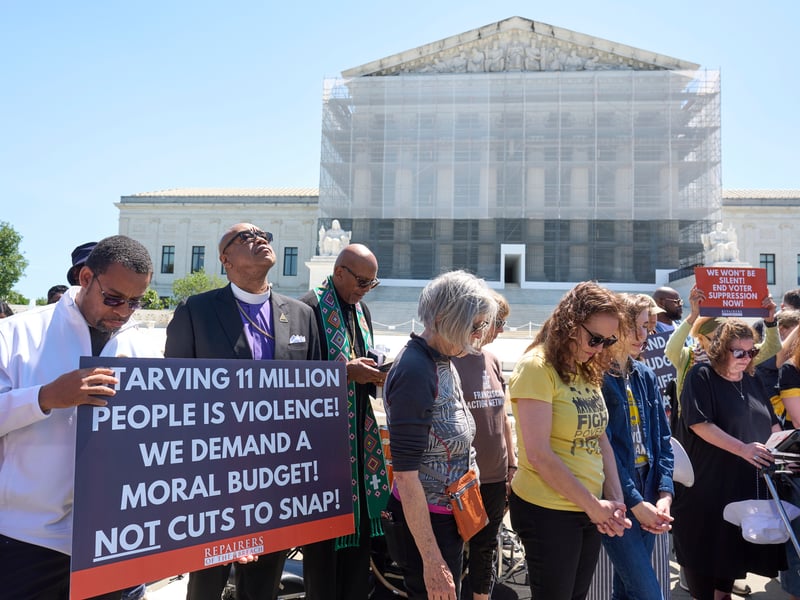
(CN)**** — A New York City-based advocacy group sued the U.S. Department of Agriculture Monday after it abruptly terminated the state’s work requirement waiver for Supplemental Nutrition Assistance Program benefits months early, citing changes enacted by the “One Big Beautiful Bill Act,” which President Donald Trump signed into law in July.
Americans classified as able-bodied adults without dependents (ABAWD) who are enrolled in the Supplemental Nutrition Assistance Program, also known as SNAP, are required to work or volunteer at least 20 hours per week to receive benefits. If they fail to meet the work requirement for a total of three months, they lose SNAP benefits until they come back into compliance.
But some individuals are exempt from work requirements entirely, including those receiving disability benefits, those mentally or physically unfit to work, guardians of children under age 14, pregnant people and homeless people. Eligible states can also apply with the USDA for a waiver that suspends the time limit and work requirements entirely.
But the “One Big Beautiful Bill Act,” a sprawling tax and spending cut bill, tightened restrictions for exempt people classified as able-bodied adults without dependents and also for states seeking waivers.
The USDA announced in early October that it would terminate existing waivers across the country in light of the new law, striking fear into 100,000 affected SNAP recipients.
On Monday, the Urban Justice Center filed a lawsuit against USDA secretary Brooke Rollins seeking to prevent early termination of New York’s waiver and to certify a class of all SNAP recipients in New York City who have been classified as able-bodied adults without dependents before the state’s waiver expires.
“As a result of USDA’s action, thousands of ABAWD SNAP recipients will begin accruing noncompliant months beginning in December 2025,” plaintiffs said in the 23-page complaint. “Those who cannot bring themselves into compliance by February will lose their benefits as of March.”
The New York-based advocacy group argued that the premature termination violates the Administrative Procedure Act and was done without any authority under the SNAP Act or its own regulations.
The agency also failed to provide a reasonable explanation for its action and failed to give New York enough notice to reinstate the process for work requirement administration — both additional violations of the APA, according to the plaintiffs.
The workload to reinstate time limits for able-bodied adults without dependents is “unworkable,” plaintiffs say, and will lead to administrative chaos on top of thousands of New Yorkers losing access to basic groceries.
The process would include, among many other steps, first sending 100,000 letters translated into 15 different languages to such SNAP recipients to notify them that they must either find employment by December or lose their benefits.
The “One Big Beautiful Bill” eliminated exemptions to the work requirement for parents with minor children older than 14, people aged 55-64, veterans, and young people aging out of foster care.
The bill also changed the threshold for states seeking a waiver to the requirement to a statewide unemployment rate of at least 10%, according to a September memo from the USDA.
That memo did not warn states that it would be terminating existing waivers.
Previously, states could apply to the USDA for waivers based on a “lack of sufficient jobs” determined by the Department of Labor. The department used several metrics to come to that conclusion, including an average unemployment rate of 20% above the national average.
New York’s 2024 waiver application was approved based on an average unemployment rate for 61 counties of 4.3%, up 20% from the national average at the time.
The advocacy group says many are unlikely to find employment in time based on these numbers.
The Urban Justice Center says class certification is imperative to represent the thousands affected by the sudden reinstatement of the work requirement in New York City.
Queens, New York, residents Laeticia Miguel is also a named plaintiff in the suit. Miguel doesn’t work because she cares for her husband, who has multiple chronic medical problems. The couple rely on their monthly $546 in SNAP benefits to survive, as Miguel’s husband cannot be left alone for her to go to work.
Miguel is worried she will lose her SNAP benefits if she can’t find a job that accommodates her husband’s care needs. She has had trouble reaching the government’s SNAP line for help in the past, according to the plaintiffs.
Without an injunction, Miguel may not have time to reach the NYC Human Resources Administration about her complicated case before the work requirement is reinstated, the plaintiffs say.
“USDA’s unlawful action must not be allowed to stand," said Laboni Rahman, an attorney with the Civil Law Reform Unit at The Legal Aid Society, representing the Urban Justice Center. “No New Yorker should go hungry because of the thoughtless decision made without regard for the people it impacts.”
 Follow @desdev5
Subscribe to our free newsletters
Our weekly newsletter Closing Arguments offers the latest about ongoing trials, major litigation and rulings in courthouses around the U.S. and the world, while the monthly Under the Lights dishes the legal dirt from Hollywood, sports, Big Tech and the arts.