
 Search Articles


MANHATTAN (CN) — ChatGPT maker OpenAI pushed back on Wednesday afternoon against additional copyright infringement claims in a multi-district class action over summaries of copyrighted books and detailed outlines for sequels generated by the popular generative artificial intelligence chatbot.
OpenAI argues that the case from a collection of authors, journalists and news outlets has always been about the mass scraping and copying of protected works for purposes of “training” the artificial intelligence software’s large language model — not claims from an amended complaint that ChatGPT’s summaries and outlines were additional copyright infringement.
The San Francisco-based OpenAI argues in its motion to dismiss that the plaintiffs’ failed to quote or attach any examples of “an allegedly infringing output,” which it says deprived the court of the ability to from conduct any analysis whatsoever.
“To determine whether a plaintiff has sufficiently alleged ‘substantial similarity’ at the pleading stage, the court looks not to the plaintiff’s allegations, but to the works themselves,” OpenAI wrote in the motion.
“Because a literary work contains both protectible and unprotectible elements, it is subject to the ‘more discerning’ ordinary observer test,’ which assesses whether the work’s protectable elements, standing alone, are substantially similar,” it adds.
OpenAI attorney Michelle S. Ybarra from Keker, Van Nest & Peters, said Wednesday the substantial similarity claims would also interfere with the massive volume of discovery already underway.
U.S. District Judge Sidney Stein questioned the OpenAI lawyers as to how much of a curveball the generated output infringement claims were.
“It wasn’t a secret to you the type of documents and outputs they were talking about,” the Bill Clinton appointee said.
Ybarra said the outputs have never been at issue and haven’t been the focus of any of the depositions and discovery already conducted.
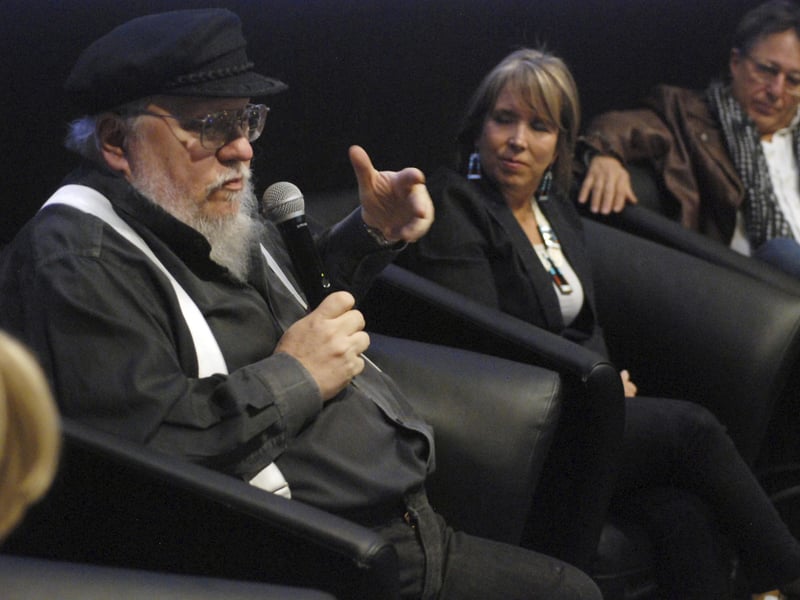
Stein questioned OpenAI about the ChatGPT-generated summaries of several works by Game of Thrones creator George R.R. Martin. The plaintiffs say ChatGPT even generated the outline for unauthorized derivative prequel book to “A Game of Thrones,” using the same characters from Martin’s existing books in the series.
Ybarra said, even in that example of the Martin’s expansive universe building, the judge could still apply his own substantial similarity analysis “filtering out the protectable expression there from unprotectable stock trope characters.”
Stein did not immediately rule from the bench on Wednesday on OpenAI’s motion to dismiss, but remarked several times that the outputs issue had to be addressed.
“If I don’t handle it now, the [multi-district litigation], that issue of substantial similarity with outputs, is going to be left unaddressed by this court and it would be hanging out there in the copyright and AI landscape and it would clearly need to be addressed at another point,” he said.
The plaintiffs have accused OpenAI and its largest investor Microsoft of infringing their copyrights when training their large language models to develop algorithms that allow anyone to generate similar texts they would otherwise pay writers to create.
The consolidated multi-district litigation combined two previously-consolidated cases in the Southern District of New York with four cases transferred from the Northern District of California, along with two other additional New York cases.
The first of these cases to be filed in the Southern District of New York was brought by the Authors Guild professional organization for writers on September 19, 2023. The Authors Guild was joined by 17 other authors on the lawsuit, including Martin and authors John Grisham, Elin Hilderbrand, Jonathan Franzen and Jodi Picoult.
The New York Times filed a suit four months later in the same court seeking to curb OpenAI’s practice of using the newspaper’s stories to train its chatbots.
The coalition of authors who sued OpenAI in the Northern District of California in 2023 includes Pulitzer Prize-winning novelists Michael Chabon, Ta-Nehisi Coates and Junot Diaz.
Comedian and author Sarah Silverman and two other authors brought an earlier complaint against OpenAI in San Francisco federal court claiming ChatGPT can accurately summarize their books when prompted, and say they didn’t give OpenAI permission to use their copyrighted books to train ChatGPT.
 Follow @jruss_jruss
Subscribe to our free newsletters
Our weekly newsletter Closing Arguments offers the latest about ongoing trials, major litigation and rulings in courthouses around the U.S. and the world, while the monthly Under the Lights dishes the legal dirt from Hollywood, sports, Big Tech and the arts.