
 Search Articles


MANHATTAN (CN) — A New York federal judge on Monday evening denied ChatGPT parent company OpenAI’s motion to dismiss a direct copyright infringement claim as part of a large multi-district class action over use of copyrighted works to train the popular generative artificial intelligence chatbot.
“A more discerning observer could reasonably conclude that the allegedly infringing outputs are substantially similar to plaintiffs’ copyrighted works,” U.S. District Judge Sidney Stein wrote in his 18-page opinion of the summaries of copyrighted books and convincingly detailed outlines for sequels generated by the chatbot.
“Though the ChatGPT-generated summaries submitted by plaintiffs do not recount ‘[e]very intricate plot twist and element of character development’ in the original works, they are most certainly attempts at abridgment or condensation of some of the central copyrightable elements of the original works such as setting, plot, and characters,” the Bill Clinton appointee wrote.
As the judge had signaled at oral arguments earlier in October, Stein found ChatGPT’s output of unauthorized derivative sequels to books in one plaintiff George R.R. Martin’s “A Song of Ice and Fire” series of high fantasy novels to be an illustrative example of the chatbot’s potentially infringing use of the central copyrightable elements of the plaintiffs’ original works in ChatGPT output.
“There is no doubt that a reasonable jury applying the more discerning observer test could determine that this output is substantially similar to Martin’s original work based on the output’s incorporation of such copyrightable elements of Martin’s original work as setting, plot, and characters,” Stein wrote.
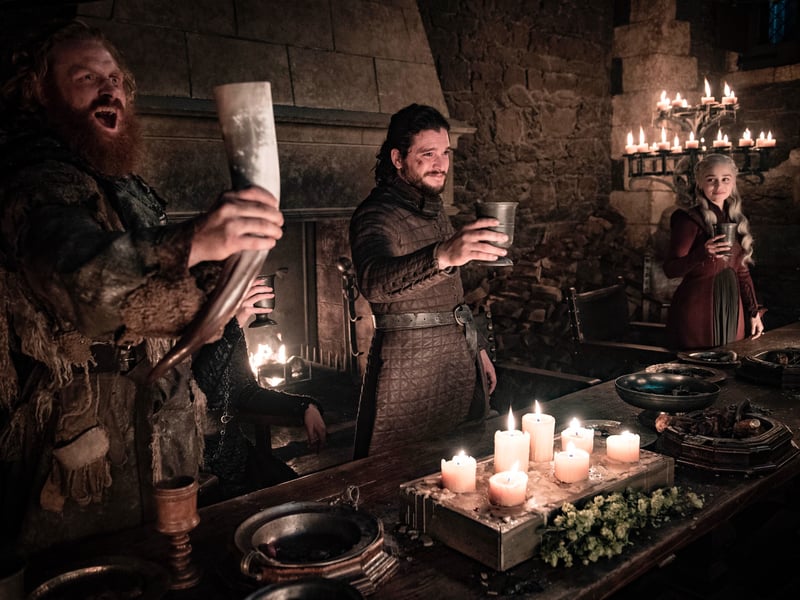
Stein concluded that the “substantial similarity” between the ChatGPT-generated output and Martin’s copyrighted “A Song of Ice and Fire” novels — later adapted into the hit HBO television show “Game of Thrones” — were sufficient to advance the direct copyright claim passed OpenAI’s motion to dismiss.
The judge noted that his dismissal opinion only considered the outputs submitted by plaintiffs in connection with the motion for the purposes of assessing substantial similarity, and did not make any conclusion on the authors’ larger fair use argument.
“Nothing in this opinion is intended to suggest a view on whether the allegedly infringing outputs are protected as fair uses of the original works,” he wrote.
The San Francisco-based OpenAI argued in its motion to dismiss that the consolidated plaintiffs’ failed to quote or attach any examples of unlawful copying based on ChatGPT’s outputs.
“To determine whether a plaintiff has sufficiently alleged ‘substantial similarity’ at the pleading stage, the court looks not to the plaintiff’s allegations, but to the works themselves,” OpenAI argued in the motion. “The complaint does not attach or even quote a single sentence from any allegedly infringing output; nor does it provide any meaningful description of what the outputs contain, much less how their contents are substantially similar to any protected expression in plaintiffs’ works.”
Representatives for OpenAI did not immediately respond to request for comment Monday evening.
The plaintiffs have accused OpenAI and its largest investor Microsoft of infringing their copyrights when training their large language models to develop algorithms that allow anyone to generate similar texts they would otherwise pay writers to create.
The consolidated multi-district litigation combined two previously-consolidated cases in the Southern District of New York with four cases transferred from the Northern District of California, along with two other additional New York cases.
The first of these cases to be filed in the Southern District of New York was brought by the Authors Guild professional organization for writers on September 19, 2023. The Authors Guild was joined by 17 other authors on the lawsuit, including Martin and authors John Grisham, Elin Hilderbrand, Jonathan Franzen and Jodi Picoult.
The New York Times filed a suit four months later in the same court seeking to curb OpenAI’s practice of using the newspaper’s stories to train its chatbots.
The coalition of authors who sued OpenAI in the Northern District of California in 2023 includes Pulitzer Prize-winning novelists Michael Chabon, Ta-Nehisi Coates and Junot Diaz.
Comedian and author Sarah Silverman and two other authors brought an earlier complaint against OpenAI in San Francisco federal court claiming ChatGPT can accurately summarize their books when prompted, and say they didn’t give OpenAI permission to use their copyrighted books to train ChatGPT.
 Follow @jruss_jruss
Subscribe to our free newsletters
Our weekly newsletter Closing Arguments offers the latest about ongoing trials, major litigation and rulings in courthouses around the U.S. and the world, while the monthly Under the Lights dishes the legal dirt from Hollywood, sports, Big Tech and the arts.