Search Articles


MEDFORD, Ore. (CN) — A logging project intended to reduce wildfire risk in Southern Oregon may proceed after a federal judge on Thursday declined a pair of conservation groups’ request to halt it.
“The public has an interest in not experiencing a heightened risk of severe, uncontrolled wildfires. And [Bureau of Land Management] has an interest in effectively carrying out its forest management plan for the long-term health of the project area,” U.S. District Judge Michael McShane, a Barack Obama appointee, wrote in a 17-page opinion.
Applegate Siskiyou Alliance and Klamath Forest Alliance accused the Bureau of Land Management in a March lawsuit of violating environmental law by authorizing logging activities under the Ashland SOS Project that conflicted with its original plan.
The conservation groups claimed the agency initially said the project would preserve hardwood trees, have limited impacts on riparian buffers and require minimal road construction. Instead, the agency is implementing the project in a “materially different manner which has different and unanalyzed effects,” the groups contended in their complaint.
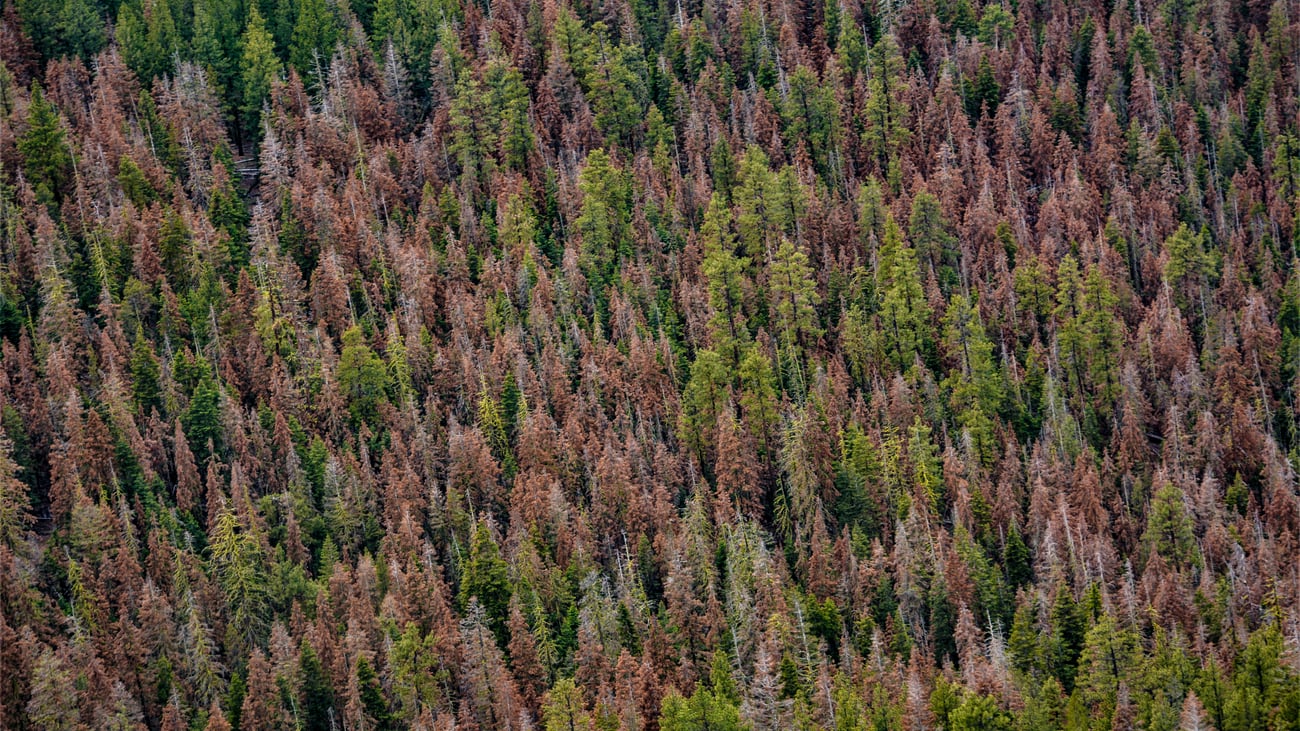
At oral argument in June, the agency said the project is intended to address safety risks posed by dead and dying conifers near populated areas. Southern Oregon has seen increasing numbers of such trees due to wildfire and past vegetation management practices that produced dense forests.
To offset some of the cost of removing those conifers, the Bureau of Land Management approved timber sales.
McShane focused on whether the conservation groups could prove the agency had failed to analyze the environmental effects of logging hardwoods sufficiently.
“The salient question here is whether BLM complied with [the National Environmental Policy Act] in the initial crafting of the project’s environmental assessment,” McShane wrote.
McShane found the agency had in fact complied with federal law, noting it is not the court’s position to micromanage agency choices as long as they fall into a “broad zone of reasonableness.”
“The court is satisfied the agency took a ‘hard look’ at the environmental consequences of hardwood tree removal within the meaning of NEPA,” McShane wrote. He went on to cite the agency’s tree tally sheets predicting post-treatment stand conditions for each timber harvest unit. The tallies were used as inputs for modeling.
While the judge agreed with the conservation groups that the agency’s refrain of promoting hardwoods didn’t show how tree counts in the tally sheets factored into analysis, McShane noted the Bureau of Land Management’s response to such concerns doesn’t necessarily mean the agency declined to account for hardwood tree removal in the environmental assessment.
Plus, the agency offered detailed analyses of the environmental consequences of removing hardwoods, even if the agency didn’t treat hardwood removal as a standalone issue, McShane wrote. And, the agency should be afforded substantial deference to how it analyzes the environmental effects in the environmental assessment.
“The court will not second-guess BLM’s decision to analyze the project’s impact across treatment units and not by specific tree type,” McShane wrote.
Determining the conservationists were unlikely to succeed on the merits of their claims that the agency neglected to take a hard look at non-conifer tree removal, McShane declined to grant them the relief they sought, finding the balance of equities favored the agency.
“Unlike in some environmental cases, BLM pleads serious environmental and equitable harms resulting from an injunction,” McShane wrote. “Specifically, BLM avers the project is necessary to decrease the risk of severe, uncontrolled fires in the Ashland SOS area, which could damage personal property and result in loss of life.”
If the court were to block the project, it could raise the chance of severe wildfires in the area and increase danger to life. It would also inhibit the agency from carrying out its forest management plan for the long-term health of the project area.
Neither party responded to a request for comment before press time.
Subscribe to our free newsletters
Our weekly newsletter Closing Arguments offers the latest about ongoing trials, major litigation and rulings in courthouses around the U.S. and the world, while the monthly Under the Lights dishes the legal dirt from Hollywood, sports, Big Tech and the arts.
Additional Reads
 Homelessness in LA is once again on the rise July 23, 2026