
 Search Articles


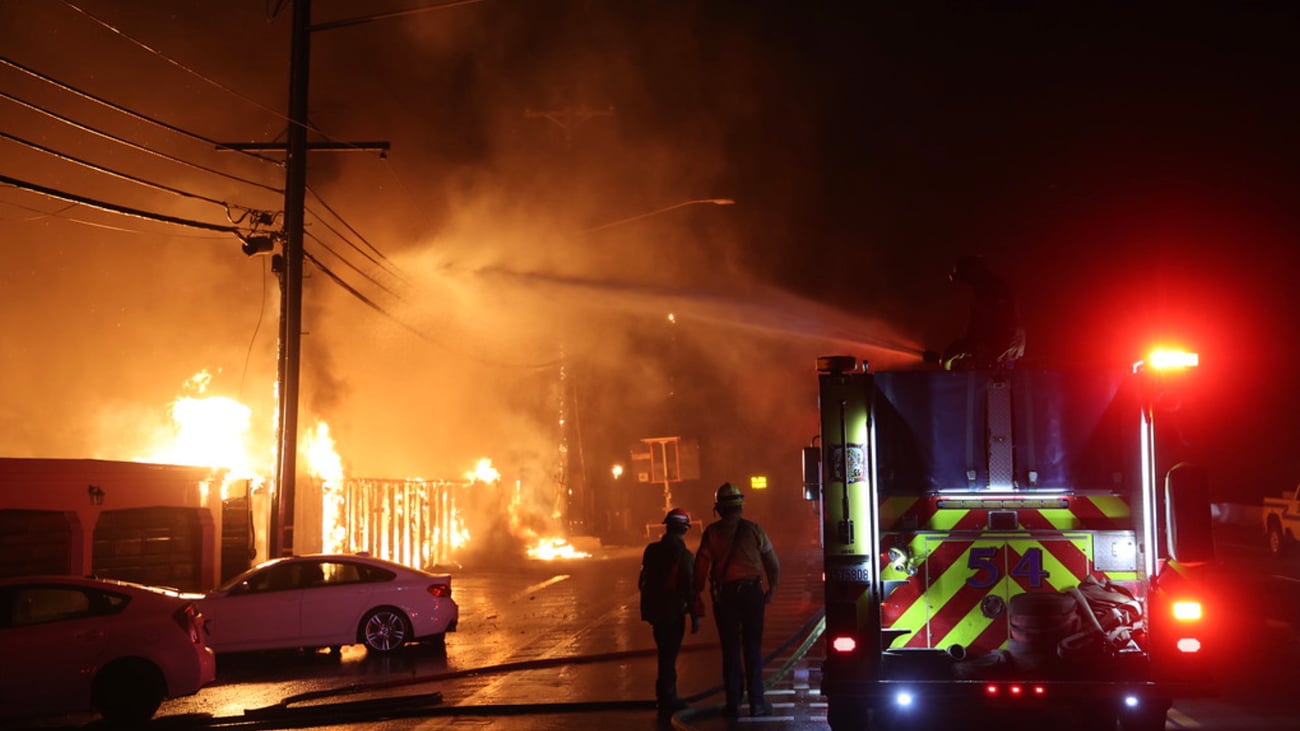
LOS ANGELES (CN) — An expert called by the suspect accused of starting the devastating Palisades Fire in Los Angeles last year testified Monday that he didn’t think the initial brushfire was caused by arson.
Edward Nordskog, a retired LA Sheriff’s Department arson investigator, told the jury that the so-called Lachman Fire in the early hours of Jan. 1, 2025, was most likely caused by fireworks.
“This case is probably not an arson,” Nordskog said under questioning by Steven Haney, the attorney for Jonathan Rinderknecht. “In fact, I don’t believe it’s an arson at all.”
Rinderknecht, 30, is accused of setting fire to the dry vegetation in the hills above the upscale, residential neighborhood above the Pacific Ocean, where he had been living with his then-boyfriend a few years earlier. While the initial brushfire was put out overnight by firefighters, embers continued to smolder underground and were rekindled six days later by extreme Santa Ana winds, resulting in a firestorm that destroyed most of the Palisades and surrounding areas.
Prosecutors with the U.S. attorney’s office in LA argue the disgruntled and volatile Uber driver, who blamed the wealthy for the wrongs in society, was particularly angry that night after he had been rebuffed by a woman whom he had dated earlier that year.
Nordskog testified that the investigation’s focus on any motives Rinderknecht may have had to start a fire was indicative of “confirmation bias,” where they looked for evidence to beef up their theory that the fire was caused by arson.
According to Nordskog, the prosecution expert, who testified last week that Rinderknecht’s behavior fitted the profile of an arsonist driven by a desire to take revenge on a society, relied on outdated and vague classifications that, he said, could fit half the people in the courtroom.
The defense expert was also dismissive of the scene investigation by the U.S. Bureau of Alcohol, Tobacco, Firearms and Explosives, which didn’t start looking at the cause of the Jan. 1 fire until almost two weeks later, when the Palisades Fire had torn through the area and destroyed any evidence there might have been.
“That is generally a case killer,” Nordskog said.
Based on his experience with the LA Sheriff’s Department, he said, most fires on New Year’s Eve and the Fourth of July are caused by fireworks. He faulted the ATF investigators for ignoring evidence of people in the area hearing fireworks that night, even though there were no eyewitness accounts of seeing fireworks over the hill where the fire originated.
Under cross-examination by Assistant U.S. Attorney Danbee Kim, Nordskog discounted Rinderknecht’s own statements to investigators that he had been all alone that night on the hillside, at the so-called Little Buddha clearing where he had spent much time back when he lived close by, and that he hadn’t heard any fireworks while he was up there.
He also said he didn’t give much weight to Rinderknecht’s background and purported motives, including his extremely angry reaction to the woman who had rebuffed his attempt to spend time together on New Year’s Eve because she wanted to have space away from him.
“I don’t see the connection,” he testified. “Maybe if her house was set on fire.”
U.S. District Judge Anne Hwang, outside the presence of the jury, expressed her concern that the prosecution didn’t elicit testimony about the more prejudicial ChatGPT material, which goes beyond Rinderknecht’s activities on the night of the fire or his possible motives for starting the fire.
The Joe Biden appointee also has foreclosed any attempts by Rinderknecht’s defense to shift the blame for the Palisades Fire to the LA Fire Department for not completely extinguishing the Jan. 1 fire that later morphed into the Palisades Fire.
Criminal investigators tracked down Rinderknecht based on 911 calls he made that night, which placed him right at the area where the fire first started shortly after midnight, and security camera footage from nearby residences that showed his car driving through the neighborhood after he dropped off an Uber passenger around 11:30 p.m.
Kevin Kelm, an expert witness retained by the government, told the jury last week that, based on ChatGPT interactions and witness testimony, Rinderknecht couldn’t cope with stressors in his life, such as financial and relationship problems. At the same time, he was fixated on political and social issues like wealth disparity that enraged him without being able to do anything about them.
“He tends to collect grievances,” Kelm said. “It’s always somebody else’s fault.”
Rinderknecht faces as long as 45 years in prison if he’s found guilty on all three counts he’s charged with: destruction of property by means of fire, arson affecting property used in interstate commerce and timber set afire.
On Monday afternoon, the judge excused one of the jurors after she had thanked an LA firefighter for his service when he left the witness stand and walked past the jury box. The juror was replaced by one of the alternates.
The firefighter, Robert Appleford, had been called by the defense to recount that he was on duty at the Palisades fire station on New Year’s Eve 2024 and that he saw flashes and heard explosions he believed were from fireworks coming from the hills around midnight, before the fire was reported.
Rinderknecht’s attorney asked the judge to excuse the juror because her comment might be an indication of bias toward the government.
 Follow @edpettersson
Subscribe to our free newsletters
Our weekly newsletter Closing Arguments offers the latest about ongoing trials, major litigation and rulings in courthouses around the U.S. and the world, while the monthly Under the Lights dishes the legal dirt from Hollywood, sports, Big Tech and the arts.
Additional Reads
 SCOTUS won’t review role of race in police stops June 22, 2026