
 Search Articles


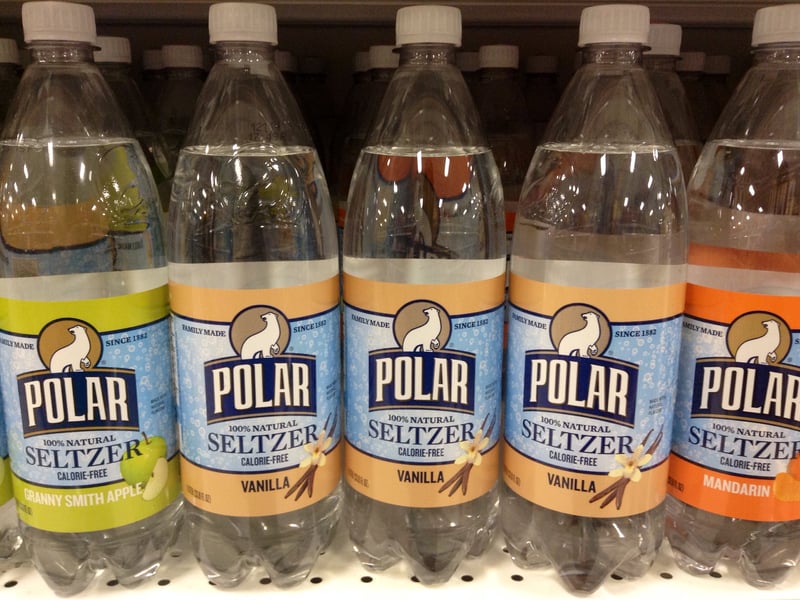
SAN FRANCISCO (CN) — Two women claiming that Polar Beverages falsely advertised their flavored seltzer water as “100% Natural” had their bubble burst on Monday after a federal judge determined there were multiple deficiencies in their claims that the seltzers contained synthetic ingredients.
U.S. District Judge Edward M. Chen wrote that the plaintiffs did not sufficiently report what flavors of seltzer water they investigated in their suit, whether the flavors they tested are the ones they purchased, whether the flavors tested are representative of all of Polar’s seltzer waters and which flavors contain which synthetics.
The named plaintiffs, Stacy Gradney and Sharon Toll, claimed in their March 2025 suit that testing conducted on multiple samples of Polar’s seltzer water found “the presence of synthetic carbon,” as well as ocimene quintoxide, what they claim to be a known synthetic, and other synthetics they say are often used in flavorings in their synthetic forms.
The flavored seltzer water the company manufactures reportedly lists only two ingredients, carbonated water and “natural flavors.”
“Plaintiffs have adequately identified one synthetic in the product — ocimene quintoxide. But for reasons noted herein, the mere identification of one synthetic in some product is not sufficiently specific to satisfy pleading requirements under the federal rules,” Chen, a Barack Obama appointee, wrote.
Chen sided with Polar’s argument that even if the plaintiff’s claims were true, “trace amounts” of synthetics would not make the product’s “100% Natural” label misleading to a reasonable customer.
The judge said that the plaintiffs adequately identified ocimene quintoxide but one synthetic in a certain amount of products was not “sufficiently specific to satisfy pleading requirements under the federal rules.”
However, Chen rejected Polar’s accusation that the plaintiffs failed to specify that the seltzer waters they purchased were labeled as “100% Natural.”
Though Chen dismissed the suit, he left the door open for plaintiffs to file an amended complaint.
“It should not be difficult for plaintiffs to make additional allegations – e.g., that they tested x different flavors (out of y flavors total) with the challenged labeling, that the flavors tested included those purchased by plaintiffs, and/or that the flavors tested are representative with respect to the presence of synthetic chemicals,” Chen wrote.
However, the judge added a caveat that the plaintiffs are prohibited from asserting a nationwide class.
Gradney and Toll, a California and New York resident respectively, brought a deceptive acts claim under New York law, and several claims for violations of California business law separated into state subclasses, but also asserted a nationwide claim for unjust enrichment, along with an express warranty claim Chen said wasn’t clear if it was a nationwide or state claim.
He said that the plaintiffs “have failed to explain how California law can apply to a nationwide class,” specifically for any plaintiff or class member who does not live in the state and bought Polar Seltzer outside the state.
“There would not appear to be any California connection justifying application of California law, especially since Polar is alleged to be a Massachusetts corporation with its principal place of business in Worcester, Massachusetts,” Chen said.
As for the New York claim, Chen acknowledged that the plaintiffs rightly claimed breach of warranty under the state’s laws, but dismissed the claim based on the specificity issues.
Attorneys for the parties did not immediately respond to request for comment.
 Follow @mhattridge_
Subscribe to our free newsletters
Our weekly newsletter Closing Arguments offers the latest about ongoing trials, major litigation and rulings in courthouses around the U.S. and the world, while the monthly Under the Lights dishes the legal dirt from Hollywood, sports, Big Tech and the arts.