
 Search Articles


MANHATTAN (CN) — New York’s Police Benevolent Association asked the Second Circuit on Thursday to reverse the New York Police Department’s settlement to overhaul its response to protests, claiming the new set of rules would harm “officer safety interests.”
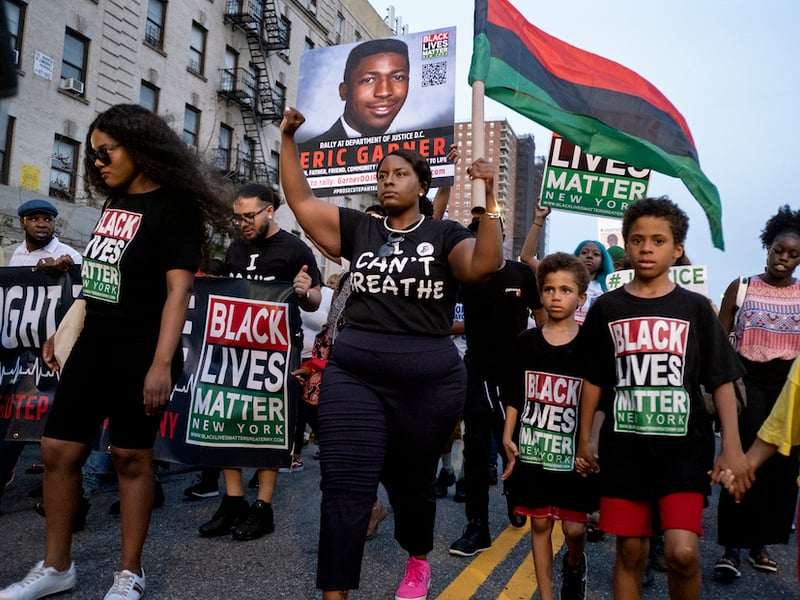
As a result of the settlement reached with the state attorney general and lawyers of Black Lives Matter protesters, the NYPD agreed to end its use of “kettling” to surround, trap and eventually arrest protesters without first providing a warning or giving them an opportunity to leave the area.
The agreement was spurred by hundreds of protesters who said the police brutalized them during 2020 Black Lives Matter protests over the murder of George Floyd by a white Minneapolis police officer. As a result, all 200 protesters were awarded $21,500 each.
But the PBA disputed the agreement and claims the rules it imposed would bind police officers to “a set of radical, laissez-faire policing methods for years to come.”
“Officers will be barred from arresting rioters and others who destroy property — even for crimes witnessed in the officers’ presence — unless they first obtain the approval of senior officers in the streets,” the PBA said in its brief. “And they must navigate a host of other procedural hurdles that will impair real-time response efforts and place the officers themselves at risk.”
Despite being named an intervenor in the lawsuit based on its interest in protecting officer safety, the PBA said the lower court erred in approving the settlement despite the labor union’s objections.
But U.S. Circuit Judge Reena Raggi, a George W. Bush nominee, asked if the PBA believed the court erred in finding that a third-party intervenor’s concerns were not enough to preclude the settlement.
“Is there something about that view of the standard that you’re saying is error, or are you saying that the court misapplied that?” Raggi asked.
PBA attorney Stephen Engel responded that the court erred in dismissing the labor unions’ claim to dispute the settlement because of its recognized interest in officer safety as it relates to this case.
“We had a right to be heard and a right to be heard by the court,” Engel said. “And the court had to consider the PBA’s interests before it approved.”
But the government argued that the lower court took public interest into account when greenlighting the settlement, including the PBA’s concerns of officer public safety.
“It played in fundamentally in the court’s analysis of the public interest,” Assistant Solicitor General Philip Levitz said.
But Raggi was skeptical whether the court did fully consider police safety in its decision.
“It was considering the man on the street who was going to be subjected to police action, that I understand,” Raggi said. “I’m not sure I understand whether, when it said it was considering public interest, it considered the police safety factor.”
Engel responded, that in considering public interest, Senior U.S. District Judge Colleen McMahon considered supporting documents from the U.S. Department of Justice, policing experts and policing organizations that “reflects contemporary policing best practices to protect both the public and officers.”
MacKenzie Fillow, representing New York City, added that the PBA simply does not have the right as an intervenor to block a settlement.
“If we had gone to trial, they could have called witnesses, they could have cross-examined everyone. That, in fact, is when an intervenor’s right is most important and most substantive,” Fillow said. “They don’t have the right to block the settlement. They don’t have the right to force us to go to trial.”
U.S. Circuit Judge William J. Nardini, a Donald Trump appointee, also heard arguments. U.S. Circuit Judge Debra A. Livingston, a George W. Bush appointee, was not present but will take part in the panel’s decision.
 Follow @NikaSchoonover
Subscribe to our free newsletters
Our weekly newsletter Closing Arguments offers the latest about ongoing trials, major litigation and rulings in courthouses around the U.S. and the world, while the monthly Under the Lights dishes the legal dirt from Hollywood, sports, Big Tech and the arts.