
 Search Articles


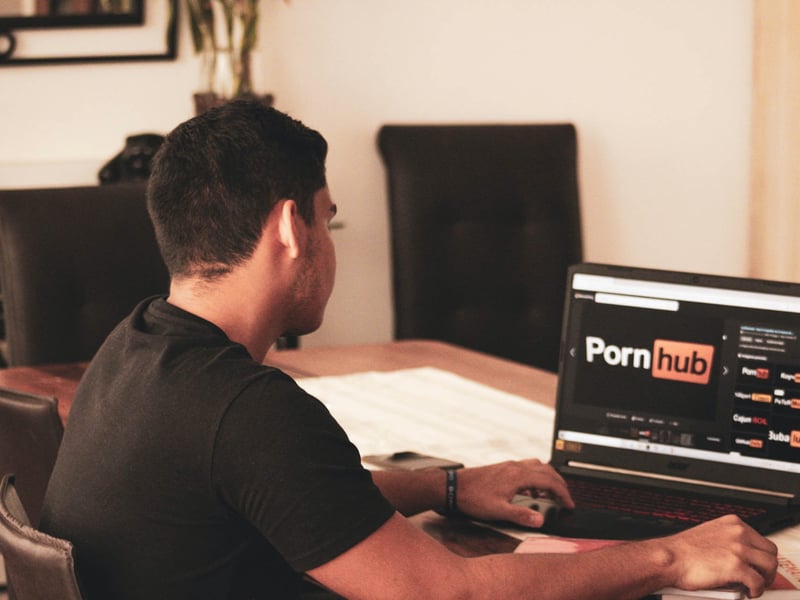
(CN) — The operators of Pornhub agreed to pay a $5 million civil penalty and take numerous measures to weed out videos with children and with nonconsensual sex from its websites in a settlement with the Federal Trade Commission and Utah.
The FTC and Utah filed a complaint in federal court on Wednesday, claiming Aylo Group Ltd. and its affiliates, which own and operate some of the largest and most popular porn sites in the world, have distributed tens of thousands of videos and photos featuring child sexual abuse material and nonconsensual material.
It was only in 2020, after a New York Times exposé about the prevalence of child porn on Pornhub prompted Visa and Mastercard to threaten the operators with massive fines and the permanent termination of their relationship, that Pornhub began attempting to police child porn and rape videos on its websites.
But even then, according to the FTC, the company routinely ignored or overruled such efforts, maintaining tens of thousands of child sexual abuse and nonconsensual sex videos and photos on its websites.
Pornhub’s compliance team even describes its websites as “a goldmine” for “rape content,” the FTC and Utah said in the complaint.
“The victims portrayed in [child sexual abuse material] and [nonconsensual material] have suffered tremendously,” the FTC and the Utah Division of Consumer Protection said in a statement. “In the case of [child sexual abuse material], every single child depicted is the victim of a horrific crime — and Aylo’s alleged facilitation of a market for that content increases incentives to commit those crimes.”
Per the stipulated, permanent injunction filed simultaneously with the complaint, Pornhub must implement a system to verify that people who appear in videos or photos on its websites are adults and have provided consent to the sexual conduct, as well as its production and publication.
The company must also remove content uploaded prior to the implementation of the CSAM and NCM prevention program until Aylo verifies that the individuals participating in those videos were at least 18 at the time the content was created and consented to the sexual conduct and its production and publication.
“This consent order is an important step in protecting people from some of the most harmful and exploitative material online,” Utah Governor Spencer Cox said in a statement. “Companies that profit from such conduct must be held accountable."
MindGeek, as Aylo was previously known, and its financial backers are also fighting a class action and multiple individual lawsuits by women who claim the company hosted videos of them engaging in sex when they were younger than 18, with many of these videos posted on the site by their former boyfriends without their knowledge or consent.
One of the women suing in Los Angeles federal court — the only one who didn’t sue anonymously and who was featured in a 2020 New York Times exposé of child porn on Pornhub — said in her complaint that she was just 13 when her then-boyfriend coerced her into making a sexually explicit video.
She then learned that the boyfriend had uploaded the video on Pornhub, where it immediately went viral and was viewed by students at her school and others in her community.
“In response to the viral dissemination of the video, Serena was bullied and harassed,” she said in her complaint. “Classmates demanded that Serena send them sexually explicit videos of herself and threatened to disclose the sexually explicit video to Serena’s mother or to her school if she did not comply.”
MindGeek employees, she claims, reviewed the video since the company repeatedly had claimed to do that for every video uploaded to Pornhub, and because of the title, “13-Year Old Brunette Shows Off For The Camera,” they were aware that this video showed child sexual abuse material.
Nevertheless, she argued, consistent with MindGeek’s business practices, it was posted on Pornhub and categorized, tagged and optimized for user preferences depicting a 13-year-old girl.
 Follow @edpettersson
Subscribe to our free newsletters
Our weekly newsletter Closing Arguments offers the latest about ongoing trials, major litigation and rulings in courthouses around the U.S. and the world, while the monthly Under the Lights dishes the legal dirt from Hollywood, sports, Big Tech and the arts.