
 Search Articles


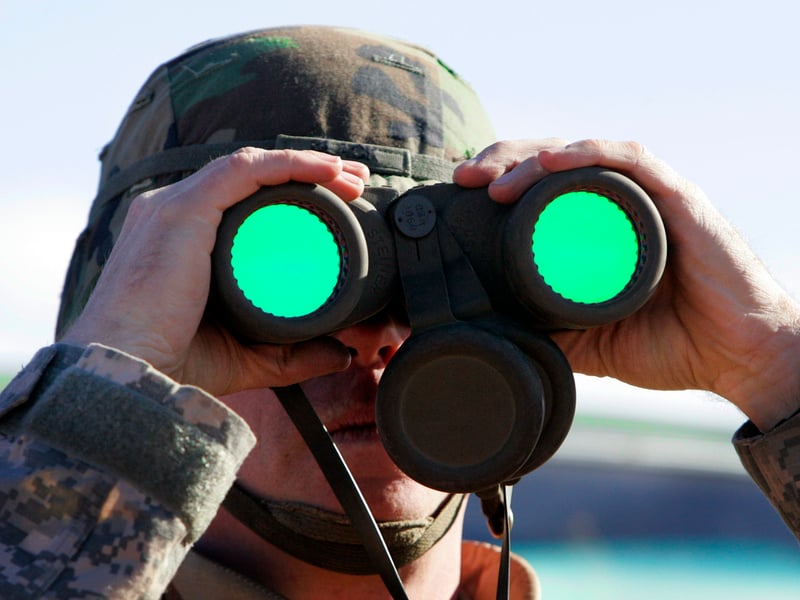
(CN) — President Donald Trump has made multiple statements about using the military inside the borders of the United States, both during the 2024 Presidential campaign and since the election. In the past week, the Defense Department has ordered additional troops to go to the border, with likely more to come.
Much of what those troops will be allowed to do — and what they aren’t — is proscribed in federal regulations relating to a law passed at the end of Reconstruction: The Posse Comitatus Act.
There is much the act allows, and much it does not. And while it remains a keystone in how the military can be deployed domestically, it can still be trumped by another, even older law: The Insurrection Act.
Essentially, what the law allows is this: active-duty military can provide intelligence and logistical support to federal and state law enforcement agencies at the agencies’ request, but generally cannot perform direct law enforcement functions unless authorized by the law or the U.S. Constitution.
The law does not apply to National Guard troops under the direction of their states’ governors.
The phrase “posse comitatus” derives from the time prior to professional law enforcement agencies, where a local authority mobilized a group of locals to protect property or prevent lawlessness.
The act itself is a one-paragraph law signed by President Rutherford B. Hayesin 1878. It reads in part that the Army (the other services were added later) is not to be used as a posse comitatus for law enforcement, “except in such cases and under such circumstances as such employment of said force may be expressly authorized by the Constitution or by act of Congress.”
Violations are a misdemeanor, and punishments include the possibility of two years in prison.
“The Posse Comitatus Act is so named because one of the things it prohibits is using soldiers rather than civilians as a posse comitatus,” according to a fact sheetby Joseph Nunn of the Brennan Center for Justice.
“Congress passed the law to stop the federal government from enforcing civil rights for Black people in the former Confederacy,” said Lindsay P. Cohn, an associate professor of national security at the Naval War College. “It was basically an agreement of home rule.”
Cohn spoke to Courthouse News in her personal capacity and her views do not represent those of the War College or the U.S. government.
The law was often ignored and frequently violated during its first century of existence, Cohn said.
It was not interpreted by a court until the 1970s, when a defendant in the 1973 Wounded Knee Occupation in South Dakota appealed his conviction, claiming logistical support provided by the Army during the standoff violated Posse Comitatus.
In the U.S. v. Red Feather , case, the U.S. District Court for South Dakota disagreed, and listed in its opinion what federal troops could and could not do. It said the act allowed passive participation, but active participation was only allowed when authorized by statute or by the U.S. Constitution.
Essentially, it said the presence of military observers, providing logistical advice, maintaining or training law enforcement officers on military equipment, loaning military equipment and facilities, and aerial photography/reconnaissance flights were all permitted.
“Those lists of things are what the DOD, and later Congress, codified into their instructions and statutes,” Cohn said. “So those lists of things are not in the Posse Comitatus statute, but they are generally referred to as Posse restrictions because that’s how the court interpreted the law.”
What this means is that deploying federal troops to assist law enforcement on the border is not against Posse Comitatus, experts said, as long as they are not directly enforcing the law.
The military can also monitor surface traffic outside, or in the U.S., within 25 miles of the border, allowing troops to surveil things entering the country from its exterior, Cohn said.
“If they detect something outside the border and they see it come in, they don’t have to turn their satellites off as soon as it crosses the border. They can watch it for another 25 miles,” she said. “But they are supposed to, at that point, start handing things over to the appropriate law enforcement agencies.”
A federal military presence along the US/Mexico border is nothing new. Current troop deployments are the continuation of a mission that has been ongoing since the early 1990s.
Ori Swed, an associate professor and military sociologist at Texas Tech University, does not see the current deployments as violating Posse Comitatus. Using soldiers or Marines to chase people crossing into the U.S. illegally doesn’t make much sense. The military is a big beast, he said, with lots of functions and roles.
“Securing the border is not new,” he said. “Monitoring, detection, transportation, working with local agencies, that’s the same as before.”
Prohibited under Posse Comitatus are the interdiction of vehicles, searches and seizures, apprehension and use of military personnel in pursuits or investigations or as interrogators.
“Most of the time when DOD personnel are doing these missions, they go down to the border and they do logistics and transportation and construction of barriers and construction of housing and things like that,” Cohn said. “The point of that is to free up the actual law enforcement agents to do law-enforcement specific stuff.”
Governors have more freedom to use the National Guard, but the national policy of the Guard discourages the use of its troops in direct law enforcement.
“As a matter of policy, the National Guard doesn’t like to do these things even when it is legally allowed to do so,” Cohn said. “It will do them if ordered to do so, but as a matter of policy it does not just jump in and do those things.”
Under federal law, the military can only provide law enforcement assistance if it does not hinder military preparedness. But the ultimate authority is the president.
“If the president decides if this mission is of a higher priority than, say, being ready for a war with China, he can make that call,” Cohn said.
The president also has a great deal of discretion in invoking the main act that can trump Posse Comitatus: The Insurrection Act, which allows the president to deploy troops under conditions of civil disorder or rebellion. Defining that is generally left up to the president, and the main restrictions are political rather than legal.
Cohn added: “Under those circumstances, all those restrictions go away and the only restrictions that matter are what the president orders and Constitutional protections. So, [the military] can’t just violate the Fourth Amendment, for example.”
And as Nunn of the Brennan Center has pointed out, the Insurrection Act, last invoked in 1992 during the Rodney King riots in Los Angeles, does not give the president the authority to declare martial law.
 Follow @nelson_aj
Subscribe to our free newsletters
Our weekly newsletter Closing Arguments offers the latest about ongoing trials, major litigation and rulings in courthouses around the U.S. and the world, while the monthly Under the Lights dishes the legal dirt from Hollywood, sports, Big Tech and the arts.