
 Search Articles


CHICAGO (CN) — Democratic Illinois Governor J.B. Pritzker on Tuesday signed a new labor protection law for the state — this one aimed at boosting the wages of workers with disabilities.
The so-called “Dignity in Pay Act” stipulates that by 2030, employers in Illinois cannot pay their disabled employees less than state minimum wage. The bill targets “sheltered workshops” which specifically hire workers with disabilities to perform labor for less than minimum wage.
The U.S. Fair Labor Standards Act allows employers to pay their disabled workers less than minimum wage, so long as they receive certification to do so from the Wage and Hour Division of the U.S. Department of Labor. As laid out in the Dignity in Pay Act’s language, Illinois concludes disabled people working under one of these certifications make an average of $3 per hour. The federal labor department is currently considering phasing out this certification; the Dignity in Pay Act beats the department to the punch.
“No longer will individuals who have untapped potential be subject to one size fits all assumptions and unfair treatment just because of a disability,” Democratic State Representative Theresa Mah, one of the act’s chief sponsors, said in a prepared statement.
The act stipulates that by the end of 2029, Illinois will no longer recognize the use of sub-minimum wage certificates for employers.
“They won’t be eliminated all right away, but by the end of 2029 they’ll have to be,” Mah told Courthouse News in a separate phone conversation.
The act also establishes a “transition program” to issue grant funding to employers that currently hold such a certificate or have a certificate pending. It further mandates the governor appoint two new members to Illinois’ Employment and Economic Opportunity for Persons with Disabilities Task Force; these two new members will represent employers that currently hold certificates allowing them to pay their disabled workers less than minimum wage.
“Together, we strive to make this state a place where all can lead enriching, independent and comfortable lives.” Pritzker said during a signing ceremony on Tuesday.
Both Houses of the Illinois General Assembly passed the Act last November with bipartisan support, nearly two years after it was introduced. Supporters of the bill ran the gamut from law and consulting firms to disability advocacy nonprofits to public bodies like the Illinois Department of Human Services.
Multiple organizations in the state that utilize disabled peoples’ labor, such as the nonprofits Avenues to Independence and Valley Sheltered Workshop, issued witness slips against the bill. In a prepared statement on its website, Valley Sheltered Workshop accused the Dignity in Pay Act of “risking the loss of vital resources and opportunities for the disable community.”
Robert Bruno, Director of the Labor Education Program for the University of Illinois, disputed this conclusion in a phone interview with Courthouse News.
“They really do suffer from these lower wages,” Bruno said of disabled workers who legally receive sub-minimum wages. “It’s just this form of really cheap labor.”
Bruno echoed Pritzker’s own comments deriding what the governor called an “outdated, tow-tier wage system” at Tuesday’s signing ceremony.
“It’s frankly embarrassing,” Bruno said of the Fair Labor Standards Act’s sub-minimum wage carveout for disabled workers. “Their labor is being dramatically undervalued.”
To date, Bruno told Courthouse News, more than a dozen states have already phased out sub-minimum wage allowances for disabled workers.
Bruno added that “push-back” from the new Trump administration could complicate the federal labor department phasing out sub-minimum wage allowances for disabled workers nationally.
“It would be consistent with the real conservative, pro-business approach,” Bruno said.
Matthew Finkin, a labor law professor also with the University of Illinois, echoed his remarks.
“If you got a labor department that is not sympathetic to equality… it’s dead,” Finkin said.
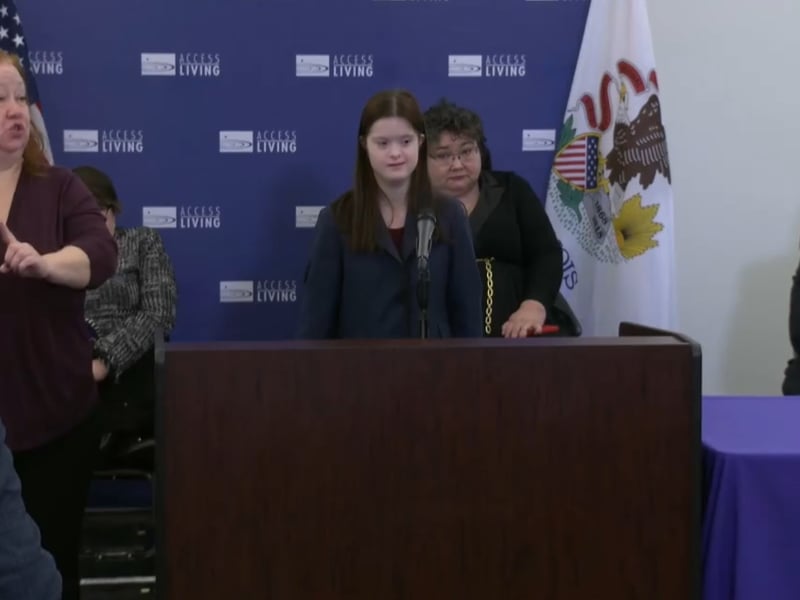
Erin Compton, a disability advocate with Down Syndrome and a member of the governor-appointed State Rehabilitation Council for Illinois, nevertheless took the opportunity Tuesday to celebrate the gains she saw in the Dignity in Pay Act.
“This law helps make financial and vocational wellness possible for all. We must work together to build new futures,” Compton said at the bill’s signing ceremony.
 Follow @djbyrnes1
Subscribe to our free newsletters
Our weekly newsletter Closing Arguments offers the latest about ongoing trials, major litigation and rulings in courthouses around the U.S. and the world, while the monthly Under the Lights dishes the legal dirt from Hollywood, sports, Big Tech and the arts.