
 Search Articles


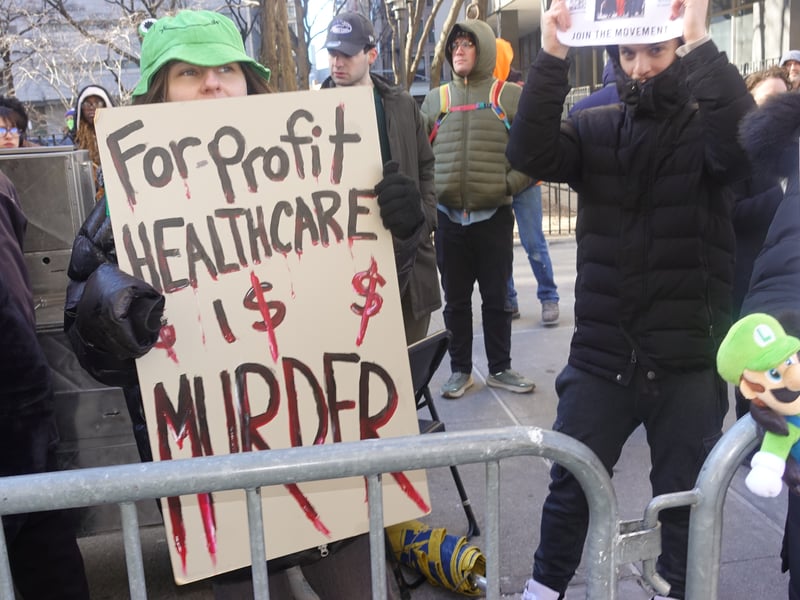
MANHATTAN (CN) — Manhattan prosecutors on Friday defended their “entirely unremarkable” subpoena of Luigi Mangione’s health insurer, Aetna, which he claims sent over his confidential medical records in violation of federal health privacy law.
In a three-page letter filed in Manhattan Supreme Court, Assistant District Attorney Joel Seidemann tried to diffuse that accusation, arguing that the scrutinized subpoena was actually standard and properly narrow.
“In her letter, counsel repeatedly insists that there was something secretive or nefarious about the May 14 subpoena,” Seidemann said, referencing a July 17 letter penned by Mangione’s attorney Karen Agnifilo. “But it sought nothing more from Aetna than ‘the account number and period of time during which [Luigi Mangione] received coverage.’”
Prosecutors supposedly got more than they bargained for. Mangione claims that Aetna ended up sending over “confidential doctor-patient privileged and HIPAA protected medical records,” which far exceeds the scope of the subpoena. Additionally, Mangione claims that prosecutors made up a court date — May 23 — as a faux deadline by which Aetna was to send the subpoena materials.
But Seidemann claims that they did things by the book.
He cited state criminal procedure, which he says “makes abundantly clear that subpoenas for production at court may require compliance on a date prior to the actual date for commencement of the trial, thus creating a window for analysis of the materials without the need to adjourn the trial for that purpose.”
And while it remains unclear what precisely was in the Aetna records, Seidemann didn’t deny that they were beyond the scope of what was requested. Still, he chided Mangione’s defense team for asking the court to punish prosecutors for what was ultimately the insurer’s mistake.
“Through no fault of the people, Aetna seemingly provided materials outside of the scope of the subpoena,” Seidemann claims. “The people then properly identified the error and notified the court and the defense and deleted our copy of said materials.”
Mangione claims that prosecutors received over 120 pages of materials, which he says “should have put the people on immediate alert” that something was amiss. Prosecutors acknowledged that they did review the documents, just not in their entirety.
Seidemann holds that the defense’s issue doesn’t lie with prosecutors, but rather the insurer.
“Given these circumstances, defendant’s real complaint is not about the subpoena itself, but about Aetna’s response to the subpoena, which included documents that the people had not requested,” he claims. “When the people dutifully alerted Aetna that it had sent material that exceeded the scope of that subpoena, Aetna submitted a new response containing only the information we requested.”
Mangione’s defense attorneys, according to Seidemann, added to Aetna’s mistake after the fact by accidentally sending prosecutors the very same file.
“Once again, we complied with our ethical obligations by asking counsel if she intended to send us the file,” Seidemann argues. “When she indicated that she did not and asked that we delete it, we complied with her request and did not take advantage of her error.”
Mangione is seeking a hearing to discuss this further and wants various remedies for the purported infractions, including the recusal of the prosecution team, suppression of evidence or dismissal of the indictment altogether.
Seidemann says all that is unnecessary.
“Reviewing the substance of what occurred, it provides no reason for the defense to delay this case from moving forward toward a hearing and trial,” he claims.
It’s uncertain why prosecutors subpoenaed this information from Mangione’s insurer. The 27-year-old is accused of murdering the CEO of a different insurance company: United Healthcare’s Brian Thompson, who was gunned down last December in an on-camera shooting that set the internet ablaze.
Mangione is currently awaiting a pair of murder trials for the killing in state and federal court. In his federal case, Mangione faces capital punishment, which his attorneys claim should put the state case on hold for the time being.
 Follow @Uebey
 Follow @uebey.bsky.social
Subscribe to our free newsletters
Our weekly newsletter Closing Arguments offers the latest about ongoing trials, major litigation and rulings in courthouses around the U.S. and the world, while the monthly Under the Lights dishes the legal dirt from Hollywood, sports, Big Tech and the arts.