
 Search Articles


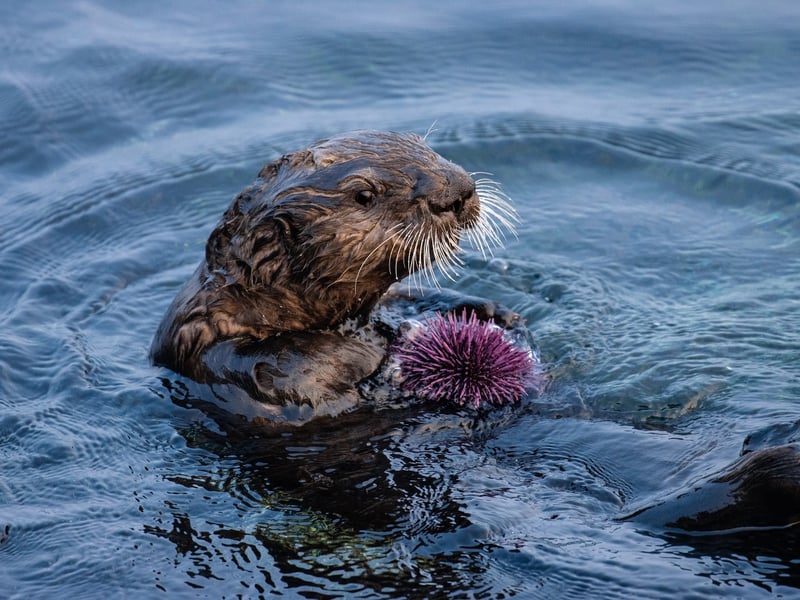
(CN) — Sea otters are voracious eaters, munching away on shellfish, urchins and other invertebrates throughout the day. While the marine mammals tend to feel satiated after a lengthy meal, recent evidence suggests the location of where they gorge may increase the amount of “forever chemicals” throughout their bodies.
In a new paper in the journal Environmental Toxicology and Chemistry, published Monday by Oxford University Press, scientists reveal high levels of perfluorinated and polyfluorinated alkyl substances, also known as “forever chemicals,” found in the bodies of dead sea otters on the shores of British Columbia.
PFAS are synthetic, often toxic chemicals that stay in the environment and continually accumulate in living creatures, including humans, where they actively bind to proteins.
They are found in soil and water, and no region in the world, even polar outposts, is PFAS-free. The lining of food packaging, nonstick cookware, waterproof textiles, cosmetics and firefighting foams, among other products, frequently contain PFAS.
Seven authors based in Canada, including scientists working in the Ocean Pollution Research Unit and the Marine Mammal Research Unit with the Institute for the Oceans and Fisheries at the University of British Columbia in Vancouver, contributed research to the new report.
The researchers analyzed 16 skeletal muscle and liver samples from 11 different otters. Forty identifiable chemicals were found in the samples, with the liver revealing higher concentrations.
“The liver is often used to assess PFAS because chemicals accumulate differently in different organs, and the liver is one that tends to contain some of the highest levels of contaminants,” Dana Price, a co-author and researcher with the University of British Columbia, said in an email.
“We also tested sea otter muscles to look at other parts of the body and found the amounts of PFAS were indeed higher in the liver. That has been found by other research in both water and land-based mammals, so it’s not just sea otters that livers are good to test,” she said.
Price and the other scientists found the closer Pacific sea otters live to humans, the more likely they are to have PFAS in elevated amounts, with over three times higher on average near shipping routes and major cities.
“A surprising trend we saw in the sea otters was that the amount of PFAS they contained was higher in sea otters that lived nearer to where more people do,” said Price.
“Since PFAS are man-made chemicals found in some everyday use products like non-stick pans, containers, raincoats, and makeup, it unfortunately makes sense that sea otters being nearer to humans may mean they’re around more chemical pollution.
“It also shocked me to see that a sea otter that had passed shortly after being born had still been exposed to PFAS, likely from its mother being contaminated with the same chemicals,” she said.
Within the study range around and north of Vancouver Island, the researchers found differing concentrations based on the specimens’ locations; however, the proportion of how much ended up in the skeletal muscle versus the liver remained the same.
“Most of British Columbia’s population is concentrated in the southern coastal regions,” the authors said. “Consequently, the sea otters using the northern portion of their range are in more remote areas located further away from major urban and industrial areas. As a result, these more remote sea otters are less exposed to human activities and release of PFAS into their environment,” the authors concluded.
The authors explained sea otters are a good species to monitor the overall number of regional contaminants, in order to indicate how much other species in coastal ecosystems may be likely to accumulate the “forever chemicals,” due to the sea otters’ ability to eat a lot of organisms and their condensed home range, compared to other marine mammals, such as whales.
The toxic effects of PFAS in mammals range from developmental delays, endocrine disruption, liver inflammation, cancer-causing effects and immunotoxicity.
To prevent further contamination, Price said, government action is needed, along with agreements by large companies to curb toxic chemical use.
“In terms of large-scale action, the Canadian government has been restricting the production and use of PFAS that have a lot of research indicating they’re a risk,” she said. “On a person-to-person basis, one of the best things we can do is be an informed and responsible consumer. There are companies that have proactively committed to not using any PFAS in their products, and since PFAS are man-made chemicals, that means fewer are being created that can affect the sea otters (and humans).”
And although sea otters’ big meals may cause higher concentrations of chemicals in their bodies, the authors also described how their metabolism may ultimately benefit them — if they survive long enough.
“The half-life of PFAS varies greatly by species,” the authors said, “and may be shorter in sea otters compared to other marine mammals due to their high metabolic rates.”
Subscribe to our free newsletters
Our weekly newsletter Closing Arguments offers the latest about ongoing trials, major litigation and rulings in courthouses around the U.S. and the world, while the monthly Under the Lights dishes the legal dirt from Hollywood, sports, Big Tech and the arts.