Search Articles


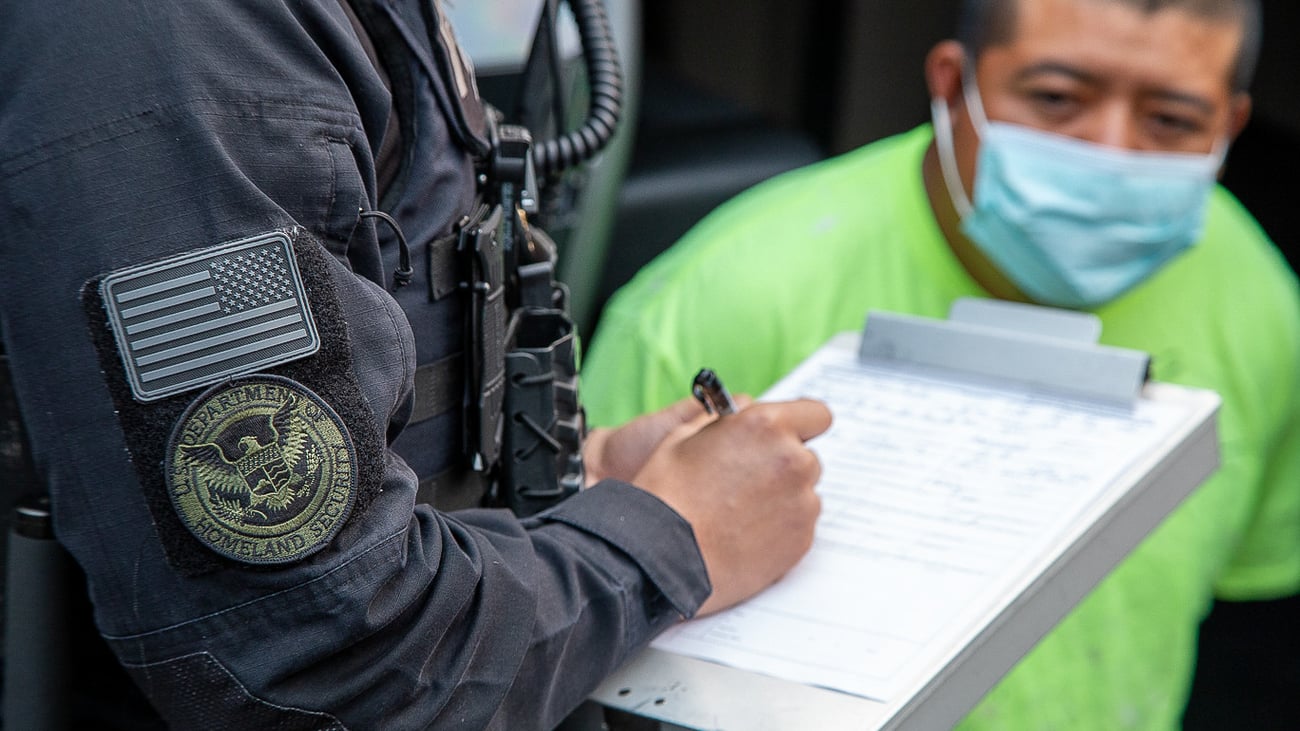
(CN) — Amid efforts to ramp up deportations, European officials hosted a delegation of Afghan Taliban officials in Brussels for the first time Tuesday with an eye toward deporting Afghans who’ve committed crimes or who pose a security threat, a policy already carried out by Germany.
The closed-door meeting at an undisclosed location was highly controversial, with human rights groups castigating the European Union and European governments for legitimizing the Taliban regime and taking a step toward deporting people to a dangerous country, which is a violation of international law.
The Taliban’s supreme leader and chief justice are wanted by the International Criminal Court for the crime against humanity of persecution on the grounds of gender.
Since returning to power in 2021 following the withdrawal of U.S.-led forces from Afghanistan, the Taliban have imposed draconian restrictions on rights, particularly for women and girls.
“By engaging in such discussions, the EU is crossing its own red lines for engagement with the Taliban, and compromising its own commitments to respecting human rights and the rule of law,” said Alexis Deswaef, the head of the Paris-based International Federation for Human Rights.
Afghan activist and Nobel Peace Prize laureate Malala Yousafzai said Monday that she was “deeply shaken” that the EU was talking with the Taliban.
“Europe must not legitimize a regime responsible for one of the worst human rights crises in the world. Any engagement with the Taliban must begin and end with the rights of Afghan women and girls,” she wrote on X.
Women and girls have been banned from education beyond primary school and from working in all but very few professions. The Taliban have also imposed strict regulations on what women are allowed to wear in public.
On Monday, Belgian authorities granted one-day visas to five Afghan officials, including Abdul Qahar Balkhi, the chief spokesperson for Afghanistan’s foreign ministry.
The European Commission, the EU executive, and Swedish officials led the talks, which also involved ministers from 15 EU states.
EU officials have largely refused to provide details about their discussions with the Taliban. They insist engaging in talks does not mean the EU recognizes the Taliban as a legitimate government.
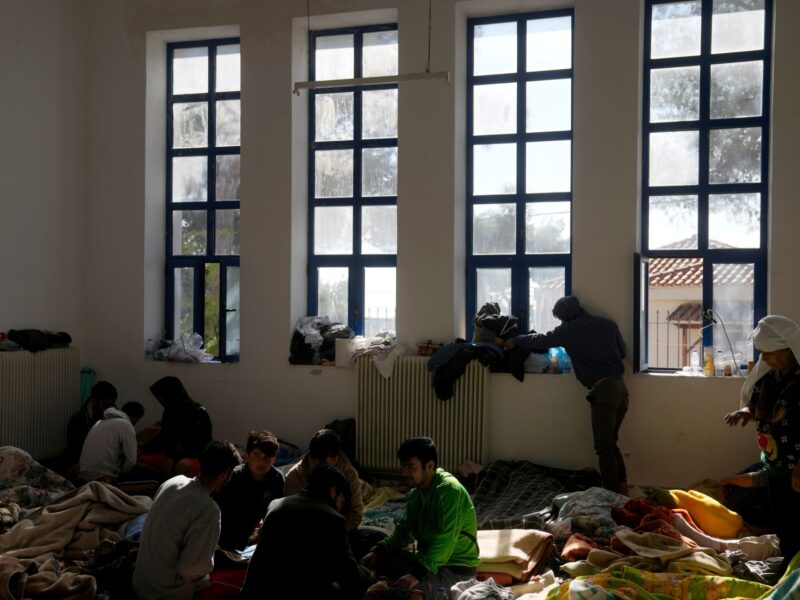
Across Europe, demands are growing to deport migrants and asylum-seekers who are in the bloc without permission or who have committed crimes. Afghans are among the largest groups of asylum-seekers in the EU.
Earlier this month, the EU began enforcing a new tough immigration regime that allows for speedier deportations. The bloc is also looking at setting up “return hubs” outside the EU where it can send rejected asylum-seekers.
Under EU law, people convicted of serious crimes or deemed security threats can be deported, but sending Afghans home has been difficult due to the lack of diplomatic relations.
Germany has already begun deporting Afghans who have committed crimes or who are designated a security threat.
It announced that policy after a mass knife attack on May 31, 2024, at an anti-Islam rally in Mannheim by an Afghan refugee. Since then, about 200 Afghans have been deported to Afghanistan, and there are about 100 Afghans in custody awaiting deportation, according to German media.
On Monday, Germany said it planned to step up deportations of Afghan “criminals and suspected terrorists.” It said it planned three flights a month to Afghanistan.
“Deporting rapists, dangerous individuals, and drug dealers, including to Afghanistan, makes Germany safer,” Germany’s ruling Christian Democrats said in a statement.
“Afghanistan cannot in any way be considered safe for returns, and this approach will put the lives of returnees at risk,” Amnesty International warned. “The Taliban’s institutionalized system of repression affects every aspect of daily life, and includes severe restrictions on the rights of women and girls, the use of torture and other ill-treatment, enforced disappearance, arbitrary arrests, and extrajudicial executions.”
Amnesty International condemned the EU for holding talks with the Taliban regime.
“Any EU engagement on deportations to Afghanistan is reckless, dangerous and ignores the EU’s own legal obligations,” said Eve Geddie, an Amnesty International director based in Brussels.
War-torn Afghanistan is in the midst of a humanitarian crisis where more than 17 million people are in need of help as the country struggles with severe food shortages, economic crisis and economic sanctions.
About 3 million Afghans have been forced to return home from Pakistan and Iran in the past year, which has worsened the humanitarian disaster in Afghanistan.
The European Commission said Tuesday’s meeting came at the request of 20 EU states that signed an October 2025 letter asking the commission to coordinate talks with Afghan officials because they saw it as a priority to deport Afghans deemed a danger.
“These are technical-level contacts,” commission spokesperson Markus Lammert said. “This does not mean recognition.”
At a news briefing on Monday, Lammert said EU nations were interested in deporting “persons who pose a security threat or who have committed serious crimes.”
No EU nation recognizes the Taliban government, as is the case with most nations around the world. Tuesday’s meeting, therefore, represented a significant diplomatic success for the Taliban.
“This was a historic visit as first time ever that delegation from Islamic Emirate visited the EU and held talks with member states in Brussels,” said Balkhi, the Taliban Ministry of Foreign Affairs spokesperson, in a statement.
Balkhi said the two sides spoke about “restarting broad-range consular services for Afghans in EU zone, including need for trust-building measures, consular presence and dignified return process.”
In January, the European Commission sent a mission to Kabul to hold a first round of talks.
Belgian Migration Minister Anneleen Van Bossuyt, who helped draft the October letter, said that across the EU, only 2% of the 22,870 Afghans told to leave the bloc had done so.
EU countries have received about a million asylum applications filed by Afghans between 2013 and 2024, according to the bloc’s migration agency.
Courthouse News reporter Cain Burdeau is based in the European Union.
 Follow @cainburdeau
Subscribe to our free newsletters
Our weekly newsletter Closing Arguments offers the latest about ongoing trials, major litigation and rulings in courthouses around the U.S. and the world, while the monthly Under the Lights dishes the legal dirt from Hollywood, sports, Big Tech and the arts.