
 Search Articles


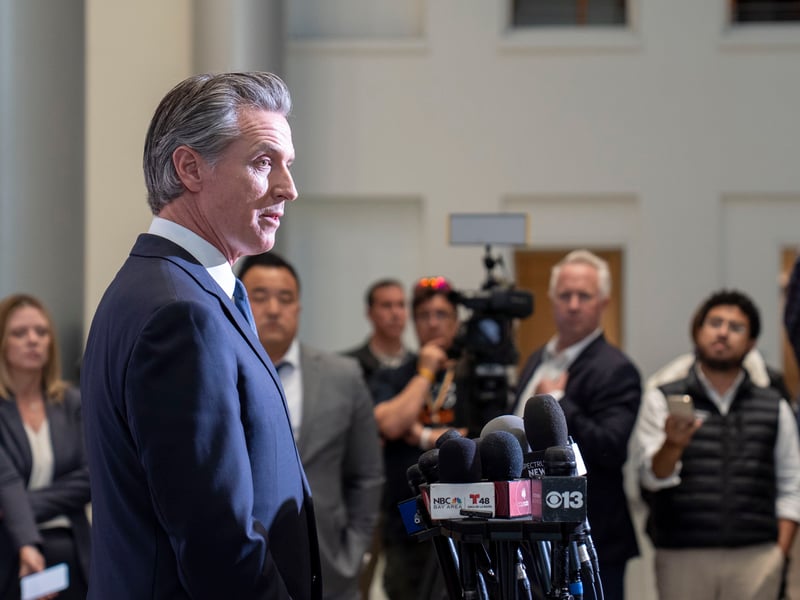
(CN) — California is poised to ask voters whether they want to temporarily set aside its independent redistricting citizens commission in favor of new congressional maps that favor Democrats.
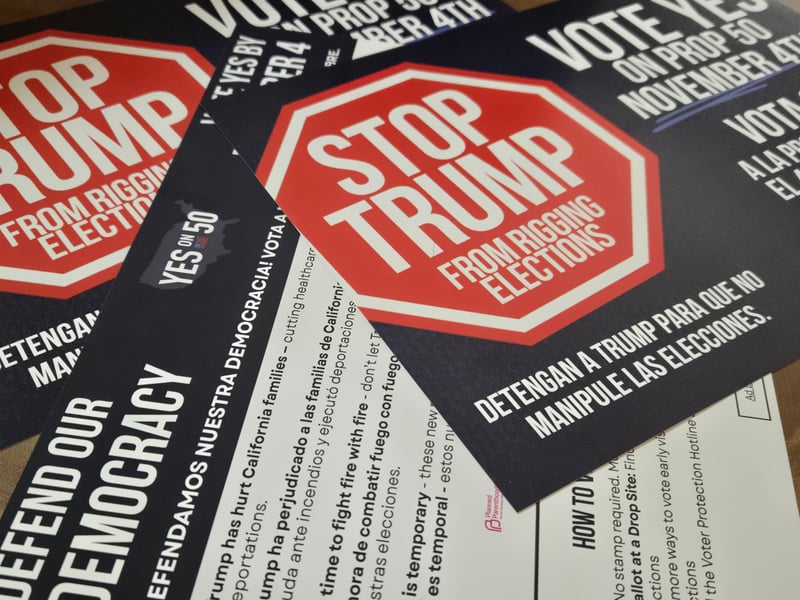
Proposition 50, set for Nov. 4, is Governor Gavin Newsom’s answer to Texas redrawing its congressional lines to favor Republicans. Newsom attacked the move, along with President Donald Trump for instigating it, saying the Golden State would fight fire with fire.
If approved, the new districts would remain effective until after the 2030 election, when the citizens commission would again take the reins.
Vote-by-mail ballots are expected to hit Californians’ mailboxes within days.
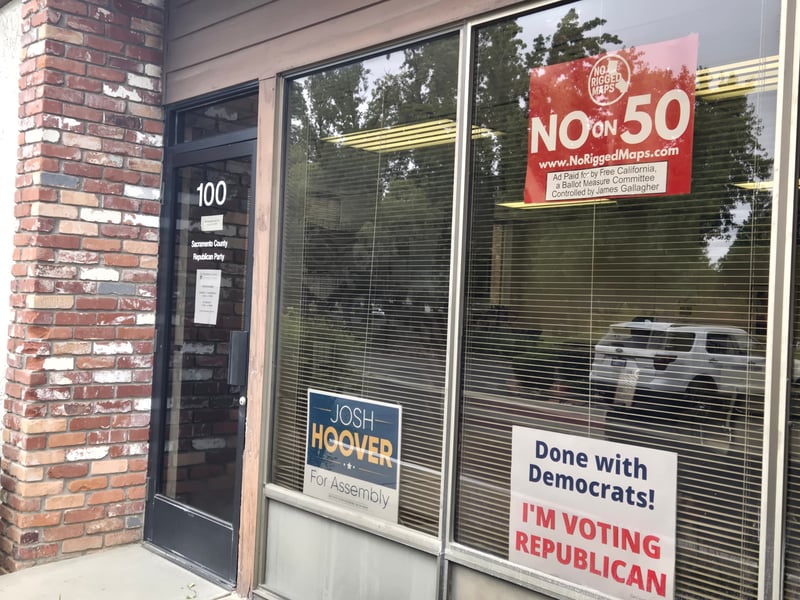
Supporters have argued that the temporary maps are needed to offset Trump’s moves in red states. Opponents have pointed to the shape of the proposed districts — like one that includes a large swath of the North State as well as the North Bay Area — saying rural voters will lose their voice.
“He’s trying to rig the election,” Newsom said of Trump after lawmakers sped bills through the Legislature to meet an election deadline. “He’s trying to set up the conditions where he can claim the election was not won fair and square.”
And big names like former California Governor Arnold Schwarzenegger have come out against it.
But the Terminator opposing redistricting might not be enough to sway those who do go to the polls.
An initial poll showed support among California voters for the measure.
Released Aug. 22 by the University of California, Berkeley’s Institute of Governmental Studies, the poll showed 48% of those surveyed would vote in favor of the measure, with 32% opposed. Twenty percent were undecided.
Another poll on the issue from UC Berkeley is expected from the university days before the election.
An Emerson College poll released Sept. 19 showed 51% in support, 34% opposed and 15% undecided.
James Adams, a University of California, Davis political science professor, sees different factors potentially causing ripples from November’s ballot question in future elections.
While Democrats could muster a win in the special election, it might backfire on them in the 2026 midterms, Adams told Courthouse News. Republicans could galvanize around the ready-made issue in 2026, he said, when all U.S. House of Representatives seats are up for grabs.
However, Democrats appear certain that the gerrymandering is a path to their own victory in the midterms, he added.
“Maybe they’re right,” Adams said of the Democrats. “Maybe the strategy will work and they have no choice.”
Adams’ own speculation is that Democrats would do better by taking the high road, referencing former First Lady Michelle Obama’s famous quip: “When they go low, we go high.” He wondered how Democrats would fare if instead of pushing redistricting, Newsom campaigned on the view that Republicans wanted to rig the election in Texas.
Newsom could argue Democrats would never use that tack and because of that people should vote for his party, Adams argued.
Kim Nalder, a political science professor at Sacramento State, took a contrary point to Obama’s high-road comment.
“I think history has shown us, they go low, we go high, is failing,” she told Courthouse News.
Some people consider present-day politics a “break-glass situation,” Nalder said, with politics as usual no longer a tried-and-true axiom. She expects red states will perform their own redistricting, potentially nullifying California’s efforts.
In one of her classes, Nalder teaches about reapportionment and redistricting.
“Now I have to explain, ‘well, but …’” she added. “I’m teaching a history class: Here’s how we used to do things.”
Nalder said campaigns involved in Proposition 50 must move quickly, as little time remains until the vote. When people don’t have much information about a ballot measure, and not much time, they tend to take cues from party leaders, celebrities and, more recently, podcasters.
“I think the whole enterprise is ethically flawed, but that seems to be the theme for the year,” Nalder quipped.
For and against
For Melina Abdullah — political action chair with the California Faculty Association, which supports the ballot measure — Proposition 50 is about stopping what she sees as the Trump administration’s attempt at a Republican majority in the U.S. House of Representatives.
“Prop 50 is a necessary pushback of the Trump regime to gerrymander this country,” she said.
Gerrymander is a term meaning to draw the lines of a political district in a way that favors a certain party or group. Trump opponents, including Newsom, say that’s exactly what Trump intended when he contacted Texas Governor Greg Abbott and asked him for five more Republican seats.
That request started a series of dominoes to fall, leading to California’s redistricting effort and some red states to follow suit.
Abdullah told Courthouse News that it’s a way for California to check Trump’s political legerdemain.
“We’re going to voters,” she said. “We’re asking them to redraw district lines, temporarily.”
Abdullah has heard the arguments about gerrymandering backfiring, with Republicans taking more seats instead of Democrats. While that could be possible in a purple state, she doesn’t see it happening in blue California.
She’s also confident the measure will pass at the polls. When people are given information about the proposition, they support it, Abdullah said.
The key, she added, is getting voters to the ballot box. She said labor groups like hers that organize people will triumph over any campaign dollars spent against them.
While pro-Proposition 50 allies have heavyweights like Newsom on their side, the opposition features Schwarzenegger — a former California governor who, when in office, pushed for the creation of the independent redistricting commission.
Calling itself a leading opposition ballot committee, No on Prop 50 — Stop Sacramento’s Power Grab has argued Californians already have made their voice known: They don’t want politicians drawing their congressional maps.
Jessica Millan Patterson, chair of the No on Prop 50 group and former chair of the California GOP, pushed back on Newsom’s messaging that the Golden State must “fight fire with fire.”
“They’re two totally different things,” Patterson told Courthouse News.
Texas had to redraw its congressional districts because of a directive from former President Joe Biden’s Justice Department. Additionally, Texas lawmakers draw their state’s districts. California has an independent commission, Patterson said.
Pointing to rural areas like Modoc County, Patterson said the new maps would move that northern county into a district with Marin County in the Bay Area. Modoc County is one of the most remote and poor while Marin County is urban and wealthy.
The new maps also would split up communities like Palm Springs and Laquinta, separated by some 20 miles.
“Their voices have been diluted by the way these districts have been drawn,” Patterson said.
The No on Prop 50 chair also blasted Democratic lawmakers for what she called their lack of transparency. Patterson said legislators wouldn’t say who drew the maps during hearings, arguing they knew who created them.
Paul Mitchell, a Sacramento data consultant who heads Redistricting Partners, has since said he drew the proposed maps.
“The lack of transparency should be a red flag for everyone,” Patterson said.
Subscribe to our free newsletters
Our weekly newsletter Closing Arguments offers the latest about ongoing trials, major litigation and rulings in courthouses around the U.S. and the world, while the monthly Under the Lights dishes the legal dirt from Hollywood, sports, Big Tech and the arts.