
 Search Articles


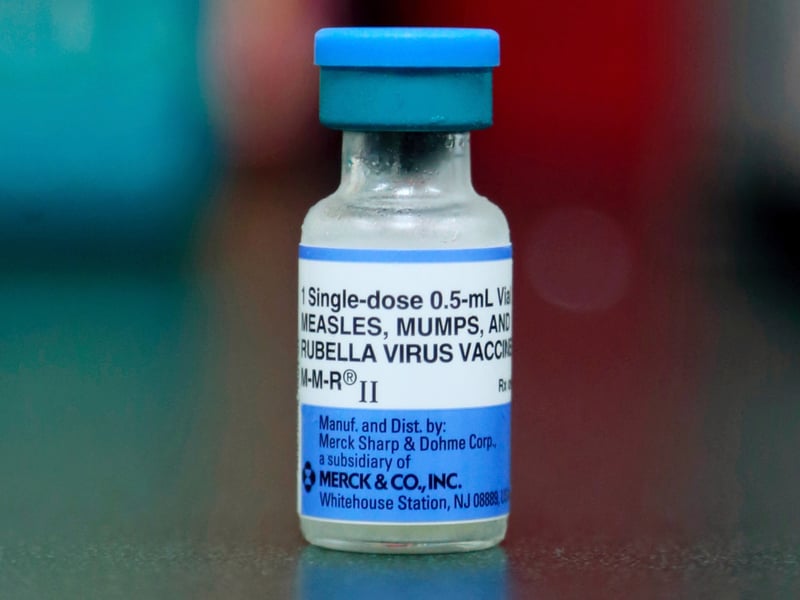
ATLANTA (CN) — The Centers for Disease Control and Prevention’s Advisory Committee on Immunization Practices met with various health experts Thursday to discuss and vote on certain vaccine recommendations.
The meeting marked the first among the committee’s new members appointed this year by Department of Health and Human Services Secretary Robert F. Kennedy Jr., who has been criticized for spreading anti-vaccine rhetoric.
While Kennedy said his upheaval of the committee’s former members was an effort to restore public trust in health officials following the Covid pandemic, some experts expressed concern that making unnecessary changes could have the opposite effect.
“We have to be very conscious that this may be driven by fear. And maybe driven by people that think of vaccines as being either good or evil. And they don’t understand the discussion of the subtleties that we are going through,” renowned psychiatrist and nutritional neuroscientist Dr. Joseph Hibbeln said.
“So, if we make a major change, I think we have to have a darn good reason for why we’re making that change,” he added.
Eight of the panel’s members voted to change the current recommended vaccination age for the measles, mumps, rubella and varicella or chickenpox shot — MMRV — from 12 months to 4 through 12 years old.
The vaccine combines the MMR vaccine with the varicella vaccine into one shot that was designed to reduce the number of shots a child receives.
But the change encourages children under the age of 4 to receive the two separate vaccinations.
It was introduced as a way to reduce the amount of febrile seizures, which can occur in infants experiencing fever — an observed side effect of the MMRV vaccine.
Dr. Cody Meissner, a pediatrics professor who previously served as a member of the Food and Drug Administration’s vaccines panel, said febrile seizures are commonly seen by pediatricians in children under 5 and that they are typically short and harmless. He voted no on the change, along with members Hibbeln and Hillary Blackburn.
“If a parent wants to only get a single dose, why are we taking away that option?” Meissner said.
Others echoed his concerns that a change would strip parents of their ability to decide what is best for their child and have informed discussions with pediatricians about the risks and benefits.
Dr. Jason Goldman, president of the American College of Physicians, expressed concerns about children not returning to receive the second dose and how pediatricians may deal with vaccine hesitancy from parents.
“This recommendation is going to confuse the public,” said Goldman. “Give the power to the parents to decide what’s best for their child,” he added.
Dr. Arjun Srinivasan, acting chief medical officer for the National Center for Immunization and Respiratory Diseases, explained the several severe consequences of the diseases these vaccines were designed to prevent.
During the nation’s last major rubella epidemic between 1964 and 1965, 11,000 pregnant women lost their babies, 2,100 newborns died, and 20,000 were born with congenital rubella syndrome, causing deafness, heart defects and developmental delay. Vaccination led to the disease being eliminated in 2004.
Before the introduction of the measles vaccine in 1963, the highly contagious infection caused an estimated 400 to 500 deaths each year. While measles was eliminated in 2000, it has made a comeback this year with 1,431 confirmed cases in 41 states, mostly among children.
Richard Haupt, vice president and head of global medical & scientific affairs, vaccines and infectious diseases at Merck Research Laboratories, said the CDC has observed a “troubling” decline in kindergarten vaccination rates for the illness. He warned the nation has fallen behind the 95% threshold needed to sustain herd immunity.
“Considering these trends, any policy decisions that compromises the clarity or consistency of vaccination guidance for MMRV has the potential to further diminish public confidence. I think that’s really important in your deliberations,” Haupt said.
On Friday, the committee will vote on whether to change the recommendation for the Hepatitis B vaccine, which is currently to be given within 24 hours of birth. Dr. Martin Kulldorff, Swedish epidemiologist, biostatistician and chairman of the committee, said the change would only apply to mothers who have tested negative for Hepatitis B.
However, about half of people with HBV infection are unaware of their infection, so they could unknowingly expose infants that are in their care, Adam Langer, the associate director for science at the CDC’s National Center for HIV, Viral Hepatitis, STD, and TB Prevention, said.
The virus affects more than 2.4 million people in the U.S. and causes a serious liver infection that can become chronic and result in cancer or death.
More than 40 years of the vaccine’s use show it is safe and effective and that earlier birth dose vaccination has greater effectiveness, Langer said.
Additionally, there is “no evidence that the risk of already rare adverse events is any greater among newborns than among older infants,” he said.
The only potential benefit to rescinding the current recommendation is a potential reduction in rare cases of adverse effects from the birth dose vaccine. Langer said when these do occur, the adverse effects tend to be mild.
“The worst adverse event you could imagine — anaphylaxis — has been very rarely reported at only 1.1 cases per 1 million vaccine doses administered,” Langer said.
On Friday, the committee will discuss updating implementations of the Covid-19 vaccine. Last month, the FDA decided to recommend the shots only for adults over 65 and adults with underlying health conditions.
The committee’s votes are simply recommendations that must be reviewed and approved by the CDC director to become official guidance. Ultimately, the FDA retains the power over what is allowed to the public.
Thursday’s meeting comes a day after the former head of the CDC, Susan Monarez, told the Senate she was fired by the Trump administration for “holding the line” on the scientific consensus supporting childhood vaccine recommendations.
Monarez reiterated claims she made earlier this month that Kennedy demanded she agree in advance to approve every recommendation change proposed by the committee.
 Follow @Megwiththenews
Subscribe to our free newsletters
Our weekly newsletter Closing Arguments offers the latest about ongoing trials, major litigation and rulings in courthouses around the U.S. and the world, while the monthly Under the Lights dishes the legal dirt from Hollywood, sports, Big Tech and the arts.