Search Articles


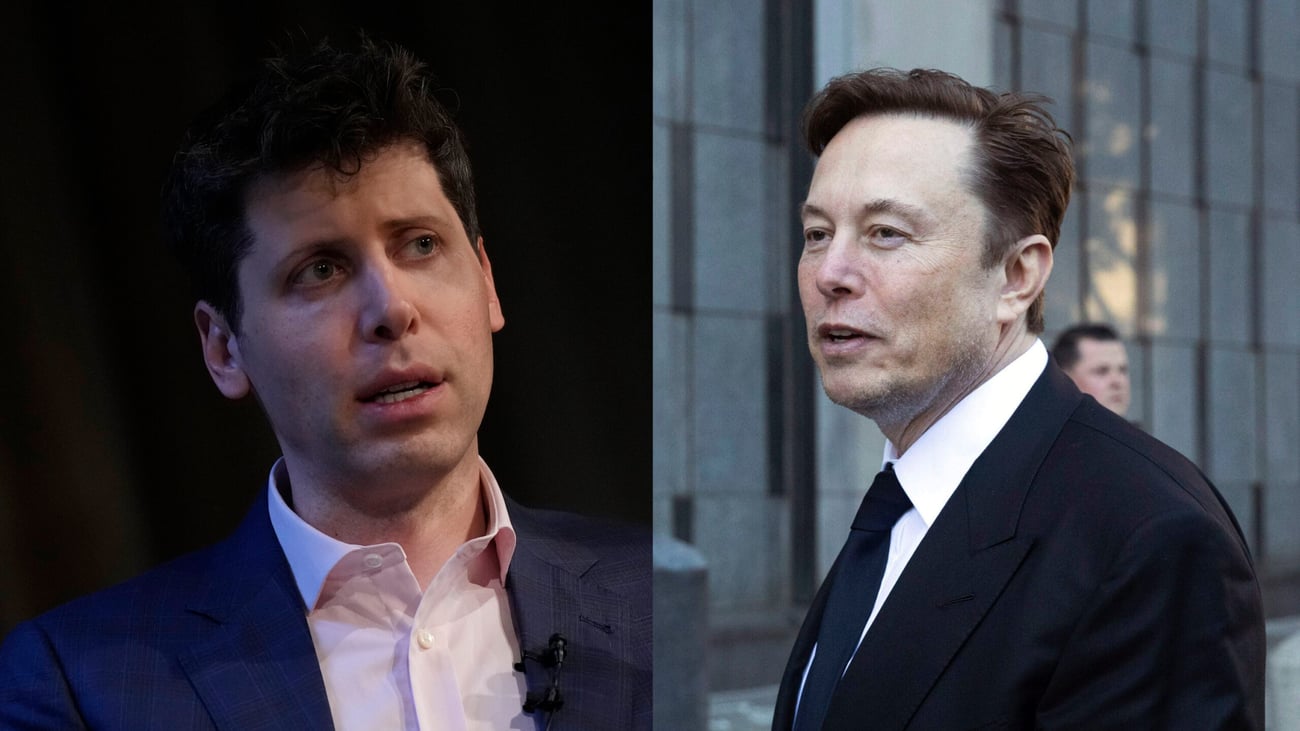
OAKLAND, Calif. (CN) — In closing arguments Thursday, the world’s richest man claimed fellow co-founders of a Silicon Valley artificial intelligence nonprofit deceived him after he donated millions of dollars into the development of AI with a mission for the technology to “benefit all humanity.”
The highly-publicized blockbuster trial pitted two tech billionaires, Elon Musk and OpenAI CEO Sam Altman, against each other for the future of OpenAI — currently one of the highest valued artificial intelligence organizations in the world, with an $800 billion valuation for its for-profit entity.
It brought a “who’s who” of the Bay Area tech world to U.S. District Judge Yvonne Gonzalez Rogers’s courtroom, where a nine-person jury will decide if Altman, current OpenAI president Greg Brockman and the OpenAI nonprofit breached a charitable trust and unjustly enriched themselves due to Musk’s early donations. Deliberations will begin May 18.
Musk’s lead counsel Steven Molo attacked Altman’s credibility in his closings, calling him a distrustful person and saying his behavior didn’t uphold OpenAI’s mission. Molo said Altman lied to the OpenAI board about safety issues. Altman was fired but quickly rehired as CEO in November 2023 and most of the board members who approved his ouster resigned from the board.
Molo referenced a text exchange between Musk and Altman where Musk called Microsoft’s $10 billion investment in OpenAI’s for-profit entity “a bait and switch.”
“Elon called it a bribe,” Molo said to the jury. “You can call it whatever you want.”
Molo said because Musk co-founded OpenAI as a first-of-its-kind AI organization that his donations were specific to that purpose — a necessary component to prove a breach in charitable trust.
In his 2024 suit, Musk claims Altman and Brockman deceived him about moving OpenAI from a nonprofit to a for-profit entity that no longer followed its original nonprofit mission, which includes a “fiduciary duty to benefit humanity.” Musk acrimoniously left the startup in February 2018. He seeks $150 billion in compensatory and punitive damages from OpenAI and co-defendant Microsoft.
OpenAI counsel William Savitt argued it was Musk’s credibility the jury should be looking at.
“Mr. Musk isn’t here. He is off to parts unknown,” said Savitt, referencing Musk’s trip to China as part of President Donald’s Trump’s delegation. “The defendants are here because they care about this case.”
Brockman and Altman attended the entire court proceedings.
Savitt argued it was convenient for Musk to have “selective amnesia” during the case, particularly regarding his testimony about OpenAI’s 2018 summary term sheet, which included its new corporate structure. Under oath, Musk said he “didn’t read the fine print” of the four-page document that included information about investments in the for-profit entity.
Fellow OpenAI counsel Sarah Eddy said Musk knew the OpenAI co-founders wanted to create a for-profit entity even before the 2018 term sheet. She said Musk was a big proponent of a for-profit entity in order to compete with Google, going so far as to say it was unlikely for OpenAI to succeed without a large investor.
She said Musk’s testimony didn’t make sense, considering he decided not to invest after being questioned on possible involvement in the for-profit, and later said he would be “supportive in spirit” and believed that the profits from investments would flow to the nonprofit.
“As one of the most sophisticated businessmen in the world do you think he somehow read it to mean that there were no investments being made?” Eddy asked the jury.
During Eddy’s arguments at least one juror gave slight nods as she claimed there were never any formal commitments or promises to Musk about the OpenAI nonprofit, nor did the defendants know of any restrictions on Musk’s donations about how it should remain, at least partly, a nonprofit.
Furthermore, Eddy said, before OpenAI partnered with Microsoft, Musk wanted to absorb OpenAI into Tesla, his electric car company, but the co-founders declined. Eddy said the Tesla idea hadn’t been mentioned by Musk’s attorneys because it “hurts his ego and his case.”
Kicking off his own closing, Microsoft lead counsel Russell Cohen noted “I said you wouldn’t be hearing a lot from Microsoft, and in the last three weeks I think you haven’t.”
Microsoft is accused of aiding and abetting the breach of charitable trust. Musk claims the tech giant benefited from his $37 million in quarterly cash donations and rent payments for office space in San Francisco.
Cohen said Molo’s arguments about Altman’s 2023 firing were a distraction to the case, and Microsoft CEO Satya Nadella’s quote around that time: “We are above them, we are below then and we are around them,” wasn’t analogous to control of OpenAI, but was supportive to the organization and its obligations to its own AI customers.
In rebuttal, Molo said it seemed like the defense was at a different trial. He called the defense’s argument that Musk didn’t read the entire term sheet a “crazy argument,” saying Musk had “one or two other things going on” and Musk wasn’t going to read a document about a company he wasn’t interested in investing in.
“Not many people in life get to do what you are asked to do, which is right a wrong,” Molo said in his last words to the jury. “We are here asking you for justice.”
Rogers, a Barack Obama appointee, went through jury instructions carefully with the jury, saying the plaintiff needed to prove with a preponderance of evidence that the OpenAI defendants broke promises to Musk.
The instructions also included affirmative defenses by OpenAI, including a statute of limitations argument, which the jury will decide first.
OpenAI argues that Musk knew long before he filed his 2024 suit that it was going to restructure to include a for-profit entity and Musk unreasonably delayed his filing until OpenAI became a successful organization and a formidable competitor to Musk’s xAI.
Additionally, OpenAI affirms an “unclean hands” defense, saying Musk was a bad actor, causing undue harm to OpenAI by suing.
Subscribe to our free newsletters
Our weekly newsletter Closing Arguments offers the latest about ongoing trials, major litigation and rulings in courthouses around the U.S. and the world, while the monthly Under the Lights dishes the legal dirt from Hollywood, sports, Big Tech and the arts.
Additional Reads
 Roblox must face Iowa consumer fraud claims May 14, 2026