
 Search Articles


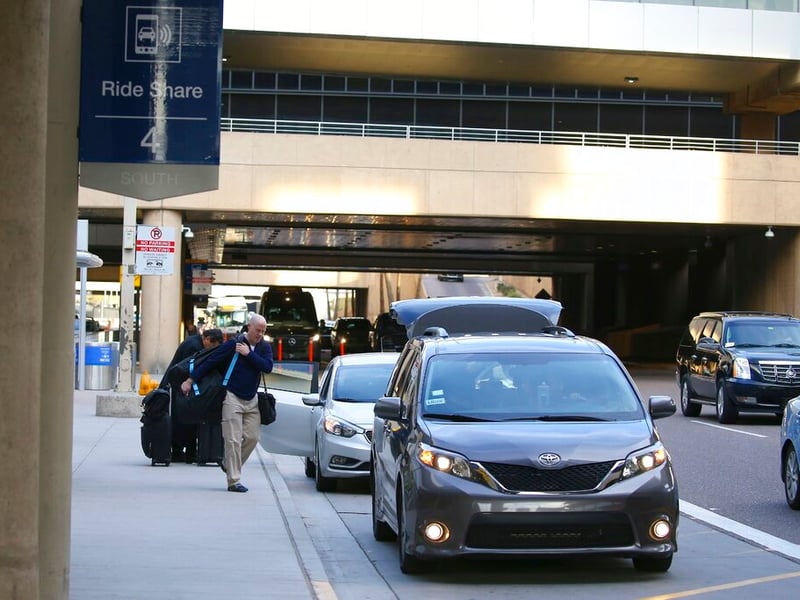
SAN FRANCISCO (CN) — Male ride-hailing drivers filed dual class actions against Uber and Lyft Tuesday, claiming new programs prioritizing matching female riders with drivers of the same gender are discriminatory.
In both lawsuits, filed in San Francisco Superior Court, drivers accuse the ride-hailing companies of openly flaunting their discriminatory policies — something they said makes the “sex-based discrimination quite unlike the mine run of discrimination cases.”
“Here, there is no question whether Uber discriminates against male drivers, like plaintiffs, who are disadvantaged by the sex-based policy,” the Uber drivers wrote. The Lyft drivers made the same accusation.
The plaintiffs argue the programs not only violate state antidiscrimination laws by promoting female drivers over male drivers but also that each company’s policy “reinforces the gender stereotype that men are more dangerous than women.”
“Lyft’s assumption that male drivers — like plaintiffs’ who have garnered stellar ratings and extensive ride histories — cannot provide female passengers adequate ‘peace of mind’ and ‘comfort’ is rooted in stereotypical notions that the Unruh Act is designed to root out of society,” the Lyft drivers wrote. The Uber drivers made an identical claim.
The drivers say they have suffered “anxiety, embarrassment, and loss of economic opportunity” based on their sex. They ask the court to certify the case as a class action and minimum statutory damages of at least $4,000 per male driver in California for violating state law.
Lyft’s “Women+ Connect” program launched in 2023 and matched women and nonbinary drivers with rides of the same gender. The feature, first available in cities such as Chicago, San Diego and San Francisco, allowed female and nonbinary riders to set a preference to prioritize female and nonbinary drivers.
“Women+ Connect is all about providing more women and nonbinary people the opportunity to earn money on their terms and giving riders more choice,” Lyft CEO David Risher said in a statement when the program was announced. “We hope this gives millions of drivers and riders another reason to choose Lyft.”
In July 2025, Uber announced its “Women Preferences” program, first introduced in Saudi Arabia in 2019, would begin pilot testing in Los Angeles, San Francisco and Detroit. The program gives female riders a “Women Drivers” option when they are requesting a trip. Female riders and drivers can also set a preference in the Uber app to be matched with other women.
“Across the US, women riders and drivers have told us they want the option to be matched with other women on trips. We’ve heard them — and now we’re introducing new ways to give them even more control over how they ride and drive,” Camiel Irving, Uber’s VP of operations, said in a press release about the program.
Both companies emphasized the programs denote a preference, not a guarantee, so riders could still be matched with a male driver.
Uber and Lyft are also facing widespread sexual assault lawsuits, mostly filed by women.
In September, a San Francisco jury sided with Uber in a first-of-its-kind case, finding the company was negligent in a 2016 incident where a woman reported being attacked by her driver but that the negligence was not “a substantial factor” in causing harm to the plaintiff.
Additionally, more than a thousand federal cases were consolidated in the Northern District of California, San Francisco, where a trial is scheduled for Jan. 14, 2026, in Phoenix, Arizona.
While Lyft faces a much smaller number of claims, a plaintiff in one of the cases filed a motion to consolidate cases against the company into a multi-district lawsuit. At the time of filing the petition on Oct. 6, there were at least 17 actions filed in 10 federal judicial districts across the country.
The plaintiff asked the Judicial Panel on Multidistrict Litigation to transfer the case to the Northern District of California, where the Uber MDL is, or to the Western District of Washington.
Representatives for the plaintiffs, Uber and Lyft did not immediately return a request for comment.
 Follow @mhattridge_
Subscribe to our free newsletters
Our weekly newsletter Closing Arguments offers the latest about ongoing trials, major litigation and rulings in courthouses around the U.S. and the world, while the monthly Under the Lights dishes the legal dirt from Hollywood, sports, Big Tech and the arts.