Search Articles


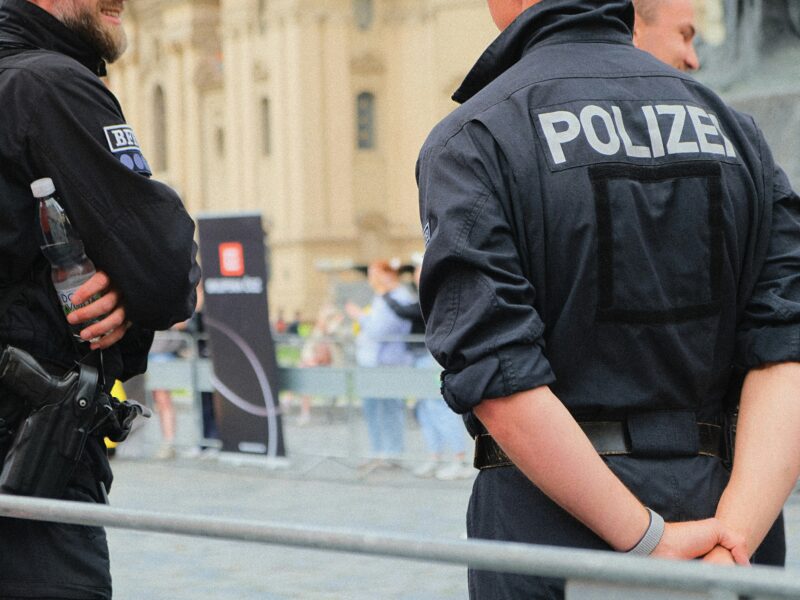
(CN) — A high-speed highway arrest in Belgium that ended in a fatal police shooting more than a decade ago was back in the spotlight Thursday, as Europe’s human rights court signed off on the officers’ split-second decision to open fire.
Hakim Benladghem, suspected of armed robbery and links to terrorist activity, was killed during a 2013 police operation. His sister spent years challenging how officers reacted, arguing the arrest was poorly planned and the force used was excessive; she ultimately took the case to the European Court of Human Rights.
Belgian courts had already cleared the officers, finding they acted in self-defense against an immediate threat. Judges in Strasbourg saw no reason to overturn that assessment.
“In the circumstances of the case, the court considers, following the findings of the domestic courts, that in firing their weapons, the officers could have acted with an honest belief that their lives were threatened and could sincerely have believed that it was necessary to resort to force, which authorized them to use appropriate means to defend themselves,” the judges said.
The judges looked beyond the final burst of gunfire. They weighed the planning, the intelligence officers had before the arrest and the few seconds they had to react once the operation spun into danger. They found Belgium’s rules on police force adequate and said the officers were trained for high-risk arrests.
They also refused to judge the scene with hindsight.
“The court also reiterates that, in the calm deliberations of the proceedings, it cannot substitute its own assessment of the situation for that of the officers who had to react, in the heat of the moment, to what they sincerely perceived as a danger in order to save their own lives or the lives of others,” the court said.
On the morning of March 26, 2013, officers were briefed that Benladghem was extremely dangerous, likely armed, trained in combat and possibly preparing for violence. Police had been watching him in separate investigations tied to suspected terrorist activity and an armed robbery.
That day, he left home, drove across Belgium and stopped at a shop selling weapons and paramilitary gear. Officers waited until they could isolate him on a highway, away from bystanders, before moving in.
Then everything happened fast. Benladghem refused to stop, hit a police vehicle and was boxed in. As officers approached, one saw him grab a handgun and point it toward police.
Several officers opened fire within seconds. Benladghem was pulled from the car and given first aid but died at the scene. An autopsy found he was killed by gunfire.
Belgian authorities opened a criminal investigation the same day, reviewing audio recordings, ballistics, witness testimony and a reconstruction of the shooting. Domestic courts later closed the case, finding the officers acted in self-defense against an immediate threat. Belgium’s highest court upheld that conclusion.
That mattered in the Strasbourg rights court. Judges pointed to the depth of the domestic review, noting Belgian courts had full access to the evidence and worked through competing accounts in detail before closing the case.
Philip Leach, a professor of human rights law at Middlesex University, said the judgment shows how deeply the court examines such incidents. It looks at “the planning and conduct of police operations and the broader legal framework,” he said, while also assessing whether force was truly necessary in the moment.
He added that what stands out here is what was not contested. There was no serious challenge to the domestic investigation, and the European judges saw “no basis for challenging those findings.”
That kind of review ties directly to the court’s core test on force. Jair Schalkwijk, a criminology researcher at Erasmus School of Law, said European law sets a high bar: Deadly force is only justified when it is “absolutely necessary,” either to protect life or to carry out a lawful arrest.
Here, he said, both elements were in play. Officers were acting under an arrest order, and the situation escalated when Benladghem pulled a firearm and aimed it at them. At that point, the risk was no longer hypothetical, making it easier for the court to accept the use of lethal force as self-defense.
A spokesperson for Belgium’s federal justice service said the ruling will now be shared with police and judicial bodies, describing it as confirmation that officers acted within the law.
Lawyers for the applicant did not respond to requests for comment.
The judgment is not yet final. The parties have three months to ask for referral to the Grand Chamber, a step granted only in exceptional circumstances. If no request is made, or if it is rejected, the ruling will become final and close the case.
Courthouse News reporter Eunseo Hong is based in the Netherlands.
Subscribe to our free newsletters
Our weekly newsletter Closing Arguments offers the latest about ongoing trials, major litigation and rulings in courthouses around the U.S. and the world, while the monthly Under the Lights dishes the legal dirt from Hollywood, sports, Big Tech and the arts.
Additional Reads
 GDP rebounds for early 2026 but falls short of expectations April 30, 2026