
 Search Articles


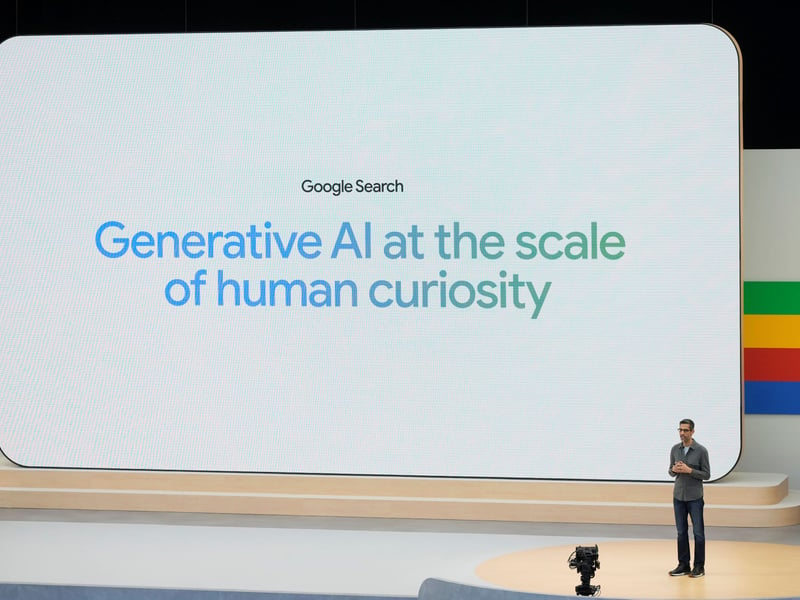
WASHINGTON (CN) — After a federal judge passed on imposing a significant breakup of Google as a remedy for its illegal search monopoly earlier this month, the tech giant seemed to have avoided the worst-case scenario from the protracted legal battle.
However, the company’s development of artificial intelligence for search results following U.S. District Judge Amit Mehta’s initial August 2024 finding that Google held a monopoly has opened the company to further litigation, with a major news publisher filing suit Friday night over Google’s “AI Overview” product.
Penske Media Corporation, the parent company of news outlets like the Rolling Stone, the Hollywood Reporter, Deadline and Variety, filed the 101-page antitrust suit in the U.S. District Court for the District of Columbia, where Mehta imposed light penalties on Google on Sept. 2.
The company argues that Google has abused its search monopoly to coerce news publishers to effectively fuel the AI-generated summaries, which appear at the top of a search results page and often keep users from clicking on articles.
Penske warned that Google’s conduct “threatens to perpetuate Google’s general search monopoly into the era of generative search,” by expanding its monopoly into online publishing, restricting publishing competition and reducing the production of original content.
“The law does not permit Google’s systematic anti-competitive conduct,” the publishers wrote. “By this action, PMC seeks to hold Google responsible for the millions of dollars in harm it is causing and illicit profits it is reaping by misappropriating unique and valuable works, and to protect the public’s continued access to high-quality and trustworthy online information.”
The company is requesting a federal judge enjoin Google from training its AI on news publishers’ content without permission and using that content in its summaries.
Google spokesperson José Castañeda slammed the suit and promised Google would defend against the “meritless claims.”
“With AI Overviews, people find search more helpful and use it more, creating new opportunities for content to be discovered,” Castañeda said in an email. “Every day, Google sends billions of clicks to sites across the web, and AI Overviews sent traffic to a greater diversity of sites.”
Castañeda asserted that the overviews “show more links to a greater diversity of sources” and provide “higher quality” clicks where users spend more time on the site. Further, the overviews are the latest example of a two-decade trend where improving search have likewise “create[d] new opportunities” for publishers, Castañeda said.
Without its search monopoly, Penske says, Google would have otherwise had to pay publishers separately for the right to republish and train its large language models with the publishers’ content. Otherwise, publishers could limit or block Google from crawling their sites.
“Because Google does exercise such monopoly power, PMC and other publishers are forced to acquiesce to this misappropriation of their content,” Penske argues. “Moreover, even if Google did provide a way to separately opt out of republishing in AI Overviews and Featured Snippets, publishers would be deterred from doing so by the presentation of those features in a way that deprecates search results.”
When Mehta, a Barack Obama appointee, ruled Google operated an illegal search monopoly in 2024, AI was not as prevalent as it has since become. Google announced AI Overview just a month later in September 2024, and it quickly became a key focus during the remedy phase.
In his remedy decision, Mehta noted the emergence of AI following the close of the liability phase “changed the course of this case.”
He did not side with the Justice Department, which warned that AI could allow Google to circumvent any antitrust remedies he could impose, instead lumping AI into his wider bar on payments to third parties for setting Google as the default search engine or downloading a suite of Google products.
According to Penske, news publishers have long participated in an “exchange of access” with Google to allow limited crawling of their websites to generate search traffic referrals to their websites.
However, recently Google added a condition that publishers also supply their content for other uses, that “cannibalize or preempt search referrals” such as generative AI and related “large language models” that create the AI overviews. The overviews even excerpt key portions of publisher content in “Featured Snippets,” including a “Questions and Answers” format, that appear atop a search engine result page, Penske said.
Together, the overview and the featured snippets often provide answers to users, resulting in fewer clicks on the original sources that the overview was based on.
“Google’s foray into online publishing is designed to make Google a destination, rather than a search origination point to other websites,” Penske argues.
Penske is represented by Ian Crosby of Susman Godfrey.
 Follow @Ryan_Knappy
Subscribe to our free newsletters
Our weekly newsletter Closing Arguments offers the latest about ongoing trials, major litigation and rulings in courthouses around the U.S. and the world, while the monthly Under the Lights dishes the legal dirt from Hollywood, sports, Big Tech and the arts.