Search Articles


LOS ANGELES (CN) — A federal judge on Friday tentatively dismissed Sable Offshore and ExxonMobil’s claims that Santa Barbara County violated the U.S. and California constitutions by refusing to transfer permits to operate the onshore oil and gas facilities that Exxon sold Sable two years ago.
In a tentative ruling that wasn’t publicly released, Chief U.S. District Judge Dolly Gee granted Santa Barbara County’s motion to dismiss claims by Sable and Exxon that the county board’s December 2025 decision violated the Takings Clause of the U.S. and California constitutions and was preempted by federal and state law.
Gee, a Barack Obama appointee, did not issue a final ruling at Friday’s hearing in downtown Los Angeles. Instead, she took the county’s motion, along with a separate motion by environmental advocacy groups to dismiss the companies’ preemption claim, under submission.
The constitutional claims were addressed separately from Sable and Exxon’s pending petition, filed as part of the same complaint, seeking a writ vacating the county board’s Dec. 16, 2025, decision and directing the county to issue Sable’s final development permits. No schedule has been set for the writ petition.
Jessica Stebbins Bina, an attorney representing Sable, argued the company paid Exxon $600 million for offshore drilling platforms near Santa Barbara and related onshore pipelines and facilities with the understanding that transferring the permits would be a “ministerial” process under the county’s code of ordinances.
“No one would pay hundreds of millions of dollars without vested property rights,” Bina told the judge.
She added the judge’s tentative decision made it appears as if the permits had evaporated with the sale of the facilities and Sable had to apply for them anew.
Although the county planning commission approved the transfer of Exxon’s permits to Sable, Bina said the board of supervisors denied it for pretextual reasons because some supervisors were firmly opposed to restarting the offshore platforms.
Bina argued some supervisors blocked the transfer to keep Exxon “on the hook” for any liability arising from Sable’s operation of the pipeline that carries crude oil to inland refineries and other county processing facilities.
Gee, however, asked what would happen if Exxon had sold the facilities to a buyer with no oil and gas industry experience or a poor track record.
“The county wouldn’t be able to do anything?” the judge asked Sable’s lawyer.
Bina responded that the county could bring enforcement actions if there were code violations.
Callie Kim, an attorney for the Santa Barbara County Counsel, said the county’s ordinance focuses only on whether a new owner of an oil and gas facility will comply with local code and permit requirements.
Sable, according to the county’s motion, had engaged in activities without prior clearance from the county, failed to notify the county prior to moving oil, failed to submit zoning clearing applications before repair work on the pipeline, and as such had been found to be not a capable operator.
“It was as much a debated issue before the planning commission as it was before the board,” Kim said at the hearing, noting that the commission had voted 3-1 in favor of transferring the permits. “It wasn’t just an administrative issue.”
Sable claims the supervisors directed planning staff to find reasons to deny the permit transfer because they opposed restarting offshore drilling.
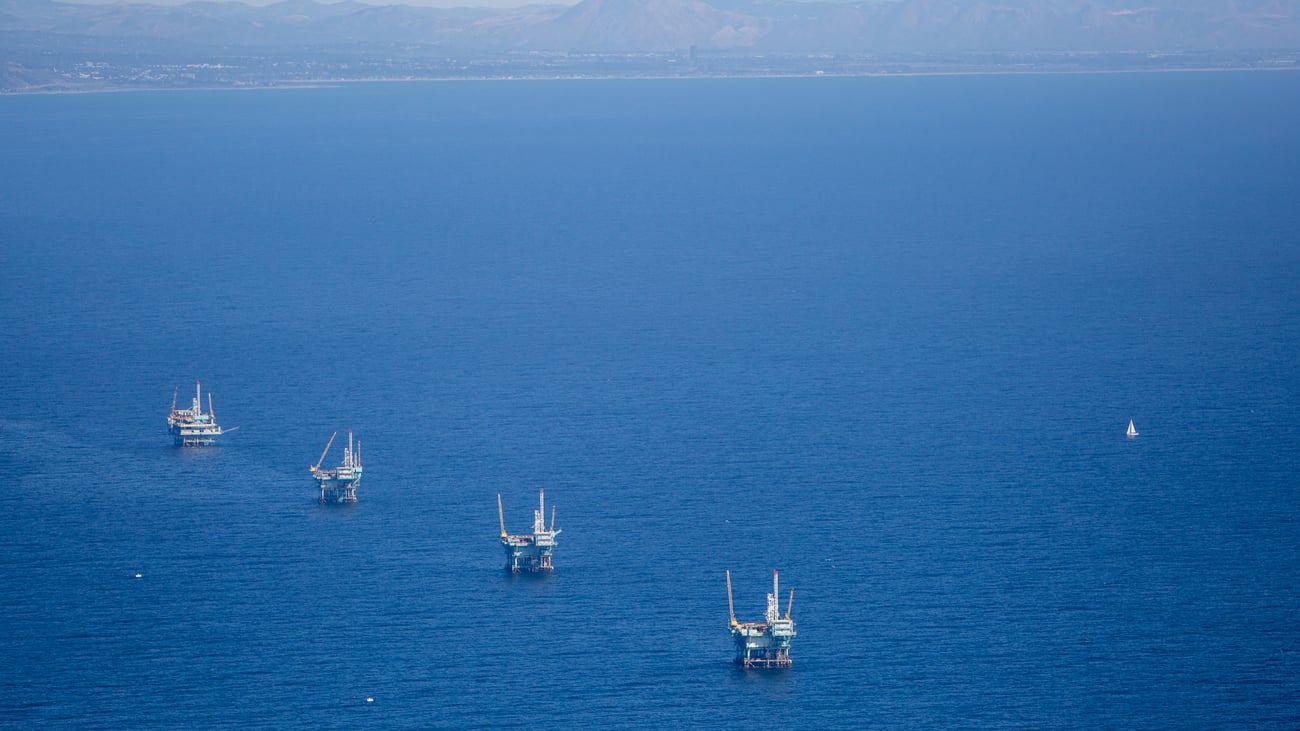
The case before Gee is one of several lawsuits filed by conservationists and the state over Houston-based Sable’s effort to restart three offshore platforms that were mothballed after an onshore pipeline burst in 2015, causing a major oil spill.
The 2015 Refugio oil spill released more than 120,000 gallons of oil into the ocean, blackening miles of coastline and temporarily crippling local tourism and fishing. Cleanup costs were estimated at about $86 million.
In May, a different judge rejected California’s bid to prevent Sable from using a four-mile segment of the pipeline that runs underneath Gaviota State Park.
Sable has said in a court filings that it has invested over $1.4 billion to restart the oil platforms and pipeline after a more than decadelong period of dormancy, including over $215 million in repairs and upgrades to the pipeline.
In March, after the U.S. and Israeli attacks on Iran disrupted global oil shipments, U.S. Energy Secretary Chris Wright ordered Sable to start using the patched-up pipeline to transport oil from the offshore platforms under the Defense Production Act.
The company said in March it expects to produce and transport 50,000 barrels of oil per day from the Santa Ynez Unit.
 Follow @edpettersson
Subscribe to our free newsletters
Our weekly newsletter Closing Arguments offers the latest about ongoing trials, major litigation and rulings in courthouses around the U.S. and the world, while the monthly Under the Lights dishes the legal dirt from Hollywood, sports, Big Tech and the arts.