
 Search Articles


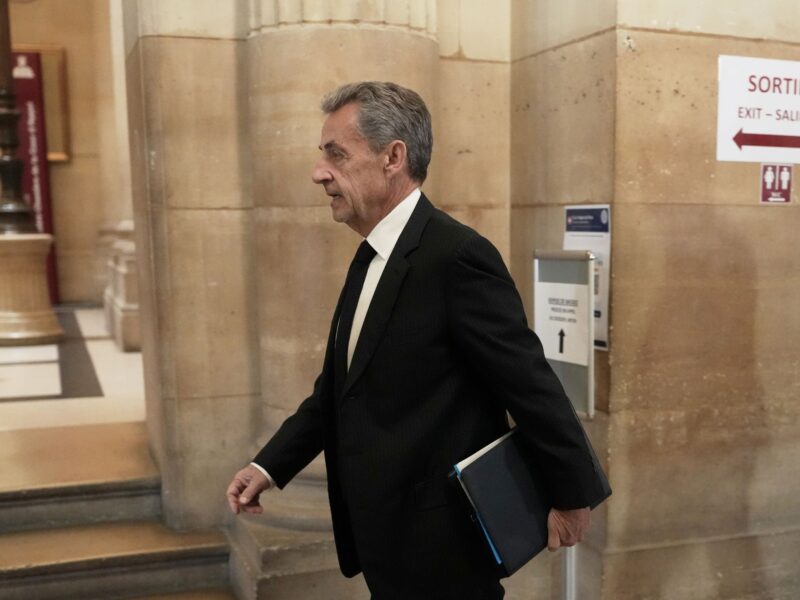
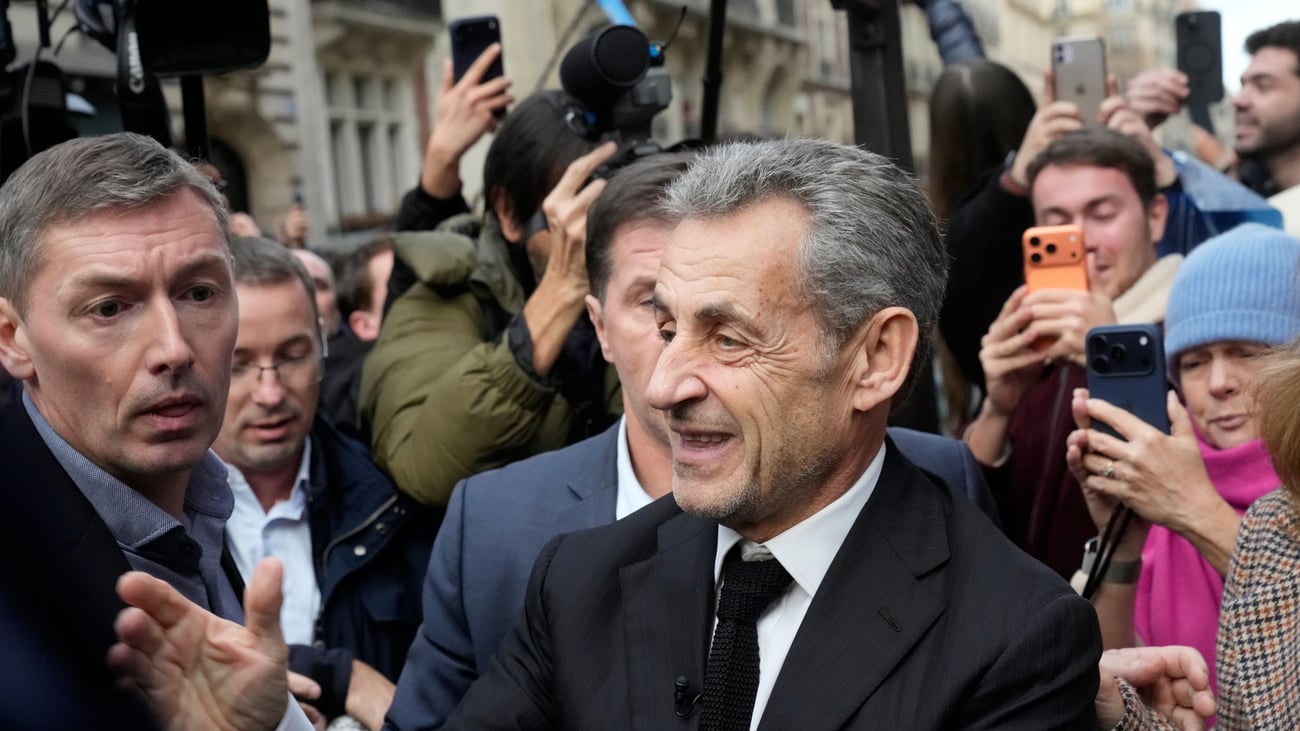
PARIS (CN) — On Wednesday, Nicolas Sarkozy looked uncomfortable in the Paris Court of Appeal — his eyes were red and puffy as he constantly threw his arms around and raised his voice in exasperation.
This was the second day of hearings for France’s former president, who is appealing a Sept. 30, 2025, guilty verdict over illegal Libyan financing in his successful 2007 campaign. Members of the public glanced at each other with raised eyebrows as his tone became increasingly agitated.
“Mr. Sarkozy, I’m obliged to ask you these questions,” Olivier Géron, the head judge on the case, said. “You’re on trial again before this court — if I didn’t ask them, I would be committing professional misconduct.”
Roughly six months ago, the court found Sarkozy guilty of criminal conspiracy in the affair, which prosecutors said saw $58 million in illegal campaign donations under Libya’s former autocratic leader Moammar Gadhafi. Sarkozy was acquitted of other charges, including receiving stolen goods, passive corruption and willfully underreporting accounting entries in an election campaign account.
He was sentenced to five years’ imprisonment, banned from running for office for five years and slapped with a roughly $120,000 fine. In October 2025, Sarkozy became the first French president to spend time in prison, though he was released after 20 days.
Now, he’s appealing the charges in a trial that began March 16 and is set to continue until June 3. Ten former associates and friends are also appealing verdicts. On Tuesday and Wednesday, Sarkozy largely shifted blame to them.
Two former interior ministers, Claude Guéant and Brice Hortefeux, are at the heart of the case.
Prosecutors say Sarkozy participated in an agreement geared toward “active and passive corruption” and “allowed his close associates and political supporters, over whom he had authority and who acted on his behalf,” to “act in order to obtain financial support for his election campaign” by meeting confidentially and organizing the transfer of public funds from Libya to France.
Hortefeux and Guéant were explicitly named as two of these associates. Hortefeux, besides serving in various ministerial positions, is a longtime personal friend of Sarkozy’s — a witness at his first wedding and godfather to one of his sons. He was convicted of criminal conspiracy and sentenced to two years in prison and a roughly $58,000 fine.
Guéant was Sarkozy’s campaign manager during his 2007 presidential run, making him an obvious focal point. He was convicted of corruption, passive influence peddling, forgery and use of forged documents, and criminal conspiracy, among other crimes, and sentenced to six years in prison and a $290,000 fine.
Sarkozy told the court Wednesday he chose Guéant because he had more of a “technocratic” profile, while he himself was more of a “pure politician.”
Throughout the hearings, Sarkozy acknowledged their meetings in Libya were a “mistake,” and he fervently maintained he was never aware of them.
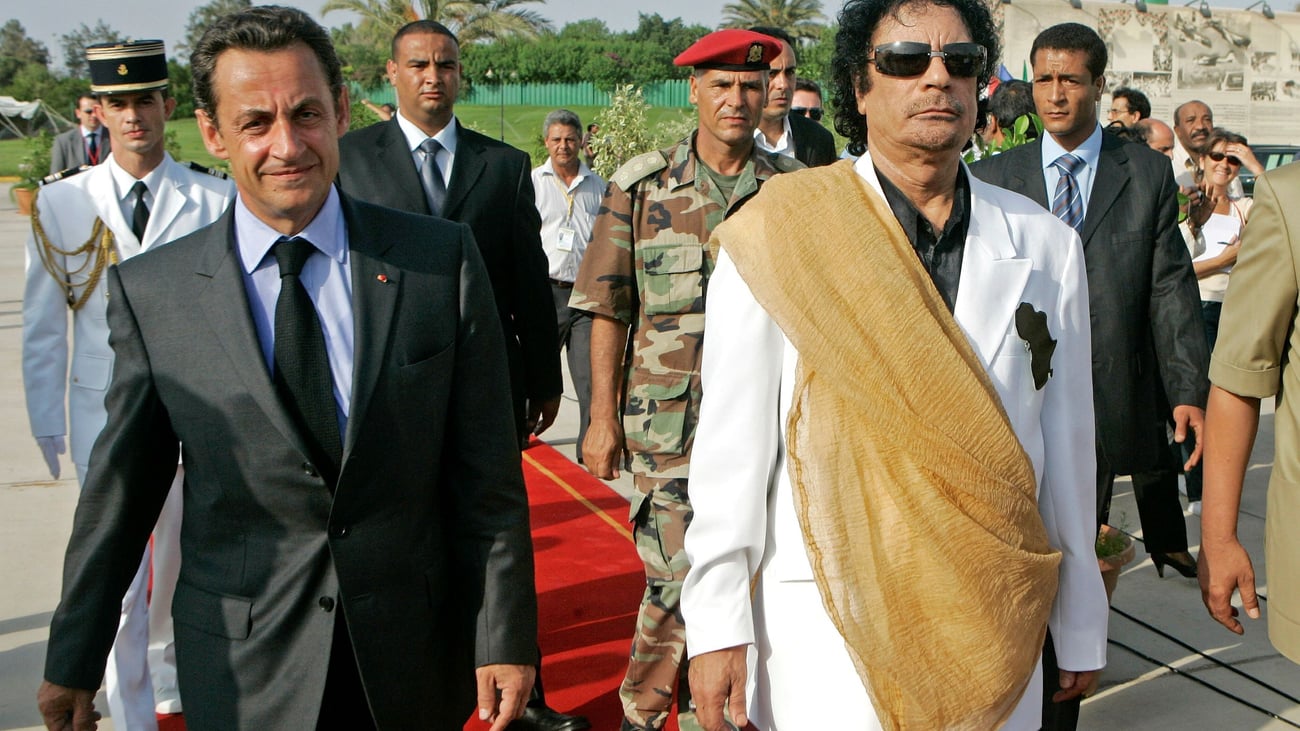
Pierre Allorant, historian and political scientist at the University of Orléans, questioned the president’s claim.
“In a way, he’s shifting the blame, the error, onto his collaborators Claude Guéant and Brice Hortefeux,” Allorant said. “[The two] were highly respected among the electorate before meeting Nicolas Sarkozy — it’s implausible that they would take such an initiative with a foreign power without having discussed it with him.”
On Wednesday, Géron said between 2007 and 2012, Guéant received roughly $378,000 while serving as secretary general of the presidential Élysée Palace and interior minister.
“I don’t know how [he] manages his expenses!” Sarkozy fired back. “It’s up to Mr. Guéant to explain himself.”
Allorant sees Sarkozy’s denial as part of a bigger strategy, which could be bolstered by an apparent lack of written evidence that he gave his associates the go-ahead to obtain funding from Libya.
“Ultimately, the justice system could accept the benefit of the doubt and convict Hortefeux and Guéant but not him, I think that’s the strategy,” Allorant said. “If I put myself in their shoes, it can’t be very pleasant, especially since they certainly had at least the tacit agreement of Nicolas Sarkozy to conduct this type of high-level negotiation — he’s going to abandon them.”
And on Wednesday, Sarkozy seemed to throw Guéant — who is not attending the trial due to fragile health — under the bus. The courtroom hung in silence when Géron asked, slowly, whether Sarkozy felt his interests were aligned with those of his staff.
“I was certain, but since reading the case file, I have fewer certainties,” Sarkozy replied as reporters began whispering among themselves.
This prompted one of Sarkozy’s lawyers to abruptly step in. After saying something quietly to Géron, the judge asked Sarkozy how he was feeling — he said he was hot, and the hearing was suspended for 20 minutes. A fan was set up.
Throughout the hearings on Wednesday, questions arose about Gadhafi himself. Sarkozy painted a picture of a man who resented him.
“My relationship with Gadhafi was so strained that he was the only head of state, south of the Mediterranean, not to participate in the [Euro-Mediterranean Heads of State and Government meeting] in 2008,” Sarkozy cried. “He was the only one to refuse!”
Later in the afternoon, Géron asked Sarkozy about the circumstances of Gadhafi’s death. He was killed in 2011, during the Arab Spring, by the National Transitional Council, which was a government force established during that time.
“Damn, I have to justify being an assassin as well as a crook,” Sarkozy replied sarcastically, before explaining what he heard about the operation.
Sarkozy’s testimony is set to last through Thursday but could be prolonged.
 Follow @lilyradz
Subscribe to our free newsletters
Our weekly newsletter Closing Arguments offers the latest about ongoing trials, major litigation and rulings in courthouses around the U.S. and the world, while the monthly Under the Lights dishes the legal dirt from Hollywood, sports, Big Tech and the arts.
Additional Reads
 Kyiv calls for Ukraine ceasefire after Iran truce April 8, 2026
