
 Search Articles


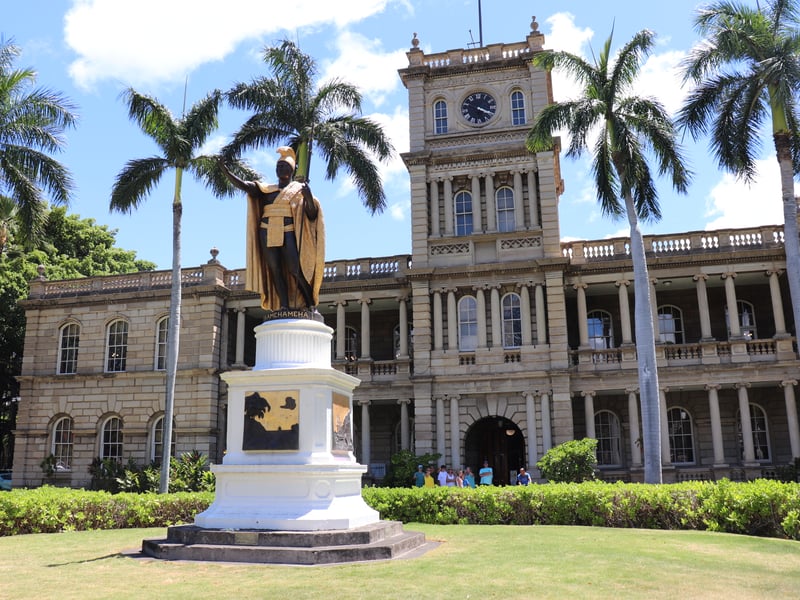
HONOLULU (CN) — A nonprofit is suing one of Hawaii’s most prestigious educational institutions, challenging Kamehameha Schools’ admissions policy, which gives preference to students of Native Hawaiian ancestry in its admissions decisions.
Students for Fair Admissions filed the suit Monday in federal court, arguing that the schools’ policy violates a post–Civil War statute prohibiting racial discrimination in contracting.
The case marks the latest chapter in Students for Fair Admissions’ broader campaign against race-conscious admissions, following its successful challenges to affirmative action at Harvard University and the University of North Carolina, which culminated in a landmark U.S. Supreme Court ruling in 2023.
Kamehameha Schools, founded through the 1883 will of Princess Bernice Pauahi Bishop, operates three campuses across Hawaii and educates roughly 5,400 students from kindergarten through 12th grade. The institution boasts an endowment exceeding $15 billion and owns 364,000 acres of land, making it one of the most powerful educational organizations in the country.
But its admissions policy effectively excludes non-Native Hawaiian students, according to the plaintiffs, who say in their complaint that applicants with Native Hawaiian ancestry are admitted first, and the school considers other children only if seats remain available.
“Kamehameha admits zero students who lack native Hawaiian ancestry. It considers non-natives only if, after accepting all native Hawaiians, it still has open seats — a condition that Kamehameha makes sure never holds.”
In its lawsuit, Students for Fair Admissions says it has members whose children would apply to the schools, if not for the admissions policy. The organization contends that admission to Kamehameha involves multiple contracts, including application agreements, enrollment contracts and tuition contracts, and that denying access based on race violates federal law.
“Kamehameha can keep its mission, its culture, and its curriculum but it cannot bar children because of their race. Native Hawaiian culture can be celebrated without imposing ancestry-based barriers that exclude white, black, Hispanic and Asian children,” Edward Blum, president of Students for Fair Admissions, said in a written statement.
The group challenges the Ninth Circuit Court of Appeals’ 2006 decision in Doe v. Kamehameha Schools , which upheld the schools’ admissions policy by an 8-7 vote. That ruling found that the school’s mission and the special relationship between the U.S. and Native Hawaiians provided valid grounds for the preference.
But Students for Fair Admissions asserts that the legal landscape has changed since then. The organization, founded in 2014 by conservative activist Edward Blum, has made dismantling race-conscious admissions policies its central mission. With more than 19,000 members, the group has emerged as a legal force challenging affirmative action in education, scoring its biggest victory when the Supreme Court sided with it in 2023 to end consideration of race in college admissions.
“While the Ninth Circuit’s 8-7 decision was wrong in 2006, it certainly cannot shield Kamehameha today,” the plaintiff says in the complaint. “Its legal reasoning was abrogated by the Supreme Court in Harvard.”
The 2023 Supreme Court decision in SFFA v. Harvard established that race-based admissions policies must meet “strict scrutiny” — the highest level of judicial review — requiring that such policies serve a compelling interest and be narrowly tailored.
The organization contends that Kamehameha’s policy fails this test on multiple grounds by treating race as a negative factor for non-Native applicants, employing a rigid racial quota, having no meaningful endpoint after nearly 150 years, and relying on racial stereotyping.
“Kamehameha’s race-based admissions policy is illegal. It continues to harm families, like SFFA’s members, whose children cannot fairly compete for admission because they were born in the wrong family tree,” the organization says in the complaint.
It also cites the Supreme Court’s reasoning in Brown v. Board of Education and its own Harvard decision, asserting that segregation in education — even when rooted in historical or cultural considerations — violates fundamental principles of equality.
“Nothing about training future leaders, or preserving Hawaii’s unique culture, requires Kamehameha to block its students from learning beside children of different ancestries — Asian, black, Hispanic, or white," the group says in the complaint.
Princess Pauahi’s will was written during a period of dramatic decline in the Native Hawaiian population, from approximately 124,000 to 44,000 during her lifetime, alongside widespread loss of Hawaiian language, culture and sovereignty.
The schools have long argued that their admissions policy serves a remedial purpose, addressing historical disadvantages faced by Native Hawaiians following the overthrow of the Hawaiian Kingdom and subsequent dispossession.
If successful, the lawsuit could establish a precedent prohibiting private schools from using racial preferences, even when tied to cultural preservation or historical legacies. Conversely, if Kamehameha prevails, it could reinforce the ability of certain private institutions to maintain such policies under specific circumstances.
Representatives for Kamehameha Schools and Students for Fair Admissions did not immediately respond to requests for comment.
 Follow @JeremyYurow
Subscribe to our free newsletters
Our weekly newsletter Closing Arguments offers the latest about ongoing trials, major litigation and rulings in courthouses around the U.S. and the world, while the monthly Under the Lights dishes the legal dirt from Hollywood, sports, Big Tech and the arts.