
 Search Articles


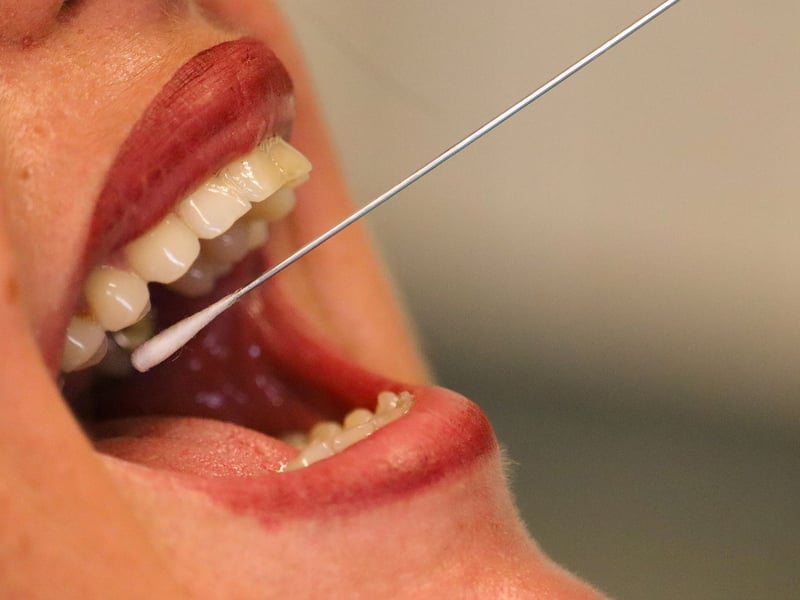
(CN) — For those curious about when they might die, the answer may lie right beneath their noses — in their mouths, to be precise.
The team of scientists behind CheekAge, an epigenetic clock that can accurately predict the risk of mortality using data derived from tissue samples, published a study in the journal Frontiers in Aging on Tuesday.
The study showed how DNA from other tissue can help the new aging clock predict how likely an individual is to die early.
Epigenetic aging clocks use DNA markers to estimate biological ages. Computational models predict age using DNA methylation, an epigenetic modification that combines a methyl group with DNA to regulate gene expression without altering the genetic code.
While scientists have been developing such aging clocks over the past 10 years, most relied on DNA methylation in blood cells. The new technique is a second-generation clock that, as the name suggests, uses easy-to-access cells from inside the cheek to quantify molecular aging.
“We also demonstrate that specific methylation sites are especially important for this correlation, revealing potential links between specific genes and processes and human mortality captured by our clock,” Maxim Shokhirev, the study’s first author and head of computational biology and data science at the company Tally Health in New York, said in a statement.
The scientists analyzed DNA at around 200,000 sites where methylation occurs and compared the amount of methylation with overall lifestyle and health scores to reflect presumed differences in physiological aging. The scientists used the resulting patterns to help predict how one’s DNA might indicate overall health and biological age.
A variety of behaviors and lifestyle factors are known to speed up aging, such as smoking, stress and alcohol, and those effects imprint on the genome in the form of epigenetic marks.
In the study, the researchers used statistical programming to see how well CheekAge predicted mortality from a pool of 1,513 men and women whose lifetime biomedical, genetic, epigenetic and brain imaging data were tracked by the Lothian Birth Cohorts program from the University of Edinburgh.
The results showed that a person’s CheekAge is closely linked to their risk of dying, and is a better indicator than previous clocks that used data from blood tests.
The Lothian Birth Cohorts program measured methylome in the participating men’s and women’s blood cells at approximately 450,000 DNA methylation sites. The Scottish National Health Service Central Register had data on mortality, and the researchers used the last available DNA methylation data with the death data to calculate the CheekAge.
For each unit of increase in CheekAge, which was measured by a standard deviation, the researchers found that a person’s risk of dying from any cause went up by 21%, showing a strong connection between a high CheekAge score and increased mortality risk.
“The fact that our epigenetic clock trained on cheek cells predicts mortality when measuring the methylome in blood cells suggests there are common mortality signals across tissues,” Shokhirev said. “This implies that a simple, non-invasive cheek swab can be a valuable alternative for studying and tracking the biology of aging.”
The researchers focused on methylation sites strongly linked to mortality. Genes near those sites may affect lifespan or the risk of age-related disease.
Adiv Johnson, the study’s last author and the head of scientific affairs and education at Tally Health, said in a statement that more studies are needed to determine what other information could be identified with CheekAge, such as indicators of age-related diseases or the length of time a person would remain healthy.
Subscribe to our free newsletters
Our weekly newsletter Closing Arguments offers the latest about ongoing trials, major litigation and rulings in courthouses around the U.S. and the world, while the monthly Under the Lights dishes the legal dirt from Hollywood, sports, Big Tech and the arts.