
 Search Articles


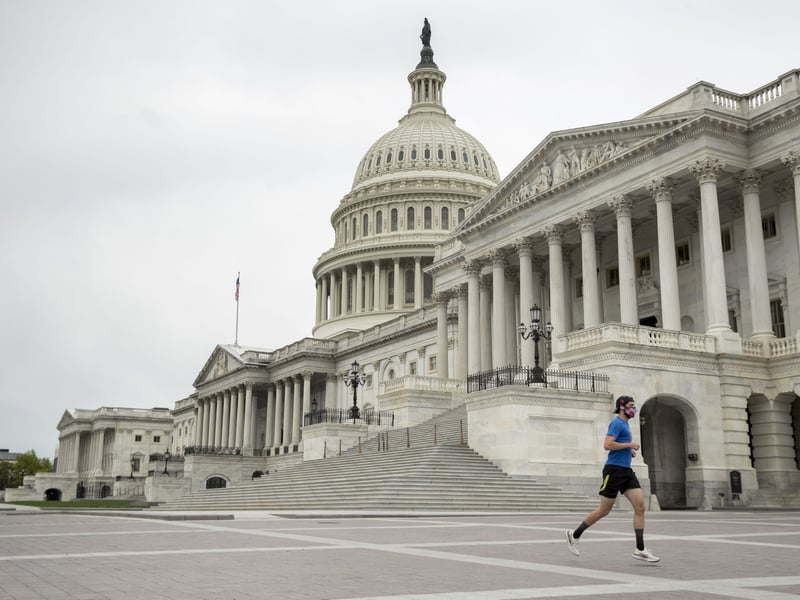
WASHINGTON (CN) — Both houses of Congress voted Thursday afternoon to approve a short-term budget that, if signed into law, will yet again sidestep the threat of a government shutdown.
The House cleared the stopgap plan, known as a continuing resolution, on a 314-108 vote Thursday. If approved by President Biden, the budget patch will keep government programs funded at current levels through early March.
The Senate passed the budget patch on a 77-18 bipartisan vote earlier Thursday.
Some House Republicans blasted the continuing resolution, which was already facing an uphill battle in the lower chamber.
Florida Representative Matt Gaetz said on X, formerly Twitter, Thursday afternoon that he would not be voting for the stopgap budget, calling it a “turd sandwich.”
“There’s no demand on the border,” Gaetz said. “No demand to defang the weaponization of government. No sufficient cuts in spending. House Republicans have failed the test of fighting in this moment.”
Tennessee Representative Mark Green said in a separate statement that the continuing resolution amounted to “Pelosi-era spending” and that his vote against the measure was “a vote against the status quo.”
House Speaker Mike Johnson has already faced criticism from his right flank for an agreement on 2024 spending levels struck with Senate Majority Leader Chuck Schumer — those same lawmakers have also vehemently opposed short-term funding resolutions like the one passed Thursday.
Negotiating a continuing resolution without any significant riders, such as spending cuts or border security provisions, is what cost the last House speaker his job. Former California Congressman Kevin McCarthy was ousted from the position in the fall after he worked with Democrats to pass a budget patch that averted a costly government shutdown.
Now, some House Republicans are hanging a political cudgel over Speaker Johnson, who has only been at the head of the lower chamber’s GOP caucus for a handful of months. Arizona Representative Eli Crane and Georgia Representative Marjorie Taylor Greene have both suggested that the speaker could face a motion to vacate if the House approved a continuing resolution.
Amid the possible maelstrom awaiting the lower chamber, Democrats framed the budget patch as an effort to avoid a government shutdown predicated by Republicans.
“I am relieved that this continuing resolution was drafted and passed with broad bipartisan, bicameral support,” said Connecticut Representative Rosa DeLauro, ranking member of the House Committee on Appropriations. “I am optimistic about what it portends for the eventual conclusion of the fiscal year 2024 appropriations process.”
Senate Majority Leader Chuck Schumer wrote in an X post that “the hard right’s bullying did not work when we avoided default."
“It did not work here either with the continuing resolution we’re passing here today,” he added.
This past spring, Congress narrowly avoided a first-ever national default after Democrats and Republican leadership compromised during negotiations over the federal debt ceiling.
New Jersey Senator Cory Booker wrote that a government shutdown would be “detrimental & disheartening to our country & constituents.”
“Leaders on both sides must do everything to avoid these continual threats to hardworking Americans,” he said.
Thursday was the last day that Congress could have passed a budget patch and avoid such a shutdown. Federal funds were slated to dry up Friday night
If the continuing resolution is signed into law, it will be the third time since September that Congress has dodged a government shutdown. Speaker Johnson late last year negotiated a two-part spending plan that kept vital federal programs funded through Friday, while supplementary spending is slated to run out in early February.
 Follow @BenjaminSWeiss
Subscribe to our free newsletters
Our weekly newsletter Closing Arguments offers the latest about ongoing trials, major litigation and rulings in courthouses around the U.S. and the world, while the monthly Under the Lights dishes the legal dirt from Hollywood, sports, Big Tech and the arts.