
 Search Articles


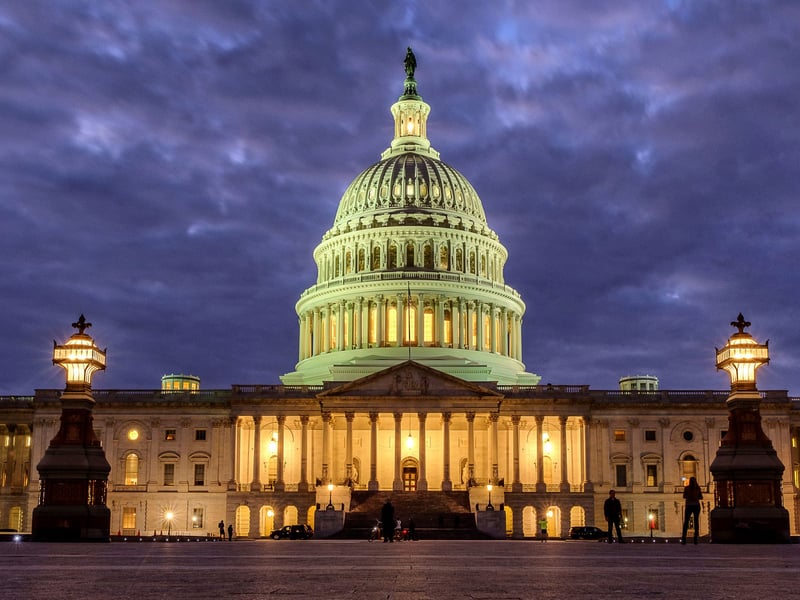
WASHINGTON (CN) — The Senate on Monday evening voted to confirm Whitney Hermandorfer to the U.S. Court of Appeals for the Sixth Circuit, making her the first federal judge to be confirmed under President Donald Trump’s second administration.
It’s a major milestone for the White House, but one that has already been met with concern by Democrats who warn that Hermandorfer — and the president’s future nominees to the federal bench — will be characterized by their loyalty to the White House rather than their adherence to the rule of law.
Hermandorfer, who before her confirmation was director of the strategic litigation division in the Tennessee attorney general’s office, cleared the Senate on a 46-42 vote Monday evening.
Ahead of the vote, Democrats accused the nominee of being a rank partisan lacking the necessary experience to serve as a judge on an appellate court and argued that she had been tapped by the White House primarily because of her political background.
“The president has been clear that his primary concern is not about his judicial nominees’ experience, competence or integrity,” said Senate Minority Whip Dick Durbin during floor remarks. “This president is not focused on temperament, independence or respect for the rule of law — he’s focused on a nominee’s perceived loyalty to him and his agenda.”
Hermandorfer’s experience and accusations of partisanship were key parts of Democratic opposition to her nomination as she made her way through the Senate Judiciary Committee earlier this year. As the upper chamber’s legal affairs panel voted to advance her appointment last month, Durbin contended that Trump would consider the nominee a “reliable ally on the Sixth Circuit for many years to come.”
Hermandorfer faced scrutiny for her work in the Tennessee attorney general’s office, including her involvement with an amicus brief filed in the Supreme Court as it considers a challenge to the Trump administration’s executive order rolling back birthright citizenship for the children of immigrants.
The nominee said during a hearing in the Judiciary Committee that the brief had been cited by the justices as “especially well-written.”
Delaware Senator Chris Coons, meanwhile, pointed out what he framed as the “striking brevity” of Hermandorfer’s record. The nominee graduated from law school in 2015 and has been in the professional world for less than a decade.
That lack of experience was a “serious concern” for Democrats, Durbin said at the time.
Before she started as a state lawyer in Tennessee, Hermandorfer served as a clerk for now-Supreme Court Justice Brett Kavanaugh while he was a judge on the D.C. Circuit Court of Appeals. She also has experience clerking for Justice Samuel Alito and Justice Amy Coney Barrett.
The nominee cleared a procedural vote in the Senate late last week, with nearly all Republicans supporting her. North Carolina Senator Thom Tillis was not present for the vote.
In a statement following Hermandorfer’s confirmation, Iowa Senator Chuck Grassley, chairman of the Senate Judiciary Committee, called her approval a “boon to the federal judiciary,” pointing to her work in the Tennessee attorney general’s office and pointing out that she has been “widely praised” for her legal acumen and qualifications.
And Grassley, looking ahead to other Trump nominees on the Senate docket, urged his Democratic colleagues to get on board.
“Despite Democrat obstruction, Senate Republicans will push forward to confirm President Trump’s nominees,” he wrote. “I hope Democrats can learn to let down their opposition to law and order nominees and begin good faith participation in the Senate’s advice and consent role this Congress.”
Hermandorfer, beyond being the first federal judge confirmed under the second Trump administration, is the first jurist in decades to receive Senate approval without formal vetting from the American Bar Association, the country’s preeminent legal association.
The Justice Department in May announced that it was ending its longstanding collaboration with the ABA, which has for years been allowed to access nominees’ non-public information as it develops ratings for each prospective federal judge. Attorney General Pam Bondi at the time accused the organization of being an “activist” group and argued that it has long favored the nominees of Democratic presidents.
William Bay, president of the ABA, fired back at Bondi in a scathing reply last month, pointing out that nearly all of the judicial nominees his organization has rated over the last 20 years were considered qualified or well-qualified — including those appointed by the Trump administration.
Assertions that the ABA had exhibited political bias, Bay wrote at the time, were based on “incorrect information.”
Despite being cut out of the formal nominations process, the ABA has published informal ratings for the nominees offered so far by the second Trump administration. The organization gave Hermandorfer a rating of “well-qualified.”
 Follow @BenjaminSWeiss
Subscribe to our free newsletters
Our weekly newsletter Closing Arguments offers the latest about ongoing trials, major litigation and rulings in courthouses around the U.S. and the world, while the monthly Under the Lights dishes the legal dirt from Hollywood, sports, Big Tech and the arts.