
 Search Articles


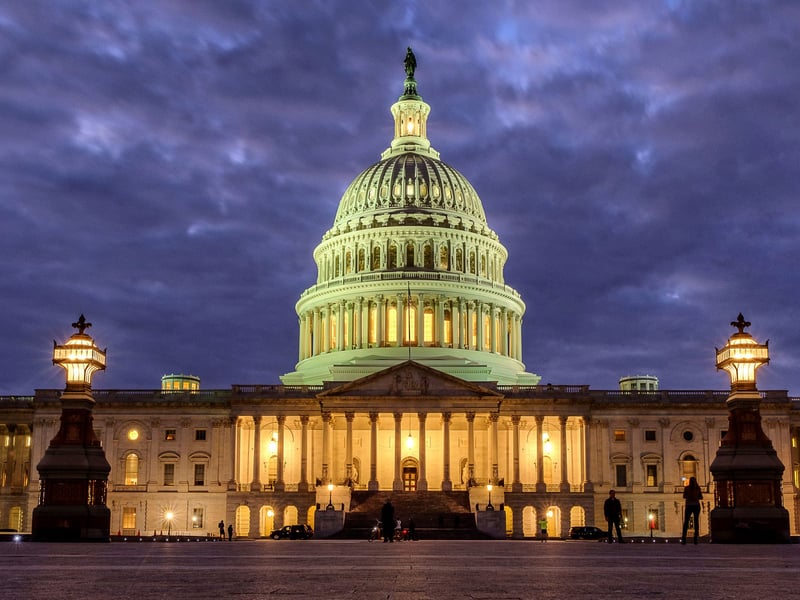
WASHINGTON (CN) — House Republicans on Friday torpedoed a Senate-passed spending bill aimed at funding the Homeland Security Department and ending a monthlong agency shutdown, effectively guaranteeing the appropriations lapse will last through the weekend as they hash out an alternative.
The lower chamber’s GOP majority has signaled they will bring up a short-term funding patch greenlighting full appropriations for DHS, rejecting the Senate’s compromise measure that peeled off some funding for U.S. Immigration and Customs Enforcement operations.
The upper chamber’s spending bill, approved by voice vote Friday morning following deliberations that lasted past midnight, represented something of an unsatisfying conclusion of negotiations for both Democrats and Republicans — it closely tracked a proposal for reopening DHS that had been floating around since before the shutdown began at the end of February.
The measure would have funded agency programs such as the Coast Guard and Transportation Security Administration without providing new budget for immigration enforcement, a concept that had long irritated some GOP lawmakers. But it also included none of the reforms to U.S. Immigration and Customs Enforcement and Border Patrol operations that Democrats have demanded for more than a month and which caused the agency’s shutdown in the first place.
While Senate Republican leaders framed the deal as an unfortunate but necessary step to ensure employees at TSA and FEMA were paid, their House counterparts accused the upper chamber’s GOP majority of caving to Democrats.
Texas Representative Chip Roy called the deal “absolutely offensive.”
“Could the Senate be any more lazy than to send us a bill that doesn’t do the job and then leave town?” he said. “We’re going to stand up and say no to that. We’re going to send back a bill that’s responsible to the American people.”
It’s not possible for the House to advance and pass an alternative funding bill for DHS in just one day, meaning lawmakers will likely need to remain in Washington over the weekend to get the measure across the finish line. House leadership has signaled the chamber could hold a rule vote on a short-term agency budget patch as soon as Friday evening, teeing up a final vote sometime on Saturday.
Any bill the House passes will also need to clear the Senate, where members have largely skipped town for the weekend.
“PSA to Senate schedulers: may want to book a return flight for your boss,” Colorado Representative Lauren Boebert wrote in a post on X. “Our work here isn’t finished.”
Following the early morning vote on Friday, Senate Democrats positioned the now-defunct funding deal as a victory, with Senate Minority Leader Chuck Schumer proclaiming Friday morning that his party “held the line” during the shutdown. And Senate Minority Whip Dick Durbin said in a statement Democrats would “continue to fight” for reforms to immigration enforcement.
Senate Republican leadership appeared unhappy about how things shook out. Senate Majority Leader John Thune for his part told reporters that the outcome of the DHS funding battle was “unfortunate,” adding that while Democrats walked away Friday with none of the reforms they’d asked for, lawmakers would have to “fight some of those battles another day.”
Resistance among House Republicans to the proposed Senate deal had been brewing all week.
House Speaker Mike Johnson on Wednesday called Democratic calls for reform “crazy” and seemed resistant to the idea of breaking ICE and Border Patrol funding off from the larger Homeland Security budget, arguing the agency has historically been funded in its entirety.
“There’s obvious reason for that, it’s very important,” the top House Republican said during a news conference Wednesday. “I don’t think we need to be breaking it apart.”
It’s unclear how the House’s GOP majority will approach a budget package without immigration enforcement funding. Congressional Democrats, for their part, signaled openness to supporting the measure. As of Friday morning, chamber leadership had yet to announce when a vote might take place.
President Donald Trump has so far not weighed in on the Senate’s funding deal or its collapse in the House. However, he was also skeptical this week of emerging plans to peel ICE and Border Patrol funding off the DHS budget, telling reporters he was “pretty much not happy” with that compromise. The president on Thursday night announced he’d directed incoming Homeland Security Secretary Markwayne Mullin to ensure TSA agents were paid as the agency shutdown dragged on.
The funding lapse began in late February amid the White House’s intense and at times deadly immigration crackdown in Minnesota. After federal agents shot and killed two U.S. citizens in Minneapolis, Democrats said they would not support any Homeland Security spending bill that did not include significant reforms to ICE and Border Patrol.
Some lawmakers went so far as to support the idea of a temporary agency shutdown to enforce their demands. Connecticut Senator Richard Blumenthal told Courthouse News at the time that shutting down DHS “should be the result” if Republicans refused to come to the table on immigration enforcement reform.
Ahead of the agency shutdown and throughout a month of negotiations, Democrats have pushed for a DHS budget package that includes language barring federal immigration agents from wearing masks and standardizing their uniforms. Lawmakers also asked for provisions prohibiting enforcement activities near “sensitive” areas such as schools and hospitals, and demanded the department drop recent guidance allowing agents to forcibly enter homes without a signed judicial warrant.
Though there is still room for debate on those reforms, Republicans have floated the idea of funding ICE and Border patrol through a process known as budget reconciliation — a spending package that can be passed under Senate rules with a simple majority, eliminating the need for Democratic support.
 Follow @BenjaminSWeiss
Subscribe to our free newsletters
Our weekly newsletter Closing Arguments offers the latest about ongoing trials, major litigation and rulings in courthouses around the U.S. and the world, while the monthly Under the Lights dishes the legal dirt from Hollywood, sports, Big Tech and the arts.